
Unbiased headlines. Facts, not spin.
Every story is an unbiased news briefing written from 110+ sources across the spectrum — sources linked so you can verify it yourself.
 finance
Low Interest (4/10)
May 20, 2026 at 08:42 AM
finance
Low Interest (4/10)
May 20, 2026 at 08:42 AM
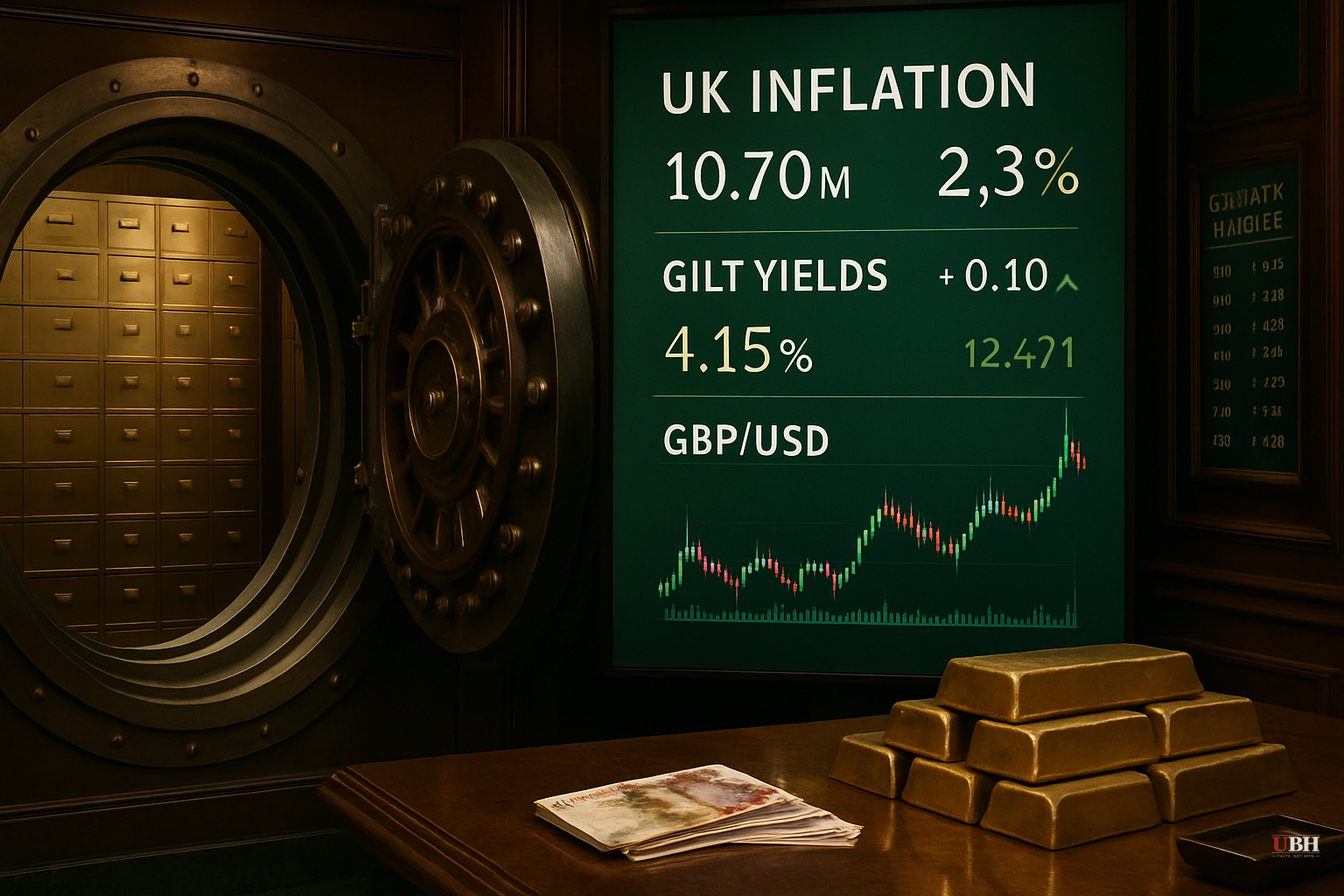
UK Inflation Drops to 14-Month Low, Gilt Yields Slide, and Rate-Hike Bets Get Slashed
What Just Changed
UK inflation dropped to its lowest point in more than a year as of May 20, 2026, according to Bloomberg. The data came in sharper than traders expected, and markets responded immediately.
Two-year gilt yields — the bonds most sensitive to rate expectations — fell eight basis points to 4.43%, according to Bloomberg Markets reporter Georgia Hall. Bond yields fall when prices rise, meaning investors rushed INTO gilts on this print.
The pound dipped 0.1% to $1.3376 right after the release before recovering. Not a collapse — but a signal that markets are repricing the Bank of England's next move.
The Rate Hike Calculus Just Shifted
Traders were betting on a Bank of England rate hike next month. They're now betting less on it, according to Bloomberg's reporting.
This shift affects every UK homeowner on a variable mortgage, every business carrying floating-rate debt, and every pension fund holding gilts. Rate expectations drive borrowing costs across the entire economy.
Bloomberg's Sam Unsted flagged the catch: economists still expect price pressures to return. So this isn't a green light. It's a yellow light that some traders are treating as green.
What's Not Being Said
The Iran energy shock didn't disappear. It's still baked into supply chains, fuel costs, and airline pricing. One better-than-expected month doesn't unwind structural energy price damage. Bloomberg itself noted in the same May 20 broadcast that Trump is threatening fresh Iran strikes if no deal materializes soon. If those strikes happen, energy prices spike again — and this inflation relief evaporates.
Also: the Bank of England's own track record on inflation calls has been poor. They were late recognizing the post-COVID surge. They may be late again if they ease off rate pressure now.
The Chancellor Gets a Small Break — But Only Small
Falling gilt yields are good news for Rachel Reeves and the Treasury. Lower borrowing costs mean the government pays less to service its debt mountain.
XPS Group put context around a similar gilt rally last autumn: a 0.3 percentage point drop in the 20-year yield reduced implied borrowing costs by up to £3 billion. The current May 2026 rally isn't that dramatic, but the direction is the same — a small reprieve for a Chancellor running out of fiscal room.
Here's the backdrop, per ING's James Smith, Chris Turner, and Michiel Tukker: the UK's public sector net borrowing is forecast at 4.5% of GDP this year before dropping to 3.5% next year — largely because income tax thresholds have been frozen, meaning bracket creep does the heavy lifting. The government isn't cutting spending in any meaningful way. It's relying on inflation-driven fiscal drag to improve the numbers. That only works if inflation stays elevated enough to push workers into higher brackets without becoming a political crisis. It's a tightrope.
What the Long-Term Bond Math Says
Vanguard's senior economist Shaan Raithatha and investment analyst Lukas Brandl-Cheng published analysis projecting UK gilts to generate annualized returns of 5.0%-6.0% over the next ten years with a Sharpe ratio of 0.30. That beats US Treasuries (0.12 Sharpe) and global aggregate bonds (0.24 Sharpe). Translation: gilts are offering better risk-adjusted returns than most comparable sovereign debt right now.
It means global capital sees the UK as a reasonable bet — but it also reflects the higher yields that come from higher risk. You don't get 5%-6% without someone pricing in the possibility things go wrong.
What Mainstream Media Is Getting Wrong
Left-leaning outlets are running this as a 'cost-of-living relief' story. It isn't — not yet. Prices are still rising, just more slowly. Real wages are still being squeezed for millions of workers. Slower inflation isn't falling prices.
Financial media broadly is treating the gilt rally as straightforward good news. Every basis point drop in gilt yields that reduces pressure on Reeves also reduces the urgency for genuine fiscal discipline. She gets breathing room — and historically, politicians use breathing room to avoid hard choices, not make them.
The Fact Set
UK inflation fell further and faster than expected on May 20, 2026. Gilt yields dropped, rate-hike bets got trimmed, and the Chancellor got a small reprieve.
But the Iran conflict is NOT resolved. Energy prices can spike again in weeks. Economists flagged that explicitly. The Bank of England hasn't pivoted — it's watching. And the UK's underlying fiscal position is still dependent on tax threshold freezes quietly picking pockets rather than on actual spending discipline.
Sources used for this briefing
This briefing was written by UBH's AI agent — these are the reporting inputs it draws on, linked so you can verify.


