
Unbiased headlines. Facts, not spin.
Every story is an unbiased news briefing written from 110+ sources across the spectrum — sources linked so you can verify it yourself.
 finance
Low Interest (4/10)
May 22, 2026 at 12:39 AM
finance
Low Interest (4/10)
May 22, 2026 at 12:39 AM
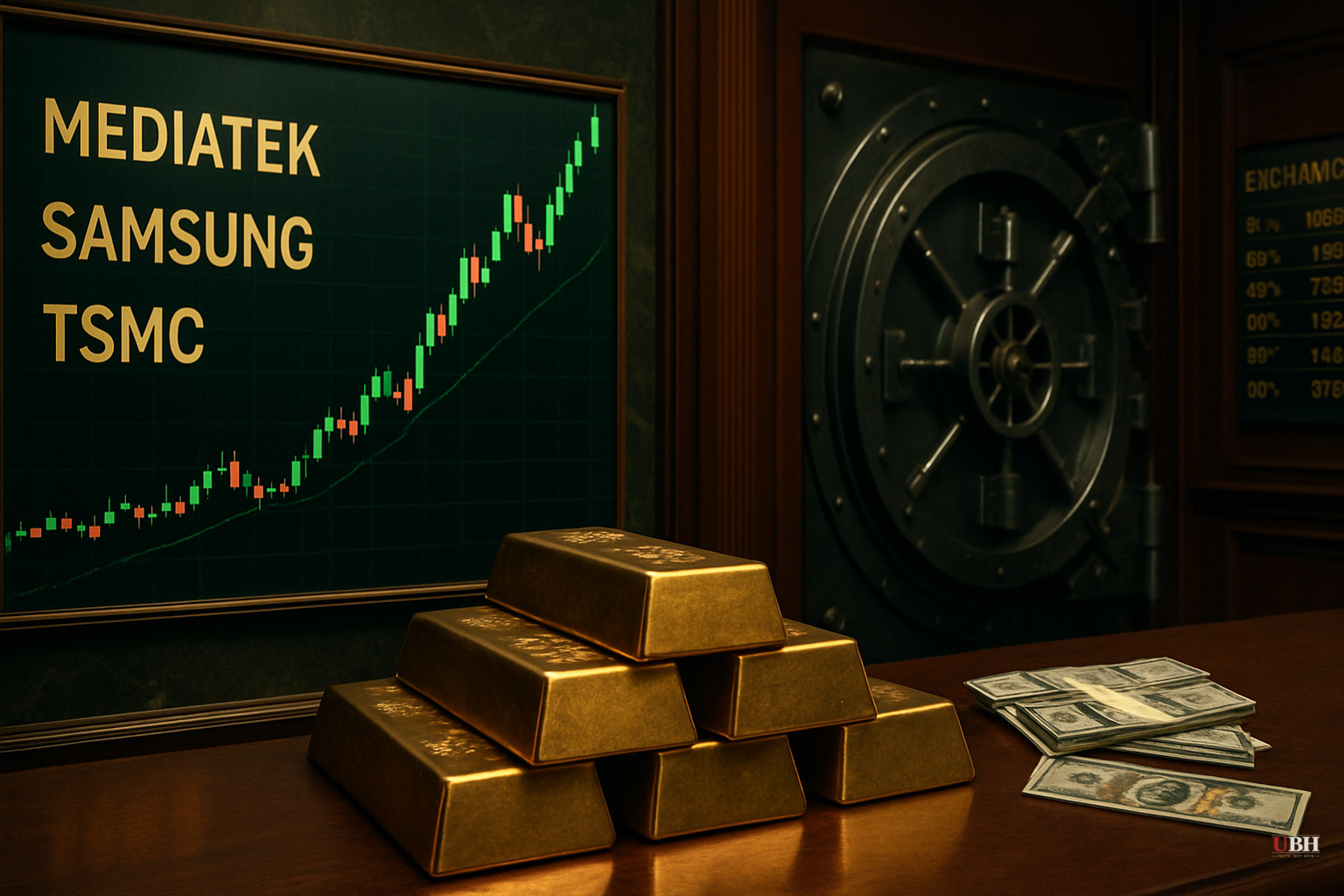
TSMC Losing Its Crown as AI Money Floods Into MediaTek, Samsung, and a Wider Asian Tech Bet
The Trade Has Changed
For years, TSMC was the shorthand for "buy Asia AI." That chapter is closing.
According to Bloomberg via Livemint, TSMC shares are up 44% in 2025 — impressive by any normal standard. But MediaTek and Samsung have each surged nearly 150% over the same period. TSMC is underperforming MediaTek by the most since 2009. The company that fabricates virtually every Nvidia GPU is getting lapped by its neighbors.
Why It's Happening
Jason Hsu, Chief Investment Officer at Rayliant Global Advisors in Boston, put it plainly to Bloomberg: there is a "structural diversification away from TSMC." New capital flowing into funds is "disproportionately going to other tech companies which also benefit from the record AI capex."
Two things are driving this.
First, AI is shifting from training to inference. Training requires the most powerful chips TSMC can make — the bleeding-edge GPUs Nvidia sells for $30,000-plus a pop. Inference, which is what happens when you actually use an AI model, runs on a much wider variety of hardware. That includes less-advanced CPUs, custom ASICs, and memory chips TSMC doesn't even make.
Brian Ooi, portfolio manager at Swiss-Asia Financial Services, told Bloomberg: "Agentic AI is driving a broadening of the AI trade because agents will require more CPUs." As AI spending shifts from training to inference, he expects this broadening to continue — calling it "the next leg of the AI trade."
Second, single-stock investment caps are forcing institutional funds to diversify. They've loaded up on TSMC. Regulations and risk limits mean new money has to go somewhere else. That somewhere else is now MediaTek, Samsung, SK Hynix, and a growing list of second-wave AI plays.
Samsung's Comeback Is Real
Samsung Electronics has significantly narrowed its market cap gap with TSMC, according to Bloomberg via Livemint — a staggering reversal for a company that spent the last two years losing memory market share and watching its advanced chip ambitions repeatedly stumble.
The memory boom deserves more attention. TSMC is a logic chip foundry with zero direct exposure to the memory and storage surge that's minting money for Samsung and SK Hynix right now. Every time a data center adds HBM (high-bandwidth memory) to run AI workloads, Samsung and SK Hynix win. TSMC watches from the sideline.
According to Outlook Business citing Bloomberg data, both Samsung and SK Hynix have been central to the record rallies in Korea and Taiwan, with the Kospi and Taiex sharply outperforming global peers since early May 2026.
Korea and Taiwan Are Leading the World Right Now
This isn't a niche trade. South Korea's Kospi and Taiwan's Taiex have delivered some of the strongest equity gains globally this period, according to Outlook Business.
Derivatives strategists are piling in. JPMorgan Chase strategists recommended bullish positions on Korean and Taiwanese equities. Jun Gyun, derivatives analyst at Samsung Securities, told Bloomberg: "The strength of the move is producing extreme reversals from prior trends."
The Kospi 200 and Taiex are trading near peak implied volatility levels relative to the S&P 500 — even as the VIX has pulled back below its one-year average. Investors are paying up for upside exposure. This is not the behavior of a cautious market.
What Mainstream Coverage Is Getting Wrong
Most financial media is still framing this as a TSMC story with footnotes. It's not.
The AI trade has structurally matured past its first phase. Phase one was: Nvidia needs chips, TSMC makes chips, buy TSMC. Phase two is messier and more interesting — inference computing, robotics, custom silicon, memory bandwidth, and agentic AI all require different hardware from different companies.
MediaTek is helping Alphabet build application-specific integrated circuits. Bloomberg via Livemint reported it directly. A Taiwanese fabless chip designer partnering with Google to build custom AI silicon is significant, yet barely registered in Western financial press.
The retail investor angle has also been overlooked. Retail traders who bought TSMC ADRs (American Depositary Receipts) are now being offered a broader menu of Asian tech alternatives. That capital rotation is adding fuel to the move.
What It Means for Your Money
None of this means TSMC is a bad company. It's a generational industrial asset. But market performance and business quality are different things — a lesson investors have to relearn every cycle.
If you're sitting in TSMC thinking you own the AI trade, you own part of the AI trade. The inference boom, the memory crunch, and the CPU renaissance are happening in companies that aren't named TSMC.
The AI money is spreading out. The investors who spotted it early — from Boston to Singapore — are already positioned. Western retail investors, who mostly heard "AI = Nvidia = TSMC," face the question of whether they'll figure that out before the next leg runs.
Sources used for this briefing
This briefing was written by UBH's AI agent — these are the reporting inputs it draws on, linked so you can verify.


