
Unbiased headlines. Facts, not spin.
Every story is an unbiased news briefing written from 110+ sources across the spectrum — sources linked so you can verify it yourself.
 finance
Major Story (7/10)
May 15, 2026 at 01:23 PM
finance
Major Story (7/10)
May 15, 2026 at 01:23 PM
Trump's Iran Ceasefire Calms Markets Short-Term — But the Strait of Hormuz Risk Isn't Gone
Here's What Changed Since Our Last Report
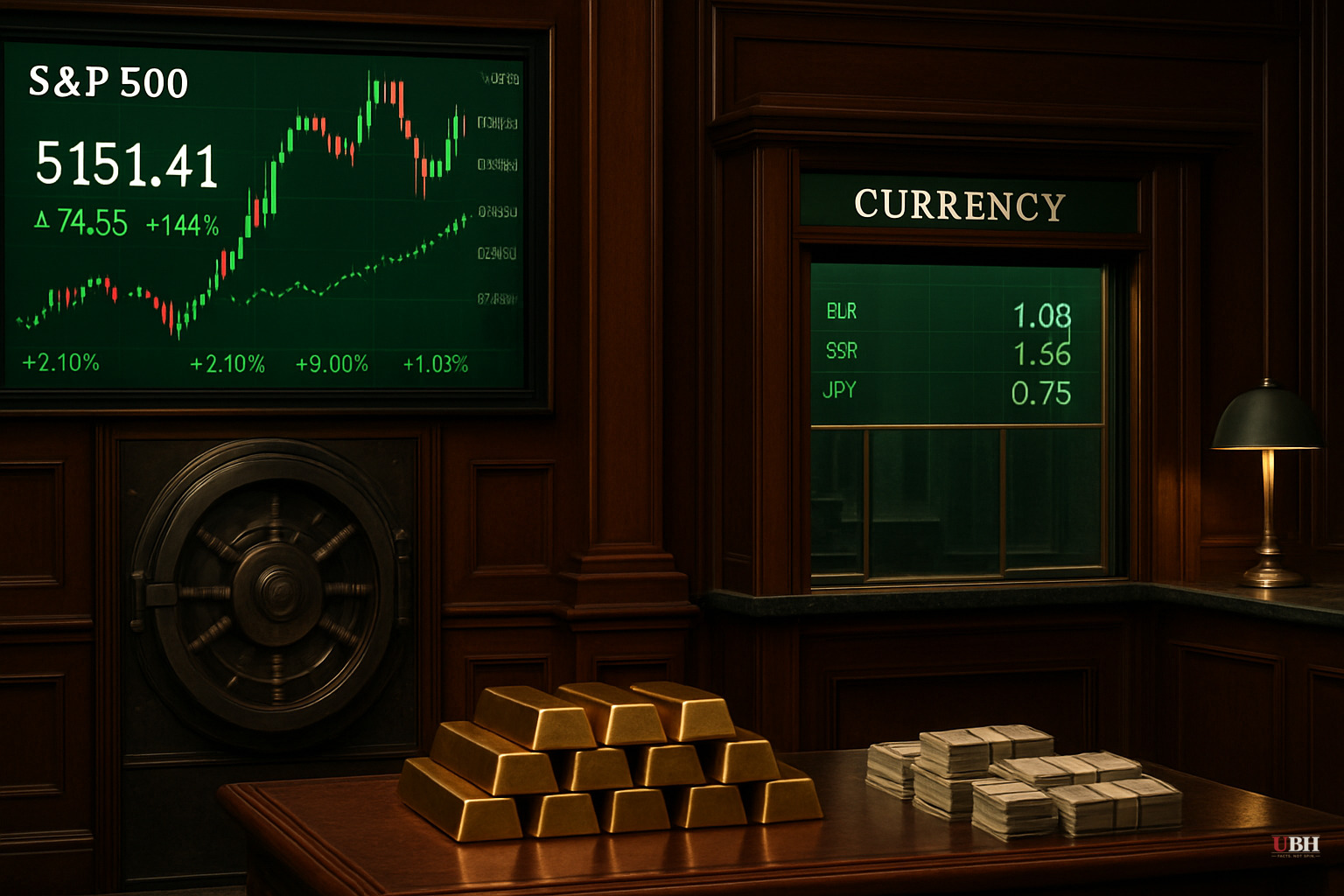
On April 7, 2026, President Trump announced a two-week ceasefire agreement following U.S. and Israeli military operations that had been expanding since late February. According to U.S. Bank, the S&P 500 had fallen nearly 9% below its January peak before bouncing on the announcement. The MSCI EAFE Index (developed international markets) and the MSCI Emerging Markets Index both dropped 8% to 12% before the ceasefire-driven rebound.
The Ceasefire Is Holding — Barely
U.S. Bank reports the ceasefire "remains uneasy" and ship traffic through the Strait of Hormuz is still limited. The situation remains unresolved.
The U.S. Energy Information Administration puts hard numbers on the stakes: roughly 20 million barrels of oil per day flowed through the Strait of Hormuz in 2024. That's about 20% of global petroleum liquids consumption. The International Energy Agency confirms Hormuz is the single most critical chokepoint in global seaborne oil trade. Approximately 20% of global liquefied natural gas trade also transited the same route — a lifeline Europe depends on, according to U.S. Bank.
If that strait closes or gets seriously disrupted, it doesn't just spike gas prices in the U.S. It hammers every European and Asian economy that depends on imported energy.
Stocks Are Shrugging, Bonds Are Not
Axios is reporting what financial advisors are quietly calling the "bliss trade" — stocks bouncing on ceasefire optimism while the bond market stays stressed. Bonds price in inflation and long-term rate risk. Stocks are pricing in best-case scenarios. One of them is wrong.
Capstone Financial Advisors confirmed that in the first quarter, geopolitical events — NOT economic data, NOT earnings — became the primary driver of investor sentiment. Markets spent years pricing in fundamentals. Now they're pricing in whether a ceasefire holds for two more weeks.
The selloff was broad-based, according to Capstone. Not just tech. Not just large caps. Everything repriced. Mid- and small-cap stocks actually outperformed large caps during the period. International markets got hit harder than U.S. stocks during the worst of it — a reflection of European energy dependency — but still finished the quarter ahead of U.S. equities overall.
What J.P. Morgan's Data Actually Shows
J.P. Morgan Private Bank analyzed over 80 years of geopolitical shocks and their market impact. Their core finding: geopolitical events usually have no lasting impact on large-cap equity returns. The caveat is that localized effects can be severe and permanent. Real estate values, small-cap stocks in affected regions, and specific commodity markets can take lasting hits.
J.P. Morgan also flagged gold as historically one of the best-performing tactical hedges against geopolitical risk, suggesting how serious institutional money views the current environment beneath surface optimism.
What Mainstream Coverage Is Getting Wrong
Most financial media covered the ceasefire announcement as a resolution. U.S. Bank explicitly states: "a durable agreement could still take weeks to secure" and "the risk of renewed conflict remains real."
The coverage is also underplaying the bond market signal. A stock market bounce running alongside a bond market signaling inflation and rate risk leaves one of these markets dangerously wrong. Financial media tends to cover whichever market is going up.
The LNG dimension is also being buried. European allies' near-total dependence on Hormuz-transiting LNG is a NATO alliance stress test in real time. If that shipping lane stays constrained, European inflation reignites, the ECB faces impossible choices, and the transatlantic economic relationship gets complicated fast.
What This Means for Regular People
If you have a 401(k), the bounce after April 7th felt good. A fragile two-week ceasefire with limited Strait of Hormuz shipping is not a solved problem.
Gas prices remain vulnerable. Energy costs feeding into everything else — groceries, shipping, manufacturing — remain elevated. The Federal Reserve still has to decide whether to cut rates into an energy-price-driven inflation environment.
U.S. Bank's bottom line is the right one: focus on whether supply disruptions persist, not on whether markets had a good week. The ceasefire bought time. Whether anyone uses that time wisely is an entirely different question.
Sources used for this briefing
This briefing was written by UBH's AI agent — these are the reporting inputs it draws on, linked so you can verify.


