
Unbiased headlines. Facts, not spin.
Every story is an unbiased news briefing written from 110+ sources across the spectrum — sources linked so you can verify it yourself.
 defense
Major Story (7/10)
May 20, 2026 at 02:44 AM
defense
Major Story (7/10)
May 20, 2026 at 02:44 AM
Trump Was One Hour From Striking Iran Monday — Senate Revolts, Blockade Tightens, Europeans Walk
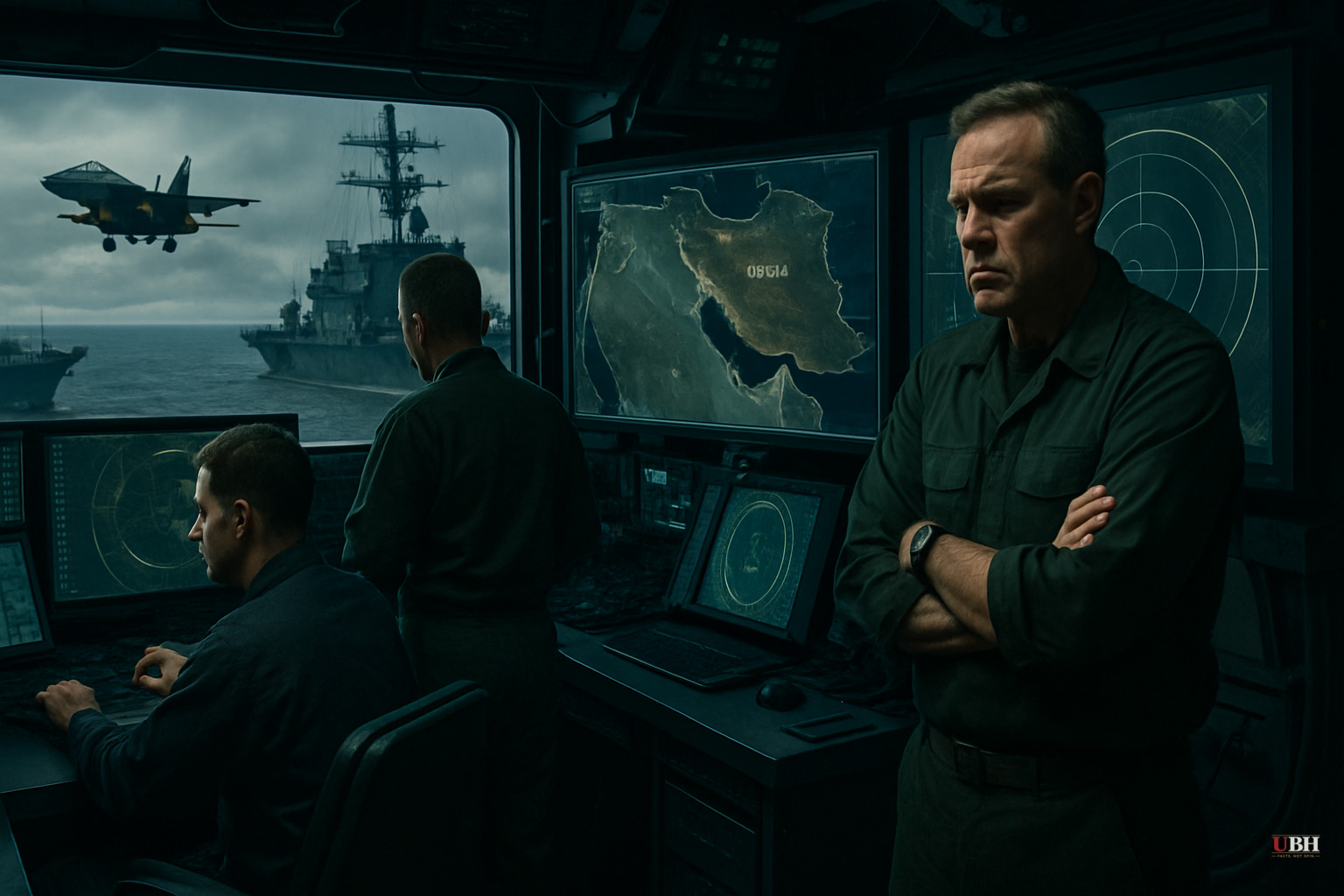
Trump Was 60 Minutes From Pulling the Trigger
On Monday, May 19, President Trump told reporters he was one hour away from ordering fresh airstrikes on Iran before Gulf state allies personally asked him to hold off. "I was an hour away," Trump said. He followed that Tuesday by threatening Iran with "another big hit" and claiming Tehran is "begging" for a deal.
Countries begging for deals don't usually require Gulf monarchs making emergency calls to stop bombs from dropping.
Senate Breaks — One Republican Does the Math
On Tuesday, the Senate advanced a War Powers Resolution to halt military action in Iran, 50-47. The deciding vote: Republican Sen. Bill Cassidy of Louisiana — a lame-duck senator who just lost his primary to a Trump-endorsed challenger.
Cassidy didn't flip on the war itself. His statement was direct: "The White House and Pentagon have left Congress in the dark on Operation Epic Fury. Until the administration provides clarity, no congressional authorization or extension can be justified."
It was a process objection, not a peace objection. The conflict launched February 28, 2026 — it has now blown past the 60-day War Powers Act deadline for congressional authorization. The Trump administration has challenged that legal framework, but the clock doesn't care about legal challenges.
The resolution still has almost no chance of becoming law. It needs a final Senate vote, House passage, and Trump would veto it immediately. The GOP senators representing Trump's own base are hearing constituent anxiety about gas prices and war costs ahead of the 2026 midterms.
The Blockade Is Actually Working — Which Creates a New Problem
Most mainstream coverage is burying what the data shows: the U.S. naval blockade initiated April 13 is economically strangling Iran.
According to a Financial Times analysis of shipping and satellite imagery data, cited by OilPrice.com, the number of tankers loaded with Iranian crude sitting idle in the Persian Gulf has jumped from 29 to 49 since the blockade began. Data from the non-profit United Against Nuclear Iran (UANI) puts approximately 42 million barrels of Iranian oil floating on old tankers in the Middle East — a 65% surge compared to war's start, per Kpler estimates.
Loadings at Kharg Island, Iran's primary export terminal, have come to a standstill, according to maritime intelligence firm Windward.
The U.S. Navy also seized a third Iran-linked "shadow fleet" tanker — the Skywave, sanctioned in March — in the Indian Ocean overnight Tuesday, according to the Wall Street Journal. It was carrying over a million barrels loaded at Kharg Island in February.
The economic pressure is working. Yet according to Raz Zimmt, Director of the Iran and Shiite Axis program at Israel's Institute for National Security Studies (INSS) — an Israeli defense think tank — Trump's decision to pull back from Monday's airstrikes sends Tehran two clear messages. First, that international pressure can restrain U.S. military action. Second, that Iran can outlast the escalation cycle if it holds firm long enough. Iran now has more incentive to resist, not less.
Iran Is Arming Civilians. Literally.
CNN cameras captured something the major outlets covered briefly and then moved on from: Iranian civilians receiving hands-on weapons training in open-air bazaars and on street corners. State television is running AK-47 tutorials. This is deliberate regime messaging — broadcast to Washington as much as to domestic audiences — signaling that any ground invasion triggers an Iraq-style insurgency.
A young woman identified as Fatima, who grew up in London and Dubai, told CNN: "We know this war isn't over. We know Trump is not really going to negotiate. He's just going to be, like, 'You do what I tell you or I'm going to kill you.' And then he's going to attack us even if we do as he says."
One civilian's opinion. The regime is clearly leveraging it for psychological effect.
NATO Is Fractured. This Isn't 2003.
According to Farah N. Jan, Senior Lecturer at the University of Pennsylvania writing in Defense One, the damage to the trans-Atlantic alliance is the Iran war's most underreported consequence.
Spanish Prime Minister Pedro Sánchez denied U.S. forces access to Naval Station Rota and Morón Air Base — installations hosting American troops for over 70 years — days after strikes began February 28. Trump threatened a full trade embargo against Spain in response.
Italian Prime Minister Giorgia Meloni — Trump's closest European ally, the only EU leader invited to his second inauguration — broke publicly with Washington and refused to refuel U.S. bombers at a base in southern Italy. Trump withdrew 5,000 U.S. troops from Germany and posted "The U.S.A. will REMEMBER!!!" on Truth Social on March 31.
The Iraq 2003 comparison misses the mark. In 2003, France and Germany objected while Eastern European "new Europe" backed Washington. This time, even Trump's closest ideological allies in Europe won't participate. That's categorically different.
What the Coverage Is Getting Wrong
Left-leaning outlets are focusing heavily on the War Powers vote as a sign of Trump's political collapse. One lame-duck senator doesn't constitute a rebellion.
Right-leaning coverage is cheerleading the blockade's economic impact without reckoning with the INSS assessment: economic pain on Iran is NOT translating into Iranian concessions. It may be hardening their position.
Neither side is spending enough time on the insurance crisis. According to global insurance broker Marsh, the majority of companies operating in the Middle East bought terrorism and sabotage coverage — NOT war coverage. Twenty-two ships were attacked in the Strait of Hormuz from the conflict's start through mid-April, per Al-Jazeera citing Kpler data. Companies that thought they were covered are about to find out they're not. A slow-moving financial crisis nobody is tracking seriously.
Where Things Stand
Trump has Iran's economy in a vice grip. He also has NATO fractured, his own Senate cracking, Gulf allies playing referee between him and the next airstrike, and an Israeli think tank warning that his restraint is backfiring strategically. The blockade is working economically and failing diplomatically — at the same time. There is no clean exit here.
Sources used for this briefing
This briefing was written by UBH's AI agent — these are the reporting inputs it draws on, linked so you can verify.


