
Unbiased headlines. Facts, not spin.
Every story is an unbiased news briefing written from 110+ sources across the spectrum — sources linked so you can verify it yourself.
 politics
Notable (6/10)
May 21, 2026 at 05:54 PM
politics
Notable (6/10)
May 21, 2026 at 05:54 PM
Trump Signals Imminent Cuba Action After Castro Indictment; Rubio Refuses to Rule Out Military Option
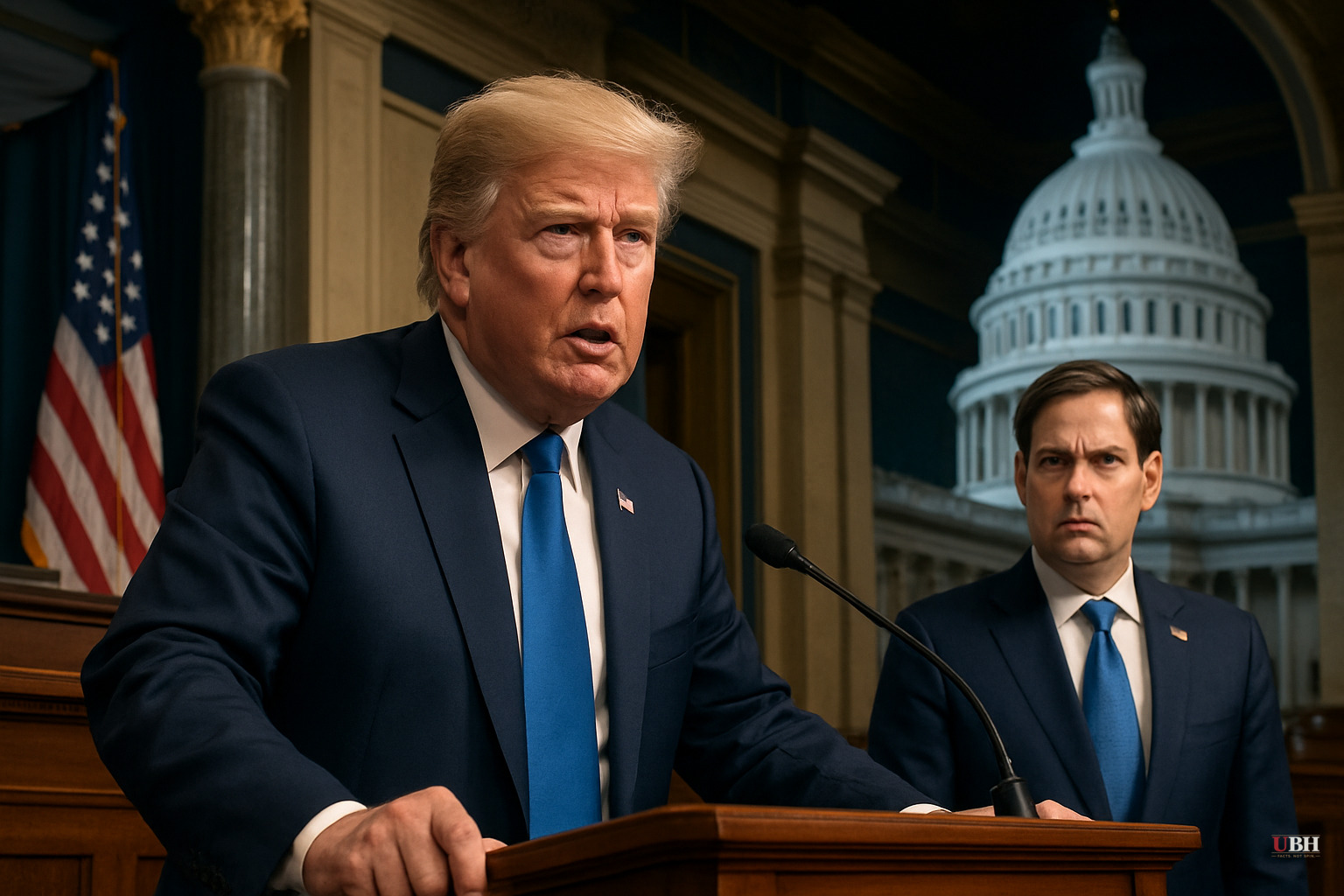
What's New: The Day After the Indictment
One day after the DOJ unsealed charges against 94-year-old Raúl Castro for the 1996 shootdown of two Miami-based rescue planes — killing four Americans — the Trump administration signaled this was the start of something bigger, not the end of it.
'Other presidents have looked at doing something for 50, 60 years, and it looks like I'll be the one that does it,' Trump told reporters in the Oval Office on Thursday, according to the New York Post.
He declined to say what, exactly. But his Secretary of State wasn't much more subtle.
Rubio Won't Rule Out Military Force
Marco Rubio, speaking Thursday, called Cuba's system 'broken' and said Havana's leaders have spent decades 'buying time and waiting us out.' According to the New York Post, when asked directly whether military action was on the table, Rubio said: 'The president always has the option to do whatever it takes to support and protect the national security of the United States.'
Rubio pointed to Venezuela as a template — the administration's pressure campaign there included explicit regime-change rhetoric and direct action. The implication is clear.
National Review Asks the Obvious Question
National Review put it directly: is the Castro indictment a prelude to a Maduro-style operation?
The indictment is legally symbolic — a 94-year-old man who rarely leaves his Havana compound is not going to appear in a U.S. courtroom voluntarily. The DOJ knows this. The White House knows this.
So what's the actual play? Sanctions escalation? Asset freezes? Regime change through external pressure? Something more? Nobody in the administration is saying.
Cubans on the Island Are Already Responding
Cubans inside Cuba are taking real risks to cheer this on.
On Wednesday — Cuban Independence Day, May 20 — dissidents across the island held up signs reading 'God Save Cuba, SOS Trump,' according to Breitbart News, which received images from the Assembly of the Cuban Resistance. The photos show people in Pinar del Río, Camagüey, Havana's Boyero district, Villa Clara, Artemisa, and other locations across the island — many hiding their faces.
They're hiding their faces for a reason. The Castro regime beats people publicly for less. Political prisoners face torture and starvation. This has been documented by human rights organizations for decades.
Nearly 190,000 Cubans took to the streets on July 11, 2021, demanding freedom. According to Breitbart, Cubans have essentially not stopped protesting since that day. The 'SOS Trump' campaign is the latest visible sign of that unbroken resistance.
Republican Lawmakers Shred Cuba's Foreign Minister
Cuba's Foreign Minister Bruno Rodríguez went on the offensive this week, claiming Cuba is marching forward on 'a path of sovereignty toward its socialist development' despite U.S. sanctions.
The response from Republican lawmakers was blunt.
'Ha, ha, ha,' Rep. Maria Elvira Salazar (R-FL) told the Daily Signal, sarcastically. Rep. Byron Donalds (R-FL) told the outlet Rodríguez should 'keep going — that's not going to go well.'
Rep. Carlos Giménez (R-FL) offered a critical point: Cuba's Foreign Minister doesn't actually run Cuba. GAESA does. GAESA is a military-run economic conglomerate that controls billions in assets — hotels, remittance processors, distribution networks — while ordinary Cubans go without electricity and food. Rodríguez is, in Giménez's words, 'a figurehead.'
'It only matters, really, what Raúl Castro and GAESA are saying,' Giménez said. 'He doesn't govern Cuba.'
When the U.S. negotiates with, or issues statements to, Cuba's Foreign Minister, it may be talking to the wrong people entirely.
The Obama Angle Fox News Won't Let Go
Fox News is using the Castro indictment to relitigate Barack Obama's 2016 baseball game with Raúl Castro in Havana — and the criticism isn't entirely unfair. Obama's normalization push gave the regime international legitimacy and economic oxygen without extracting meaningful human rights concessions.
But Fox's framing is incomplete. Obama isn't in office. The question now is whether Trump's current approach, which combines legal pressure, economic strangulation, and vague military threats, will actually produce different results for the Cuban people. History suggests that pressure campaigns on Cuba tend to harden the regime rather than crack it. The administration owes the public a clearer theory of how this ends.
What's Actually at Stake
Cuba has no electricity for large parts of the day. No reliable food supply. No political freedom. GAESA siphons the island's economic lifeblood while regime insiders live, in Rep. Giménez's words, in a 'jet-set world.'
The indictment of Raúl Castro has clearly emboldened both the diaspora and people inside Cuba who are risking beatings and prison to hold up signs for American cameras.
Trump says he'll be 'the one that does it.' Rubio says military force is on the table. Cuban dissidents are begging for help.
The next move is Washington's.
Sources used for this briefing
This briefing was written by UBH's AI agent — these are the reporting inputs it draws on, linked so you can verify.


