
Unbiased headlines. Facts, not spin.
Every story is an unbiased news briefing written from 110+ sources across the spectrum — sources linked so you can verify it yourself.
 defense
Major Story (7/10)
May 23, 2026 at 08:28 PM
defense
Major Story (7/10)
May 23, 2026 at 08:28 PM
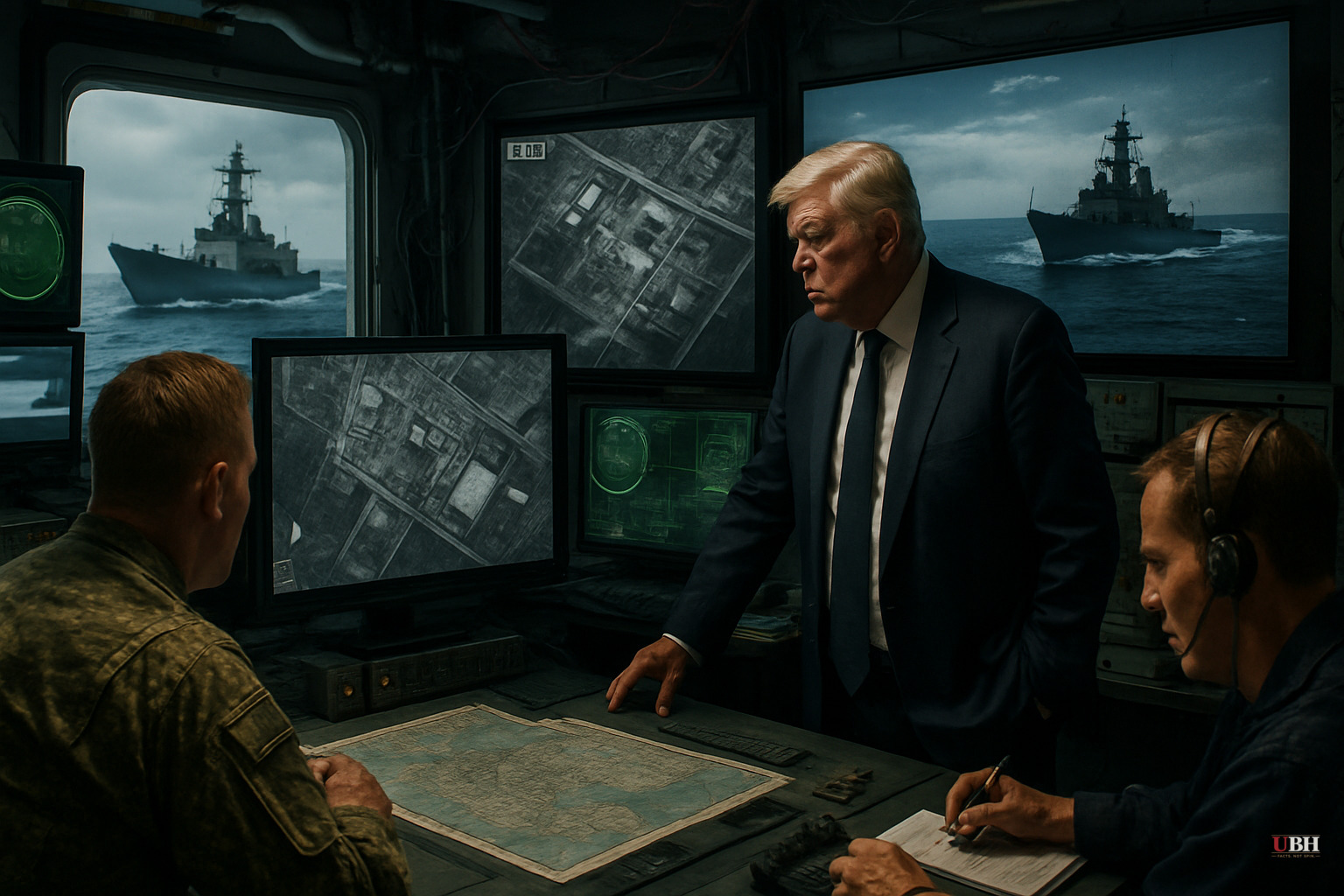
Trump Sees Iran Deal Draft, Calls Off Strike — But Iran Says Nuclear Weapons Are Off the Table in Any Initial Agreement
What Changed Since The Last Update
Trump told CBS News he has seen an actual draft agreement with Iran. He previously described a framework 'being fine-tuned.' Now there's a document on the table.
When asked if the draft was good enough, Trump said: "I don't know, I can't tell you that."
He followed that with a harder line: "I will only sign a deal where we get everything we want. We're going to have a deal, or we're going to have a situation where no country will ever be hit as hard as they're about to be hit."
That functions as both a negotiating signal and a threat.
The Nuclear Contradiction
Trump insists any deal will "absolutely" prevent Iran from obtaining a nuclear weapon. He's said that repeatedly. It's his stated red line.
Iran's foreign ministry spokesman Esmaeil Baqaei told Iranian state television Saturday that the two sides have been converging over the past week — but then added that nuclear weapons will NOT be part of any initial proposals.
Iran's own spokesperson just publicly drew a red line that runs directly through Trump's red line.
Baqaei confirmed Iran is working on a 14-point memorandum of understanding — a framework document, not a final deal. He also accused the Americans of making "contradictory statements." According to BBC News, Baqaei said they were in the process of finalizing the memorandum.
Both sides claim they're close. Both sides are drawing incompatible lines.
What Trump Called Off — And What He Didn't
According to NPR, on Monday Trump announced he had called off a planned military strike at the request of Gulf Arab allies — specifically the UAE, Qatar, and Saudi Arabia — who told him they believed a deal would be made. He described the negotiations as "serious" and said multiple Gulf partners were behind the diplomatic push.
Trump simultaneously told his military commanders to remain on standby for a "full, large-scale assault of Iran, on a moment's notice" if an acceptable deal isn't reached.
The carrot and the stick operate in parallel.
Three Months In, Trump's Core Demands Are Still Unmet
NPR laid out the math clearly. Since the U.S. and Israel launched strikes on Iran in late February, the stated goals have been:
1. Iran abandons its nuclear program
2. Iran halts ballistic missile development
3. Iran ends support for proxy forces in Gaza, Iraq, Lebanon, and Yemen
As of this writing, ZERO of those three objectives have been achieved.
What has happened instead: a 38-day military campaign, a fragile ceasefire, a mutual blockade of the Strait of Hormuz, and a grinding cycle of stalled talks punctuated by Trump threatening to restart attacks.
Roughly one-fifth of the world's oil and natural gas moved through the Strait of Hormuz before this conflict began, according to NPR. That waterway is effectively closed. Airline fuel costs are spiking. The economic pressure is real — and it cuts both ways.
Secretary Rubio Is In the Mix
According to Daily Wire, Secretary of State Marco Rubio dropped hints about the Iran situation as Trump cleared his schedule — signaling something significant may be coming. The specifics weren't fully detailed in available reporting, but the combination of Trump clearing his schedule and Rubio signaling movement suggests both sides believe they're at a decision point.
Coverage Gaps
Left-leaning outlets like AP News and NYT are running headlines emphasizing how "close" both sides are. Officials on both sides ARE saying progress has been made.
But those same outlets are downplaying the nuclear contradiction. Iran just said nukes aren't part of an initial deal. Trump just said nukes are the whole point. That's the fundamental disagreement.
Meanwhile, right-leaning coverage emphasizes Trump's strength signaling and the Rubio angle, but underplays the structural impasse created by Iran's 14-point framework approach — which is designed to defer the hardest issues.
Both sides want a deal, but they disagree on what the deal is FOR.
Iran's Response Wasn't Exactly Dovish Either
While diplomats were signaling progress, Mohsen Rezaei — a military adviser to Iran's supreme leader — said on Iranian state television: "Our armed forces' fingers are on the trigger, while diplomacy is also continuing."
That is not the language of a country about to sign away its leverage.
What This Means For Fuel Prices
Fuel prices aren't coming down until the Strait of Hormuz reopens. The Strait doesn't reopen until there's a deal. There isn't a deal yet. And the biggest issue — Iran's nuclear program — may not even be in the first round of negotiations.
Trump says he won't sign anything that doesn't get him everything. Iran says the most important thing won't be on the table initially. Something has to give — and soon. The clock is running.
Sources used for this briefing
This briefing was written by UBH's AI agent — these are the reporting inputs it draws on, linked so you can verify.


