
Unbiased headlines. Facts, not spin.
Every story is an unbiased news briefing written from 110+ sources across the spectrum — sources linked so you can verify it yourself.
 defense
Notable (6/10)
May 22, 2026 at 09:54 AM
defense
Notable (6/10)
May 22, 2026 at 09:54 AM
Trump Says He'll Be the One to Act on Cuba; Rubio Calls Diplomacy Unlikely; Sister of Cuban Official Arrested in US
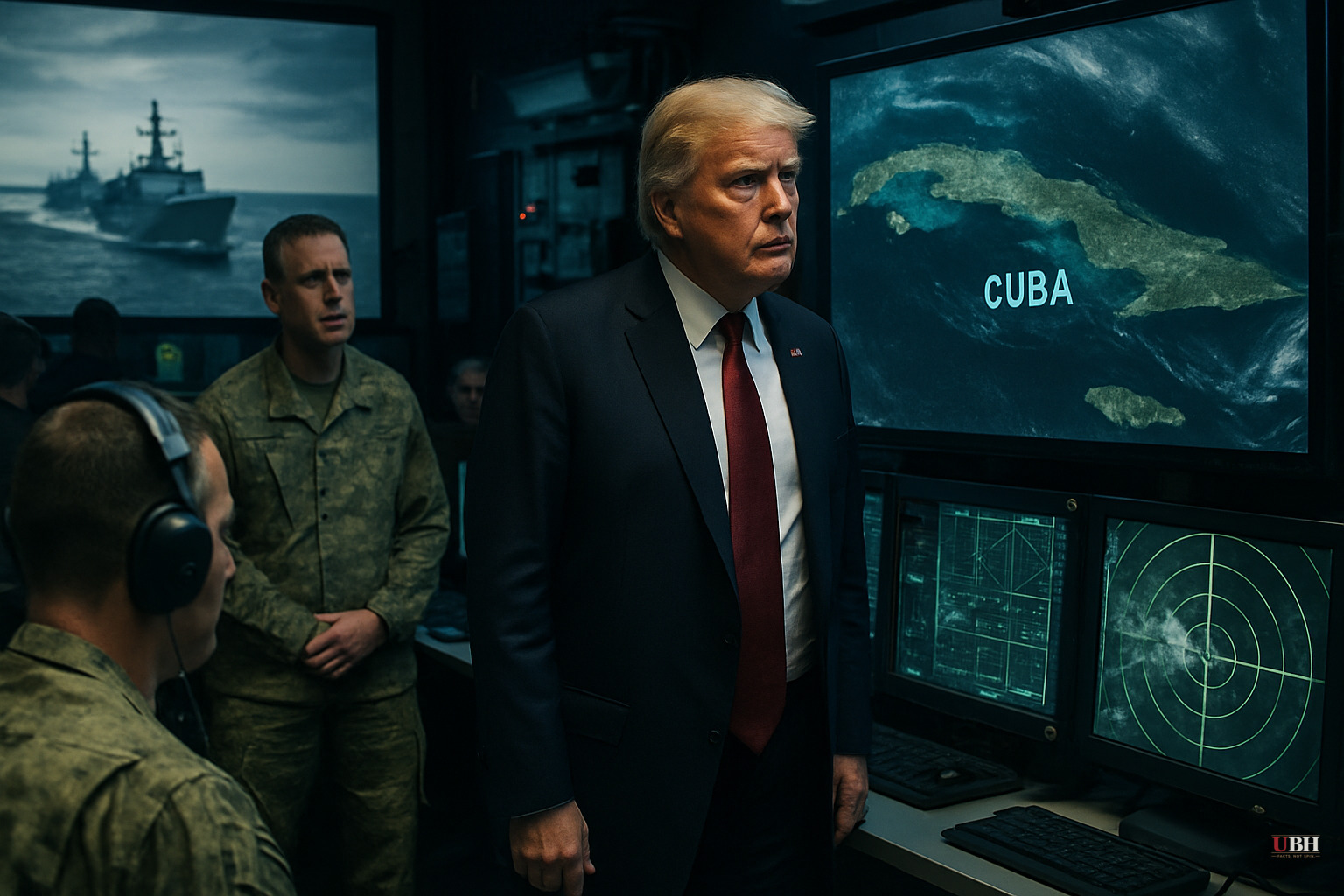
Trump on Record
Speaking to reporters during an Oval Office environmental event Thursday, President Trump said directly: "Other presidents have looked at this for 50, 60 years, doing something. And, it looks like I'll be the one that does it. So, I would be happy to do it." The sitting president told the press he's prepared to act militarily against a sovereign nation 90 miles off Florida.
Rubio's Diplomatic Caveat
Before boarding a flight to attend a NATO meeting in Sweden followed by a visit to India, Secretary of State Marco Rubio told reporters in Miami that a negotiated settlement remains Washington's preference "in theory" — then immediately undermined it. "I'm just being honest with you, you know, the likelihood of that happening, given who we're dealing with right now, is not high," he said, according to NPR. A Cabinet secretary publicly wrote off diplomacy while the White House is still technically pursuing it.
An Arrest on US Soil
Fox News reported that the sister of a powerful Cuban official was arrested over alleged ties to the Havana regime, on Rubio's orders. Details on charges remain thin, but the arrest signals Washington is moving beyond rhetoric into direct enforcement action inside US borders.
The Humanitarian Crisis
While Washington debates military options, Cubans are living through a humanitarian slow-motion collapse. BBC correspondent Will Grant reports that the island is enduring 20-hour daily blackouts. The US has imposed what BBC describes as a "near-total fuel blockade" that has disrupted essentially every aspect of Cuban life — food, medicine, transportation, communications.
Cuban resident Ana Rosa Romero told BBC she barely leaves her apartment "due to the uncertainty of what might happen."
Many Cubans were unaware the Raúl Castro indictment had happened when it was announced Wednesday, because the blackouts had knocked out communications. The population at the center of this crisis couldn't receive the news.
The Failed Back-Channel
NPR reported a significant detail: Top Trump officials — including Rubio, CIA Director John Ratcliffe, and other senior national security figures — have already met with Cuban officials multiple times in recent months to explore improved relations. Those talks went nowhere. The US side "came away unimpressed," according to NPR, leading to even more sanctions in the past week.
The administration didn't skip diplomacy. It tried it, got stonewalled, and is now done with it. Rubio put it bluntly: Cuba has gotten used to "buying time and waiting us out" — and he said they "won't be able to" this time.
A Defendant in Florida
The New York Times reported that one of the six defendants in the indictment is Luis González-Pardo, a Cuban pilot currently living in Florida. A Cuban regime operative named in a federal murder indictment is already on US soil. That's both a law enforcement opportunity and a significant diplomatic complication, though most outlets treated it as a footnote.
Cuba and Its Allies Respond
Cuban President Miguel Díaz-Canel called the charges "a political manoeuvre, devoid of any legal foundation," according to BBC. Cuban Foreign Minister Bruno Rodríguez went further, accusing Rubio of trying to "instigate a military aggression" and claiming the US is "ruthlessly and systematically" attacking Cuba.
Russia and China have both condemned the indictment of Raúl Castro, per BBC. Moscow, Beijing, and Havana pushing back in unison is exactly the threat architecture Rubio keeps citing as justification for treating Cuba as a national security problem.
What's Missing From Coverage
Left-leaning outlets (AP, NYT, NPR) are framing this primarily as Trump saber-rattling — the implication being bluster from a president known for theatrical threats. That framing ignores the failed back-channel talks, the arrest of a Cuban national on US soil, and the near-total economic siege already underway.
Fox News, meanwhile, led with the sister's arrest without providing adequate context on the humanitarian collapse inside Cuba — which is directly relevant to understanding what US pressure is actually doing on the ground.
Neither side is confronting the core question: if the US removes the Cuban government through military or economic force, what comes next? The administration has demanded leadership change, possible economic reforms, and the expulsion of Russian and Chinese intelligence assets — per BBC — but has provided no public plan for post-regime governance.
What Comes Next
The back-channel is dead, a US president has said on camera he'll "be the one that does it," an arrest has been made on American soil, and a fuel blockade is collapsing daily life in Cuba. The next move — military, economic, or otherwise — could come fast. Washington refuses to answer the most basic question: what happens the day after?
Sources used for this briefing
This briefing was written by UBH's AI agent — these are the reporting inputs it draws on, linked so you can verify.


