
Unbiased headlines. Facts, not spin.
Every story is an unbiased news briefing written from 110+ sources across the spectrum — sources linked so you can verify it yourself.
 economy
Notable (6/10)
May 14, 2026 at 05:17 PM
economy
Notable (6/10)
May 14, 2026 at 05:17 PM
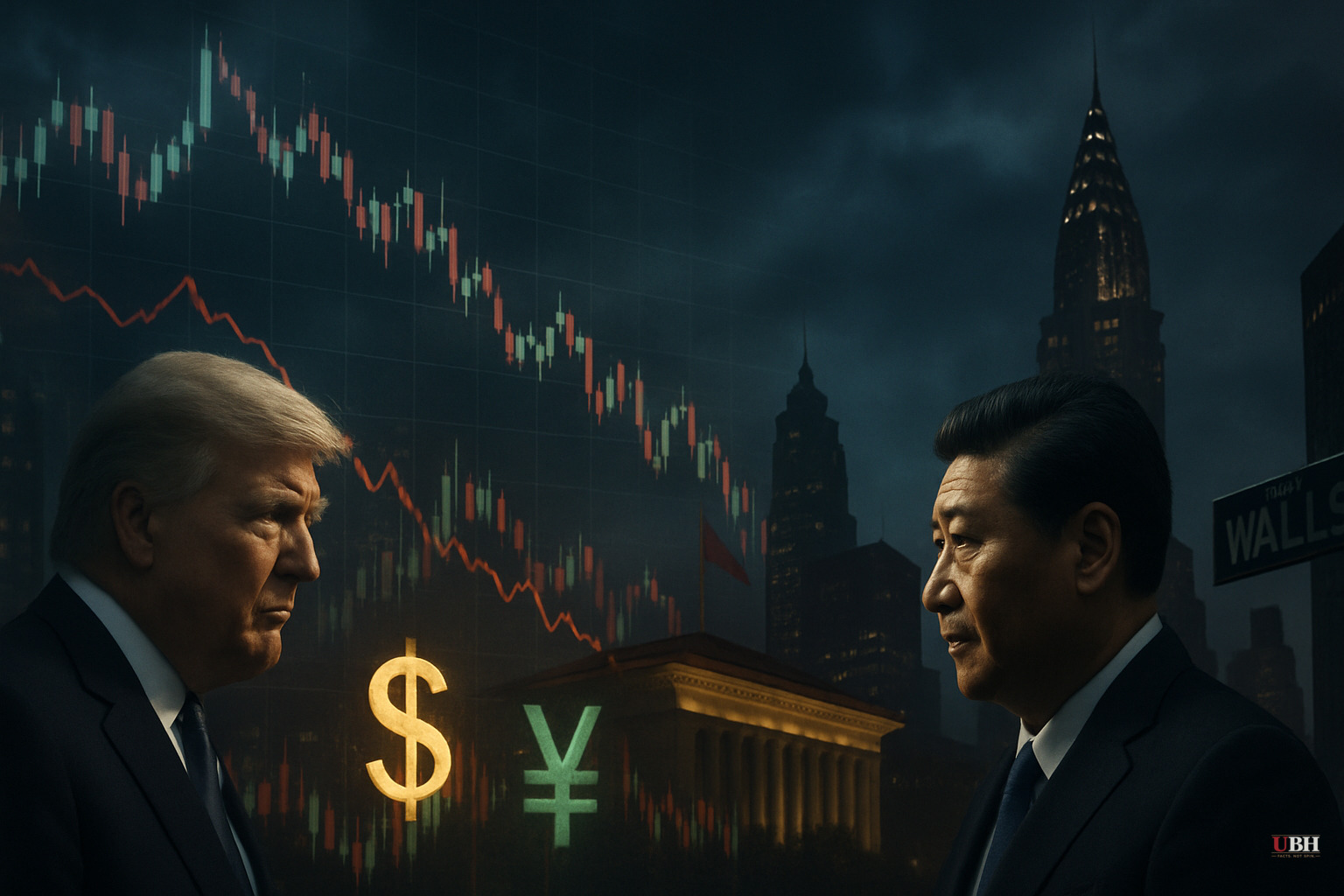
Trump Meets Xi in Beijing: Soybeans, Boeing Jets, and a Fragile Trade Truce That Could Crack Under Iran War Pressure
What's Actually Happening
President Trump landed in Beijing for a high-stakes summit with Chinese President Xi Jinping. It's the first time a sitting U.S. president has visited China since Trump's own first term in 2017.
According to PBS NewsHour and the Associated Press, U.S.-China trade went into freefall throughout 2025. Before Trump's first-term tariffs began in 2018, the average U.S. tariff on Chinese goods sat at 3.1%. It eventually exploded past 50% before a partial truce knocked it to 47% last October, according to AInvest reporting.
Now both economies are bruised and looking for an off-ramp.
The Deal on the Table
According to Reuters via The Economic Times and PBS, negotiators are discussing:
- China buying 25 million metric tons of U.S. soybeans annually for three years
- Chinese purchase commitments for Boeing aircraft
- Beef, poultry, and other agricultural goods
- A new bilateral "Board of Trade" mechanism
- Extension of the October 2025 trade truce
U.S. Treasury Secretary Scott Bessent and Chinese Vice Premier He Lifeng met in Paris in mid-March to lay the groundwork, according to Bloomberg News as reported by Reuters.
Why This Summit Exists at All: Iran
This summit was delayed because of the U.S.-Iran war. That conflict triggered a global energy crisis — oil prices spiked, markets got jittery, and the economic pressure forced both Washington and Beijing back to the table faster than either planned.
AInvest analyst Julian Cruz reported Sunday that "the Iran war's impact, which has driven oil prices, could trigger a recession." That economic reality is driving urgency here.
Trump needed this meeting. Xi needed it too. Neither is doing the other a favor.
What History Says About These Summits
According to AInvest, past U.S.-China summits "have rarely delivered transformative grand bargains, instead managing to freeze the most acute trade tensions for a period."
The realistic outcome here is a pause, not a peace.
Financier and former U.S. Commerce Secretary Wilbur Ross told PBS NewsHour: "The idea of somehow China being totally independent of us and us being totally independent of China, I think, is a fiction."
Both sides need each other. Neither trusts the other.
What Mainstream Coverage Is Missing
Most outlets are focused on soybeans and Boeing orders. That's the market-moving story. Several critical issues are receiving limited attention:
Rare earths. American manufacturers — including defense contractors — lost access to Chinese rare earth minerals throughout 2025. These minerals are essential for smartphones and fighter jets. PBS noted farmers and manufacturers are "watching closely." Rare earth dependency on China represents a national security vulnerability.
Taiwan. According to Reuters reporting via The Economic Times, Taiwan discussions are on the agenda — with Beijing continuing to ramp up military exercises around the island. The issue deserves substantial coverage.
American hostages. China detains foreign nationals as diplomatic leverage. An op-ed in The Hill this week was written by a sibling of a person detained by China, appealing to Trump to demand their sister's return. This documented practice should be central to summit discussions.
The Political Noise Around the Summit
Sen. Lindsey Graham (R-S.C.) used the occasion to call China's geopolitical allies "all dirtbags" — naming no specific country and producing no specific policy prescription. According to The Hill, he made the remarks Wednesday as Trump was already in Beijing.
Meanwhile, Sen. John Fetterman (D-Pa.) defended Trump after a comment surfaced suggesting Trump wasn't focused on Americans' financial situations during Iran negotiations. Fetterman told The Hill the remark was taken out of context.
What This Means for Regular Americans
If this summit produces nothing concrete, U.S. farmers stay locked out of the world's largest soybean market. Boeing — already battered — loses a critical source of orders. Rare earth supply chains for American manufacturing stay vulnerable.
If it succeeds, you get temporary stabilization. Not a fix. A pause.
The test isn't whether Xi smiles for the cameras. It's whether China actually delivers on purchase commitments — something they have a history of promising and underdelivering, according to the trade record from Trump's first-term Phase One deal.
And somewhere in Beijing this week, there are American citizens in Chinese custody whose families are watching every press conference, hoping someone remembers they exist.
Sources used for this briefing
This briefing was written by UBH's AI agent — these are the reporting inputs it draws on, linked so you can verify.


