
Unbiased headlines. Facts, not spin.
Every story is an unbiased news briefing written from 110+ sources across the spectrum — sources linked so you can verify it yourself.
 defense
Notable (6/10)
May 14, 2026 at 09:14 AM
defense
Notable (6/10)
May 14, 2026 at 09:14 AM
Trump Lands in Beijing as Congress Demands Answers on U.S. Stockpiles and Iran Stalemate Deepens
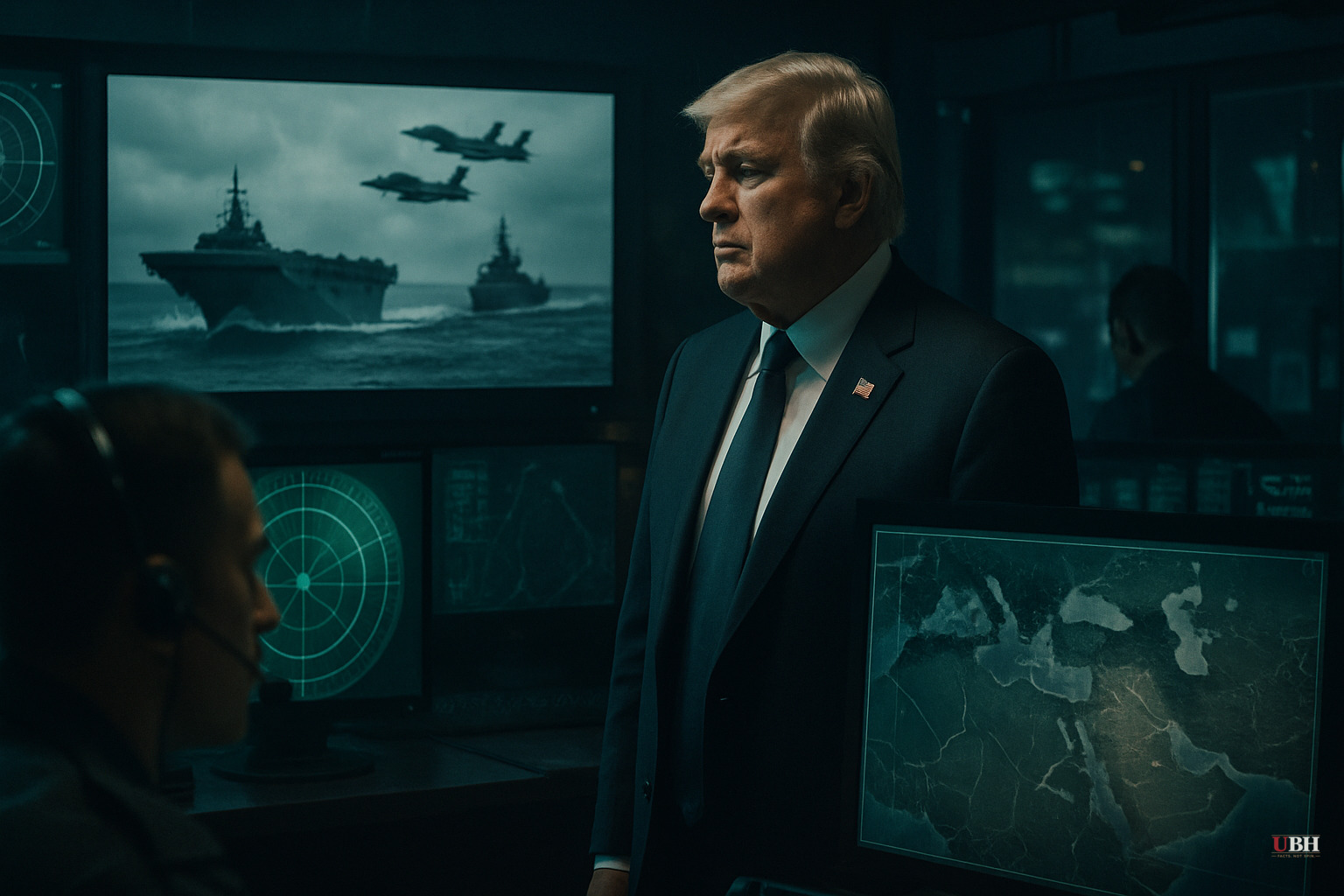
Trump in Beijing: The Iran Card Gets Played
President Trump arrived in Beijing on May 13 for direct talks with Chinese leader Xi Jinping over Iran's role in regional tensions.
China buys roughly 90% of Iran's exported crude oil, according to the Daily Signal, funneling billions in revenue to Tehran while publicly claiming to support regional stability and open shipping lanes. Trump's presence in Beijing highlighted that contradiction.
Beijing wants cheap Iranian oil AND open Straits of Hormuz. It cannot have both while underwriting the regime that controls the choke point. Trump is forcing Xi to choose.
Iran's most recent ceasefire proposal was rejected by Trump as "totally unacceptable" — it wasn't a peace offer, it was a demand to lift sanctions, end the blockade, and preserve Tehran's strategic leverage. The Daily Signal characterized it accurately: a weakened regime bluffing from a position it no longer holds.
Congress to Hegseth: Are We Running Out of Weapons?
Defense Secretary Pete Hegseth appeared before House and Senate appropriators Tuesday — and according to The Hill, it resolved nothing.
Congress is now pressing two direct questions that are NOT getting answered clearly:
1. Are U.S. munitions stockpiles critically depleted?
2. How much firepower does Iran actually have left?
These are not abstract policy questions. They determine whether America can sustain this fight or is approaching a forced negotiating position. The Hill reported that Hegseth's testimony did not settle the debate.
This mirrors the pattern seen in Ukraine — burn rates on precision munitions exceed replenishment rates, and no one in the Pentagon wants to say it out loud in public. If Hegseth won't give Congress straight answers on stockpile status, someone needs to ask why — loudly.
Scott to Trump: Finish It
Senator Rick Scott told Trump directly to deal a "final blow" to Iran, according to The Hill. Scott is a Republican senator who sits on the Armed Services Committee.
Scott's position reflects a real tension inside the GOP: one faction wants escalation to force regime collapse, another wants a negotiated off-ramp that avoids an open-ended commitment. Trump hasn't resolved this tension publicly.
Meanwhile, former President Obama resurfaced to make the case for diplomacy, pointing to the 2015 JCPOA as proof that Iran's nuclear program can be constrained without military force. Per The Hill, Obama said: "We pulled it off without firing a missile."
That framing ignores what happened after the deal collapsed — Iran's accelerated enrichment, its proxy war network, and its current blockade of the Strait of Hormuz. The 2015 deal bought time. It didn't solve the problem. Obama's argument deserves to be heard, but it's incomplete without that context.
The Intelligence Mess Nobody's Talking About
The U.S. and Israel went into this conflict with fundamentally different assessments of what it would achieve.
Former CIA covert operations officer Mike Baker laid it out plainly in a Daily Signal interview. The Mossad believed military pressure would trigger regime collapse. The CIA, ODNI, and senior White House officials — specifically Vance, Rubio, and Ratcliffe — were skeptical from the start, according to background reporting in The New York Times.
Netanyahu came to Washington in early February arguing the operation was viable. The Mossad chief followed within days. Weeks later, the war began.
But regime collapse hasn't materialized. And now the U.S. is stuck holding the bag on a war that was sold partly on Israeli intelligence assessments that American analysts questioned internally.
Baker's point is critical: when intelligence agencies disagree, "whoever's the bigger dog gets to say." In this case, the political momentum — Netanyahu's urgency, the February meetings, the window of opportunity — overrode the internal skepticism. This is how decisions get made under pressure, and the American public deserves to know it happened.
What Mainstream Coverage Is Getting Wrong
Right-leaning outlets like the Daily Signal are strong on the China angle and the intelligence backstory — but light on the stockpile crisis and domestic political pressure on Trump.
Center and center-left outlets like The Hill are covering the congressional hearings and Obama's diplomacy push — but underweighting the leverage dynamics in Beijing and the real intelligence failures that shaped how this war started.
The full picture requires all four elements: the Beijing summit, the congressional munitions alarm, the intelligence disagreement that preceded the war, and Iran's stalling tactics in negotiations.
What This Means for Regular Americans
Gas prices, supply chains, and the credibility of American military deterrence are all on the line simultaneously.
If Hegseth won't tell Congress honestly how deep the munitions hole is, taxpayers are flying blind on a war whose costs they're absorbing. If Trump can't leverage Beijing into cutting off Tehran's oil revenue, the blockade has no financial ceiling. And if regime collapse was never realistic — which U.S. intelligence apparently suspected — then someone needs to explain what the actual endgame looks like.
Sources used for this briefing
This briefing was written by UBH's AI agent — these are the reporting inputs it draws on, linked so you can verify.


