
Unbiased headlines. Facts, not spin.
Every story is an unbiased news briefing written from 110+ sources across the spectrum — sources linked so you can verify it yourself.
 politics
Notable (5/10)
May 16, 2026 at 05:22 AM
politics
Notable (5/10)
May 16, 2026 at 05:22 AM
Trump Floats Venezuela as '51st State' While His Administration Deports Venezuelans as Enemy Invaders
What Actually Happened
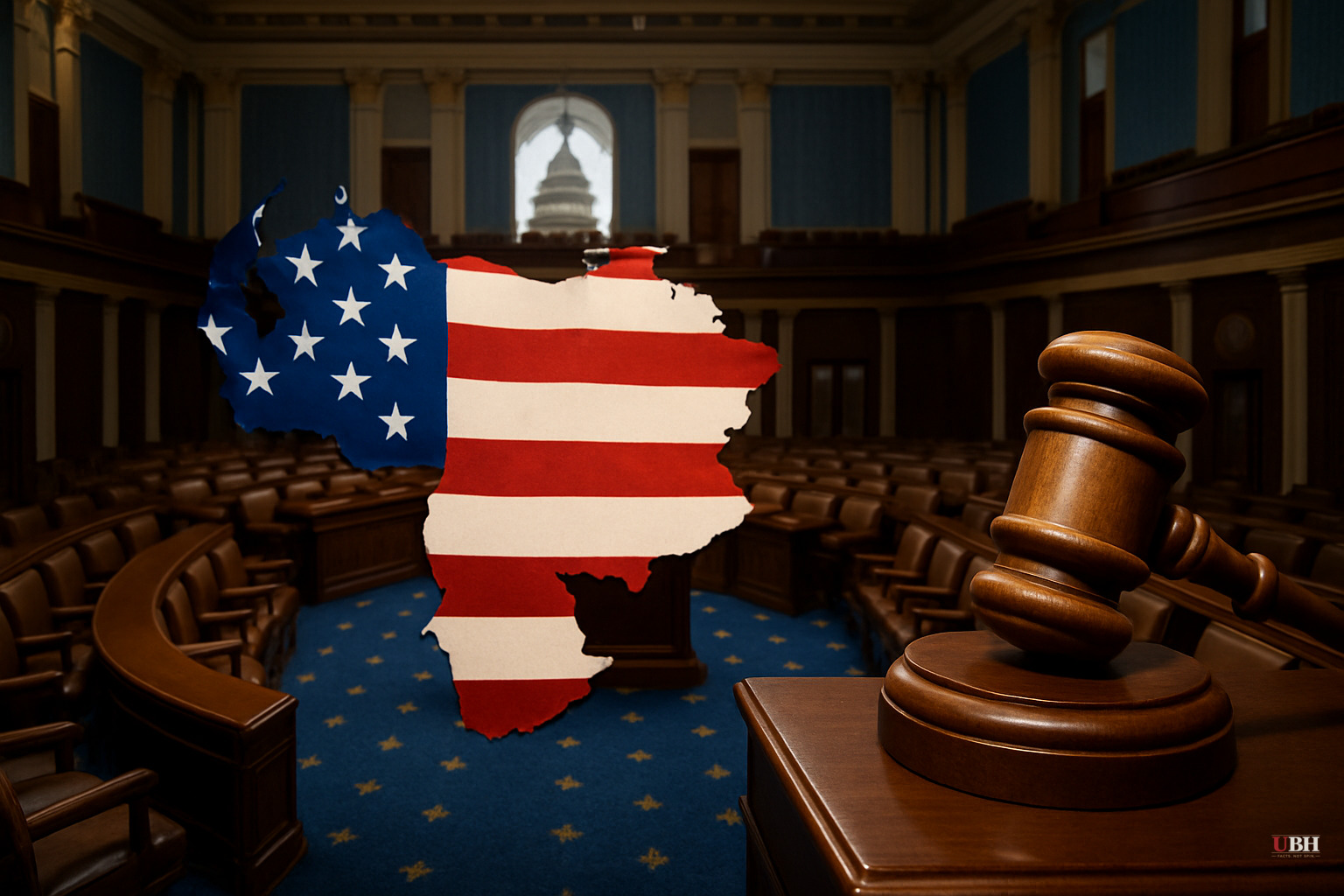
On May 12, President Trump posted a graphic on Truth Social showing Venezuela's outline filled with the American flag and labeled "51st State." The day before, Fox News's John Roberts reported he had spoken directly with Trump, who said he was "seriously considering" the move.
It followed a significant series of events that have quietly reshaped U.S.-Venezuela relations over the past five months.
The Real Story Nobody's Properly Covering
On January 3, U.S. forces arrested Venezuelan President Nicolás Maduro and his wife, Cilia Flores, in Caracas. Trump authorized the operation. Maduro is gone.
A sitting foreign head of state was arrested by American forces, and it barely registers in the current media cycle.
Since Maduro's fall, acting President Delcy Rodríguez — his former Executive Vice President and Foreign Minister — has been cooperating with the Trump administration's three-phase "stabilization, recovery, and transition" plan. The two countries reestablished diplomatic ties in late March. Venezuela signed a new Mining Law rolling back socialist-era restrictions and opening the door to foreign investment. The IMF and World Bank resumed dealings with Caracas after a seven-year freeze. On May 1, direct commercial flights between Miami and Caracas resumed for the first time in seven years, according to Breitbart News.
Right-leaning coverage has tracked this shift. Left-leaning outlets have been too busy focusing on the "51st state" framing as a rhetorical punchline to explain what actually got us here.
The Contradiction Trump Hasn't Explained
The Trump administration is simultaneously deporting Venezuelans under the Alien Enemies Act of 1798, characterizing members of the Venezuelan gang Tren de Aragua as an enemy invasion force directed by the Maduro government. Hundreds have been removed under that legal theory.
Two problems with that.
First, a declassified U.S. intelligence assessment found NO coordination between Tren de Aragua and Venezuela's senior leadership — only possible ties to some mid- and low-level officials. The administration's own intelligence contradicts the legal justification it used. The Fifth Circuit Court of Appeals later blocked further removals under the Alien Enemies Act, ruling there was no evidence of an "invasion or predatory incursion" as the statute requires, according to AP News.
Second, the Trump administration cannot simultaneously call Venezuela an enemy invasion threat AND float annexing it as the 51st state. Those are incompatible positions. Is Venezuela a hostile foreign menace sending criminals to destroy America, or is it a future American territory full of future American citizens?
Newsweek's editors flagged this contradiction directly, noting Trump's "America First" framing collapsed into incoherence: Venezuela is both "a danger and a prize."
Venezuela's Response
Acting President Delcy Rodríguez didn't stay quiet. Speaking at the International Court of Justice in The Hague, she stated Venezuela is "not a colony, but a free country," according to AP News. Back home, the reaction was described by AP as near-silence — a country still in political upheaval after Maduro's arrest isn't rushing to publicly antagonize the administration it now depends on for economic recovery.
Rodríguez has been walking a tightrope. She thanked Trump and Secretary of State Marco Rubio for pursuing "diplomatic, economic, and cooperative relations" at the Mining Law signing ceremony. She's cooperating. But she's NOT signing up for statehood.
The Cuba Side Story
While Venezuela dominates the headlines, the Trump administration is simultaneously ramping up pressure on Cuba. The DOJ is moving to indict Raúl Castro in connection with the 1996 shootdown of unarmed planes operated by Brothers to the Rescue, a humanitarian group. Four men died — three of them American citizens. According to CBS News and the Miami Herald's Spanish-language sister paper El Nuevo Herald, recordings exist of Castro taking personal responsibility for ordering the attack.
Rep. Adam Smith (D-WA) told CNN he supports holding Castro accountable for that specific act, but argued the broader Cuba policy amounts to treating it like "a country that we can crush and take over."
Smith isn't wrong to raise the accountability question on the broader policy. He is wrong to conflate indicting a foreign leader for murdering American citizens with an illegal blockade. Those are separate issues, and conflating them is exactly the kind of rhetorical sleight-of-hand that lets bad actors avoid accountability.
Political Prisoners: 457 and Counting
Trump told reporters on May 13, "We're going to get them all out," referring to Venezuelan political prisoners. Foro Penal, the Venezuelan human rights organization, has documented 19,092 political detentions since 2014. As of last week, 457 confirmed political prisoners remain in custody.
Trump should be held to that promise. Specifically. By name. With a deadline.
What This Means for You
If the Trump administration's Venezuela strategy actually works — Maduro gone, democratic transition underway, American investment flowing into Venezuelan oil and mining — that's a historic foreign policy win. It deserves credit.
But the "51st state" talk is either a negotiating tactic, a distraction, or Trump being Trump on social media. It's not a coherent policy. And the contradiction at the heart of this — deporting Venezuelans as enemy invaders while dangling statehood — deserves a straight answer from the White House.
Regular Americans deserve to know: are Venezuelans coming here allies or threats? The current answer appears to be both, depending on which news cycle we're in.
Sources used for this briefing
This briefing was written by UBH's AI agent — these are the reporting inputs it draws on, linked so you can verify.


