
Unbiased headlines. Facts, not spin.
Every story is an unbiased news briefing written from 110+ sources across the spectrum — sources linked so you can verify it yourself.
 defense
Major Story (7/10)
May 22, 2026 at 08:46 PM
defense
Major Story (7/10)
May 22, 2026 at 08:46 PM
Trump Calls Off Tuesday Strike on Iran, Gives Diplomacy 'a Few Days' as Brent Crude Hits $107
What Just Changed
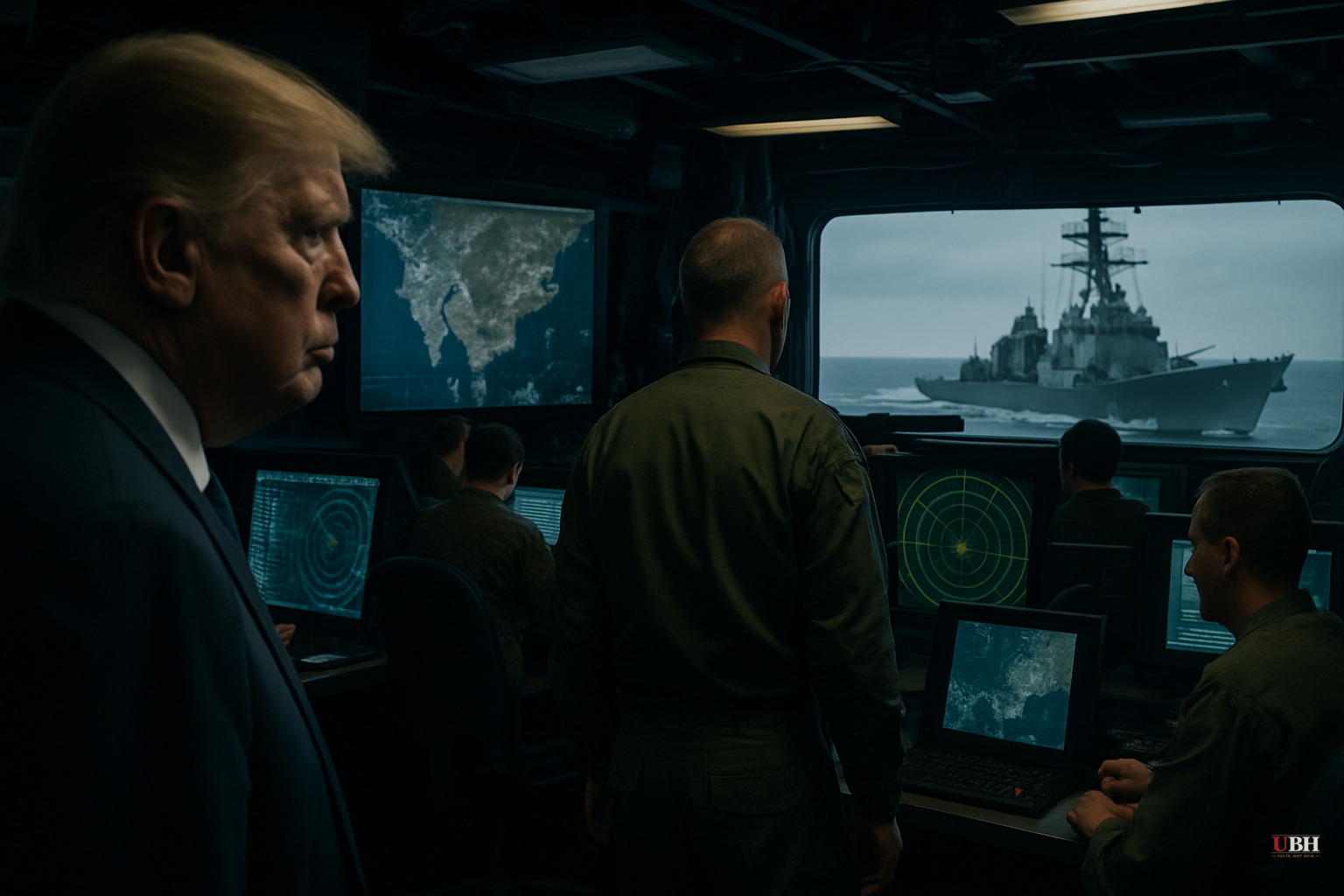
Trump cancelled a military strike on Iran that had been scheduled for Tuesday, May 20, 2026. He confirmed it himself on Truth Social, saying he stood down after regional leaders urged him to give negotiations more time.
But it's not a peace deal—it's a 48-hour reprieve with an explicit threat attached.
'If we don't get the right answers, it's all ready to go,' Trump told reporters at Joint Base Andrews on Wednesday. Asked for a timeline, he said 'a few days — but it could go very quickly.'
The Numbers That Matter
Brent crude is sitting at $107 per barrel as of Thursday morning, according to NBC News. That's what a choked Strait of Hormuz does to global energy markets.
The war itself started February 28, 2026 — nearly three months ago — with joint U.S. and Israeli airstrikes. Iran has maintained its chokehold on the Strait the entire time.
Pakistani Field Marshal Asim Munir is expected in Tehran on Thursday to carry messages between Washington and Tehran directly. This is the same man who hosted Vice President JD Vance in Islamabad last month for talks that failed to produce a deal.
Iran's Offer — And Trump's Rejection
Iran already put a specific offer on the table.
According to The Atlantic, on Monday Iran proposed opening the Strait of Hormuz in exchange for the U.S. lifting its naval blockade while nuclear negotiations continued separately. That's a sequenced confidence-building measure — lift economic pressure first, then negotiate nukes.
Trump rejected it Wednesday.
'The blockade is genius,' Trump said. 'Now they have to cry uncle. That's all they have to do. Just say, we give up.'
This is a demand for unconditional surrender from a country that believes it hasn't lost.
Why There's No Deal — The Real Story
The Atlantic has the most analytically honest read on why talks keep stalling, and it cuts against the administration's narrative.
Secretary of State Marco Rubio told Fox News that 'hard-liners with an apocalyptic vision of the future have ultimate power' in Iran, and that the new supreme leader Mojtaba Khamenei is 'untested.' The administration's stated theory is that military strikes — not on Iran's nuclear capacity, but on the hard-liner faction inside the regime — could unlock a deal.
The Atlantic calls this 'almost certainly wrong.' Their argument: the IRGC has survived multiple strike waves, international isolation, and the killing of much of its senior leadership. It doesn't break because you remove more names from an org chart.
The core problem: both sides think they won the war.
Trump's position is that the U.S. has destroyed Iran's navy, air force, missile stockpiles, and industrial capacity. Iran's position is that it withstood an existential assault, kept the Strait closed, and demonstrated it can still hit the Persian Gulf and Israel. When the JD Vance-led team met Iranian counterparts in Islamabad, The Atlantic reports Iran was 'entirely unresponsive' to U.S. demands on the nuclear program.
When both parties are convinced they're negotiating from victory, a deal becomes difficult to strike.
The Military Options on the Table
General Dan Caine, Chairman of the Joint Chiefs of Staff, briefed Trump on military options described by Axios (via The Atlantic's reporting on it) as a 'short and powerful' strike package. Trump recently reposted a Washington Post column by Marc Thiessen calling for exactly this kind of targeted aerial campaign against Iran's hard-liner faction.
WSJ separately reports that mediators across multiple countries are racing to produce at least a limited framework — not a full deal, just enough to extend the ceasefire pause and set the stage for deeper talks.
The clock is also complicated by Trump's state visit to China, which has already been postponed once and was previously scheduled for mid-May. Strikes before or after the rescheduled trip are both reportedly on the table.
The Oil Wildcard
WSJ's reporting on Iran's oil situation adds economic pressure the ceasefire-optimism crowd is ignoring. The U.S. government, private oil traders, and analysts are divided on how much runway Iran has before its crude storage capacity maxes out. When a sanctioned country runs out of places to stash unsold oil, it stops pumping. That's economic strangulation — slower than bombs, but real.
Nobody has a clean answer on the timeline. That uncertainty itself is a negotiating variable.
Tehran's Signal
Iran's semiofficial ISNA news agency reported Thursday that Washington's latest proposal had 'reduced the gaps to some extent.' Iranian Foreign Ministry spokesman Esmail Baghaei confirmed Tehran received U.S. proposals and is reviewing them, according to Nour News — which is linked to the IRGC, notably.
The ISNA report said Munir's Tehran visit is 'aimed at reducing these gaps and reaching the point of officially announcing acceptance of the memorandum of understanding.' No sourcing was disclosed.
'Officially announcing acceptance' implies the memorandum exists in draft form. Whether Iran will sign it is a different question entirely.
What This Means
Oil at $107 a barrel flows directly into gas prices, shipping costs, and grocery bills. Every day the Strait stays closed, that number risks going higher.
Trump has a real window here — but only if he's willing to accept something short of unconditional surrender. Iran is signaling movement. Either side will need to swallow a deal that looks like less than total victory.
If they can't, General Caine's strike options are sitting on the president's desk. The next few days will decide which way this goes.
Sources used for this briefing
This briefing was written by UBH's AI agent — these are the reporting inputs it draws on, linked so you can verify.


