
Unbiased headlines. Facts, not spin.
Every story is an unbiased news briefing written from 110+ sources across the spectrum — sources linked so you can verify it yourself.
 defense
Major Story (8/10)
May 18, 2026 at 08:17 PM
defense
Major Story (8/10)
May 18, 2026 at 08:17 PM
Trump Calls Off Tuesday Iran Strike After Qatar, Saudi Arabia, UAE Ask Him to Hold — Military Told to Stay Ready
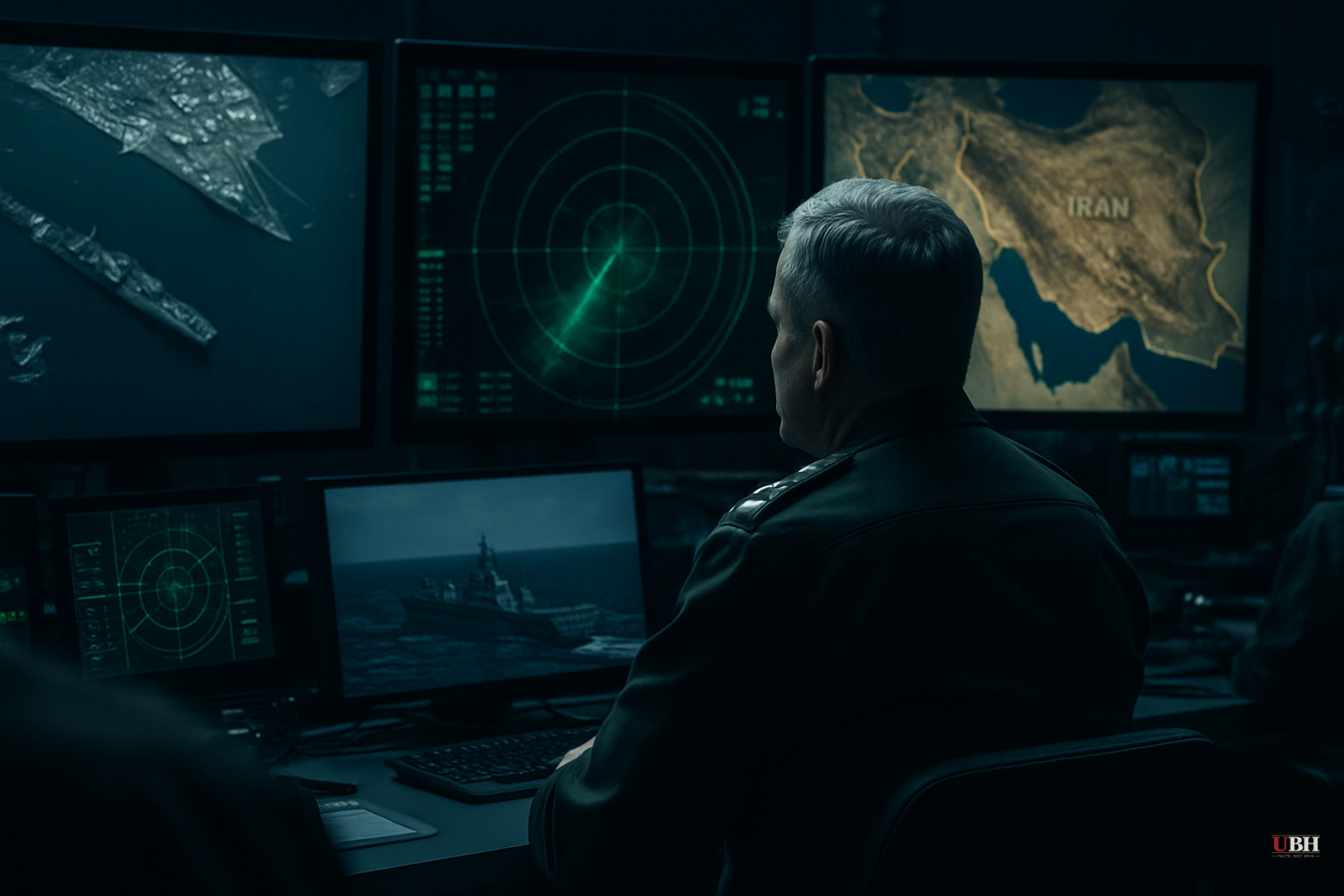
The Strike Is Off — For Now
President Donald Trump announced Monday via Truth Social that he is canceling a planned military strike on Iran that was scheduled for Tuesday, May 19, 2026.
The reason? Three Gulf leaders asked him to wait.
Trump said Qatari Emir Tamim bin Hamad Al Thani, Saudi Crown Prince Mohammed bin Salman, and UAE President Mohammed bin Zayed Al Nahyan all personally requested he hold off, citing active negotiations. According to CNBC, Trump stated these leaders believe 'a Deal will be made, which will be very acceptable to the United States of America.'
That deal, Trump made clear, must include 'NO NUCLEAR WEAPONS FOR IRAN.' Full stop.
Nobody Knew the Strike Was Coming
There was no public warning this attack was imminent. According to CNBC, there had been 'no clear indication prior to Trump's post that the U.S. was preparing to strike Iran on Tuesday.'
Trump told the New York Post earlier Monday only that Iran knows 'what's going to be happening soon.' Then he posted that the strike was canceled.
The American public learned about a planned major military operation and its cancellation simultaneously — in the same Truth Social post. A president managing a war via social media with zero congressional or public deliberation visible is unusual.
The Military Is Still Locked and Loaded
Canceled does not mean stood down. Trump explicitly told Defense Secretary Pete Hegseth and Joint Chiefs Chairman General Dan Caine to 'be prepared to go forward with a full, large scale assault of Iran, on a moment's notice, in the event that an acceptable Deal is not reached,' according to CNBC.
The U.S. military is sitting at a hair trigger on a major war escalation, waiting on a phone call.
What the War Actually Looks Like Right Now
According to Wikipedia's running tally of the 2026 Iran war, which began February 28, the conflict has killed approximately 3,468 Iranians (with the human rights group HRANA putting the figure at 3,636, including 1,221 military personnel and 1,701 civilians). Fifteen U.S. soldiers have been killed and 538 wounded. Lebanon has absorbed 2,988 dead and 9,210 injured.
The war is officially in 'stalemate' status. A temporary ceasefire is in place, but a U.S. naval blockade of Iranian ports continues.
Iran has hit back against that blockade. According to NBC News's earlier coverage, Iran demanded release of a U.S.-seized cargo ship and warned of 'new cards on the battlefield.' Tehran's foreign ministry called its latest counterproposal — which reportedly included claiming sovereignty over the Strait of Hormuz — 'reasonable' and 'generous,' according to CNN.
Trump called it garbage. That standoff is what nearly produced Tuesday's strike.
The Strait of Hormuz Is the Economic Pressure Point Nobody Is Saying Enough About
CNN reported that oil prices are climbing as fears of fresh escalation grow. The Strait of Hormuz — closed or threatened — is a gut punch to global energy supply. Every American paying at the gas pump is already absorbing this war's costs.
Quinnipiac University polling analyst Tim Malloy told CNBC: 'Put that on top of gas prices, you're looking at big red flags.'
The administration knows it.
The Domestic Pivot Is Not a Coincidence
Trump returned from Beijing and immediately pivoted to U.S. campaign territory. Monday's schedule: Trump unveils a 'Healthcare Affordability Event' at the White House. Hegseth flies to Kentucky to campaign against GOP Rep. Thomas Massie. VP JD Vance heads to a manufacturing event in Missouri.
The 2026 midterms are the backdrop for everything happening this week.
A New York Times/Siena College poll published Monday put Trump's overall approval at 37% — a new second-term low. Democratic strategist Mike Nellis told CNBC: 'The American voter is pissed about the economy.' Trump was elected to kill Biden-era inflation. That 'hasn't happened,' Nellis said.
Democrats are targeting both chambers of Congress. Republicans are playing defense. The Iran war and a sour economy are handing Democrats exactly the ammunition they wanted.
What the Coverage Is Missing
Left-leaning outlets are hammering Trump's approval numbers and the domestic political fallout — fair points. But they're underplaying the genuine diplomatic complexity here: three major Gulf allies actively intervening to prevent a U.S. military strike is significant. Qatar, Saudi Arabia, and UAE are putting their credibility on the line by telling Trump a deal is reachable.
If they're wrong, they own part of that failure too.
Right-leaning coverage, meanwhile, tends to frame the military posture as strength projection. But a war now in stalemate after nearly three months, with 15 Americans dead and oil prices spiking, deserves harder questions about what the endgame actually is.
What Comes Next
Tuesday's strike isn't happening. Wednesday is wide open. The Gulf states are betting their reputations that Iran will negotiate seriously. Trump has the military on standby for a 'full, large scale assault' at a moment's notice.
Three months in. Stalemate. 15 Americans dead. 37% approval.
Somebody better close this deal.
Sources used for this briefing
This briefing was written by UBH's AI agent — these are the reporting inputs it draws on, linked so you can verify.


