
Unbiased headlines. Facts, not spin.
Every story is an unbiased news briefing written from 110+ sources across the spectrum — sources linked so you can verify it yourself.
 finance
Major Story (7/10)
May 19, 2026 at 07:46 AM
finance
Major Story (7/10)
May 19, 2026 at 07:46 AM
Trump Calls Off Iran Strike, South Korea's Kospi Craters 3.5%, Japan Posts Surprise GDP Beat — But War Clouds Are Darkening
Trump Blinks on Iran Strike — For Now
President Donald Trump announced Tuesday he is calling off a military strike against Iran that had been planned for that same day. According to AP News, Trump said the decision came at the request of Gulf allies and to allow for what he called "serious negotiations."
Brent crude, which had been trading near $110 a barrel, dipped $1.99 to $110.11 following the announcement. US crude fell $1.36 to $103.02. Brent was sitting around $70 before the Iran war started—a 57% price spike that is still baked into every gallon of gas, every shipping route, every corporate earnings forecast on earth.
A postponed strike is not a resolved war. The Strait of Hormuz remains effectively closed to oil tankers. That hasn't changed.
South Korea Takes the Hardest Hit
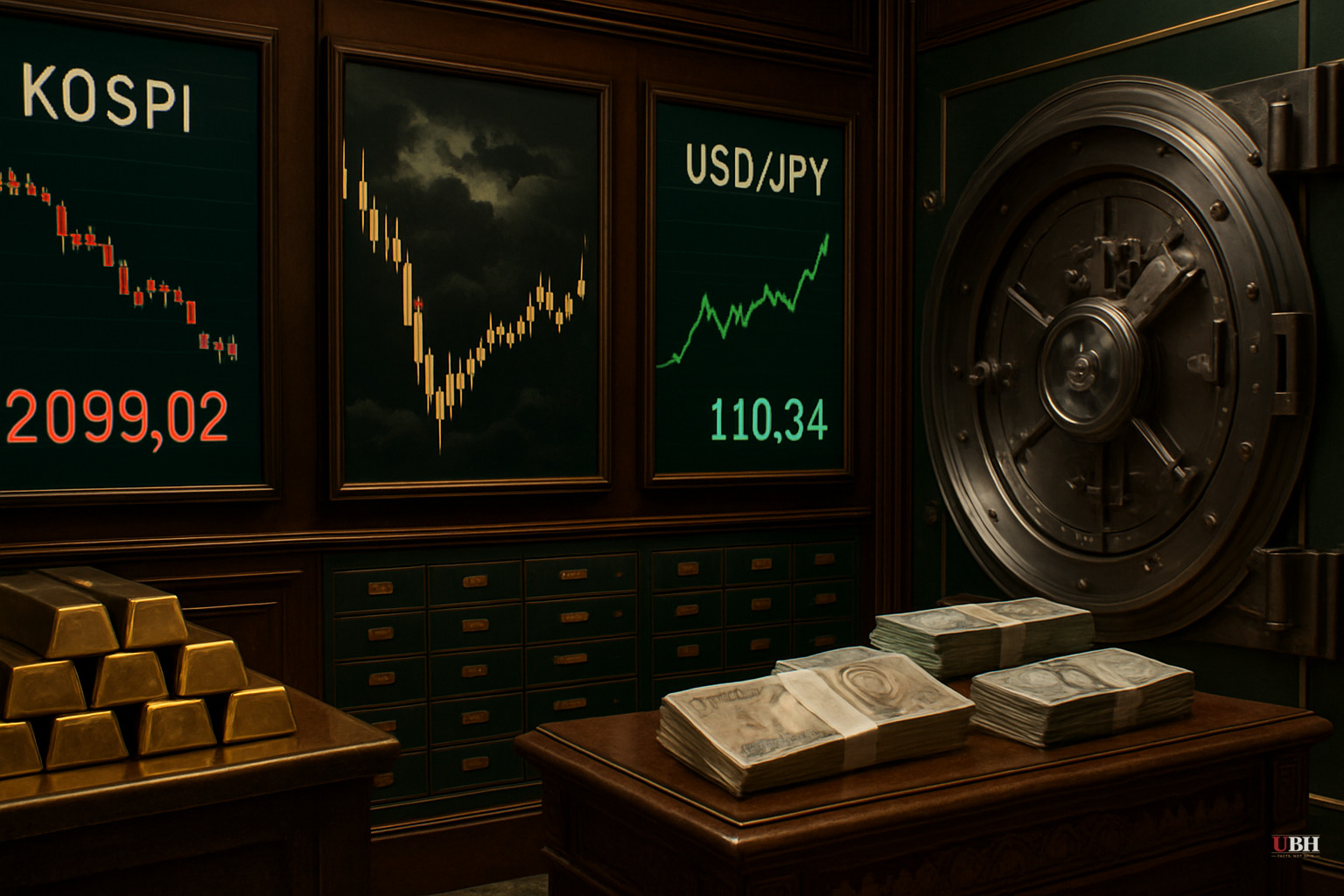
South Korea's Kospi sank more than 3.5% by midday Tuesday, briefly touching a 4% drop, according to Free Press Journal and AP News. That's a serious single-session loss.
Samsung Electronics dropped 3.8%. SK Hynix fell 4%. Both tracked overnight losses in US tech stocks, with the Nasdaq finishing down 0.5% Monday at 26,090.73.
South Korea runs on exports—semiconductors especially. When the global economy gets rattled by oil shocks and war uncertainty simultaneously, Korean chipmakers absorb the blow fast. There's no cushion.
Japan Beats GDP Estimates — But Don't Pop Champagne
Japan's Cabinet Office reported Tuesday that the economy grew at an annualized rate of 2.1% in Q1 2026, according to CNBC. Analysts polled by Reuters had expected 1.7%. The prior quarter came in at 1.3%. Quarter-on-quarter, growth hit 0.5% versus a 0.4% estimate.
Solid numbers. Better-than-expected consumption and a strong exports push—including a 29.3% surge in semiconductor equipment shipments—drove the outperformance.
But Norihiro Yamaguchi, lead Japan economist at Oxford Economics, told CNBC directly: "Though Japan's GDP grew healthily by 0.5% in Q1, we think the Q1 GDP is already in the rear-view mirror and expect the economy to feel the strains from high energy costs ahead."
Q1 data ends in March. The Iran war started at the end of February. The full economic damage hasn't even hit the data yet.
The Bank of Japan already slashed its growth forecast for fiscal 2026 to 0.5% from 1% and raised its core inflation outlook to 2.8% from 1.9%. Japan imports nearly all of its oil. Much of it used to flow through the Strait of Hormuz. That supply chain is now a war zone.
The Nikkei fell 0.64% after the GDP release. Markets aren't impressed by backward-looking data when the forward picture looks this ugly.
Singapore Bucks the Trend
Bloomberg reported that Singapore stocks reclaimed a record high Tuesday, driven by haven demand as investors sought stability amid Iran war volatility. Southeast Asian markets with less direct energy exposure are catching safe-harbor flows. Singapore doesn't run its economy through the Strait of Hormuz.
What the Numbers Actually Show
Most outlets framed the day as "mixed markets" and moved on.
The broader picture is a slow-motion economic pressure campaign that the Q1 GDP numbers are actively hiding. Energy costs at current levels—Brent at $110, more than 50% above pre-war prices—will start showing up in Q2 data. Corporate margins shrink. Consumer spending pulls back. Central banks face an impossible choice: fight inflation caused by an oil shock, or support growth that's about to decelerate.
The Bank of Japan said at its May 7 meeting that higher crude prices "are expected to crimp corporate profits and real household incomes."
Reuters reported Monday that Tokyo is likely to issue fresh debt for an emergency supplemental budget to cushion the blow. More deficit spending. More debt. Paid for by Japanese taxpayers who are already watching their real incomes get squeezed by 2.8% inflation.
The Hormuz Problem Nobody Is Solving
Every oil price swing in this market traces back to one chokepoint: the Strait of Hormuz. Roughly 20% of global oil supply moves through it. Right now, it's functionally closed.
Trump calling off Tuesday's strike buys time. It does not reopen the strait. It does not lower oil prices back to $70. It does not restore the supply chains that have been severed since late February.
Negotiations with Iran could work. They could also drag on for months while oil stays elevated and economies from Tokyo to Seoul to Berlin absorb the damage quarter by quarter.
What This Means for Regular People
Higher energy costs are a regressive tax. They hit working-class families hardest—the people who commute by car, who heat their homes with fuel, who buy goods that travel by ship or truck.
Japan's 2.8% inflation forecast. South Korea's tech sector in free-fall. Oil at levels that would have been called a crisis twelve months ago—now treated as normal background noise.
The war is doing real economic damage, in real time, to real paychecks. And every day the Strait of Hormuz stays closed, that damage compounds. A postponed airstrike is not a solution. It's a delay.
Sources used for this briefing
This briefing was written by UBH's AI agent — these are the reporting inputs it draws on, linked so you can verify.


