
Unbiased headlines. Facts, not spin.
Every story is an unbiased news briefing written from 110+ sources across the spectrum — sources linked so you can verify it yourself.
 economy
Notable (6/10)
May 23, 2026 at 12:11 PM
economy
Notable (6/10)
May 23, 2026 at 12:11 PM
Trump and Xi Met for 100 Minutes at APEC. Here's What Actually Got Resolved (Not Much).
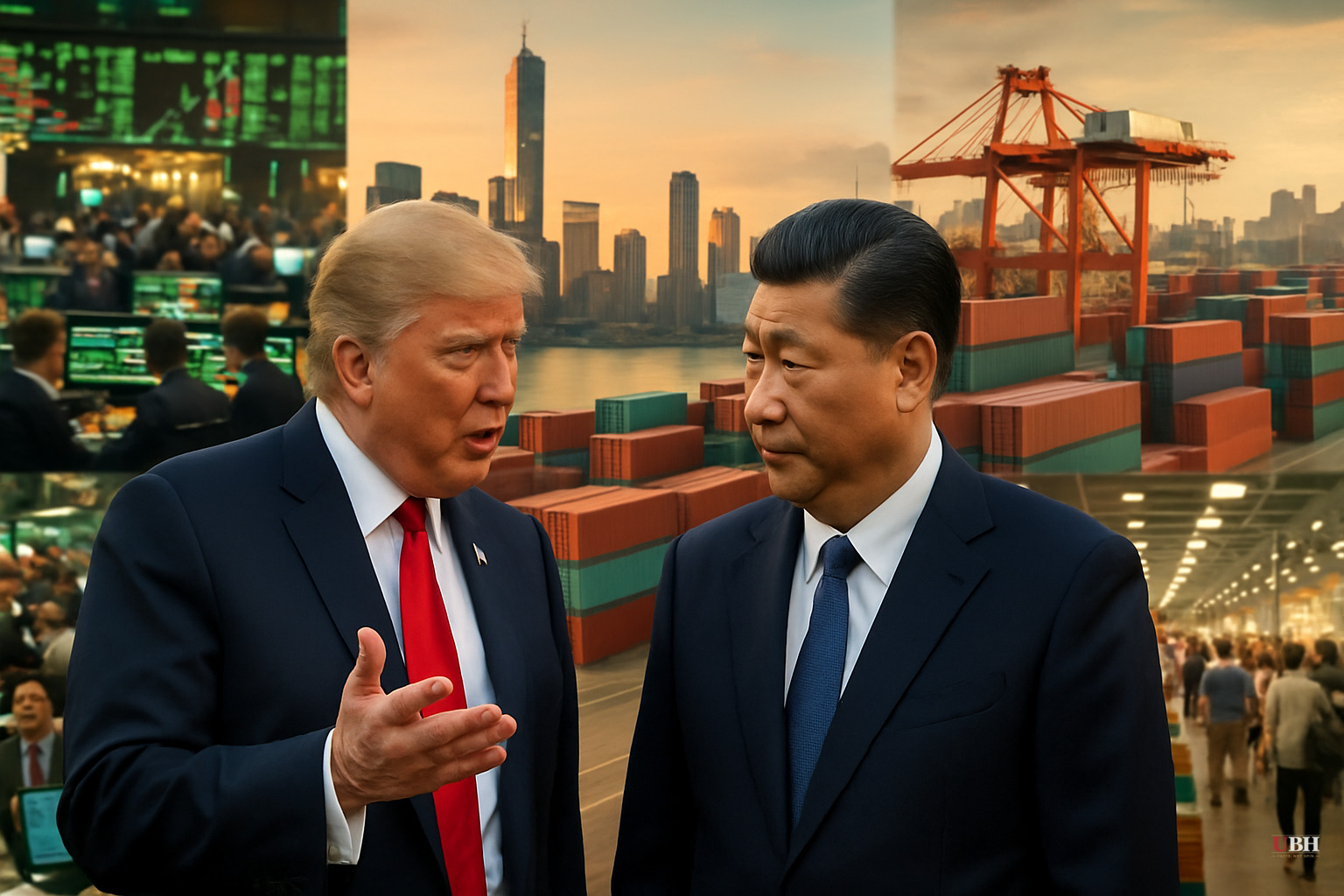
The Meeting That Produced a Headline, Not a Deal
Trump and Xi Jinping met at Gimhae International Airport in Busan, South Korea on October 30, 2025 — about an hour's drive from the main APEC gathering in Gyeongju. The meeting lasted one hour and forty minutes, according to NPR.
Trump publicly rated the meeting a "12 out of 10." His assessment differed sharply from what emerged on paper.
The concrete outcomes: China agreed to purchase 200 Boeing aircraft and $17 billion annually in U.S. agricultural products. Tariffs were lowered — temporarily. That's the full list, according to CNBC's reporting from Suzhou.
What the Two Sides Are Telling Their Own People
China and the U.S. are publicly describing the same summit with very different emphasis.
Beijing's official statements highlighted how tariff reductions will stick for longer. The U.S. readout didn't mention tariffs at all, according to CNBC.
China's Commerce Minister Wang Wentao held a press conference on May 23, 2026, at the APEC trade ministers' meeting in Suzhou and declared that advancing a Free Trade Area of the Asia-Pacific (FTAAP) was a key outcome of the talks. Free trade. Fewer barriers. Open markets.
The U.S. Senior Official to the APEC Forum, Casey K. Mace, had a different answer when CNBC asked about FTAAP directly. He called it "more an agenda than a destination" and focused on balanced trade — the Trump administration's framing for why tariffs exist in the first place.
One side wants fewer restrictions on the flow of goods. The other side wants the trade ledger to balance. Those positions conflict at a fundamental level.
The Rare Earth Problem Nobody Is Solving
The Chicago Council on Global Affairs identified an issue that received minimal coverage: rare earth elements.
China controls the global supply of samarium — a material used in the magnets that power the F-35 fighter jet. Each F-35 requires roughly 50 pounds of samarium to produce. China is currently the sole global supplier. Not a major supplier. The only one.
The U.S. military's most advanced combat aircraft depends entirely on Chinese raw materials. That is a national security vulnerability of the first order.
Getting China to ease export controls on rare earths was listed as a key U.S. goal going into the summit. Whether that was achieved remains unclear. The fact that the U.S. readout focused on Boeing planes and soybeans — not rare earths — suggests progress on this front was limited.
The Soybean Play and What It Reveals About Leverage
When Trump imposed early tariffs on China over fentanyl, Beijing responded by cutting the U.S. completely out of its soybean purchases. American farmers took heavy losses. China turned to Brazil and Argentina instead.
The $17 billion in annual agricultural purchases announced after the Busan meeting is partly a correction of that. What actually occurred: China used American farmers as leverage, it worked, and the U.S. is now regaining lost sales.
The Countries Caught in the Middle
South Korea hosted APEC this year under President Lee Jae Myung, who publicly pushed for multilateral cooperation despite what he acknowledged were "different values and objectives" among APEC's 21 member nations.
South Korea's position illustrates the difficult calculation facing most Asia-Pacific nations. It needs the U.S. security umbrella. It also needs access to Chinese markets. When Washington and Beijing are in open economic conflict, Seoul has to navigate between them — neither option is painless.
Jeffrey Robertson, an associate professor of Diplomatic Studies at Yonsei University in Seoul, told NPR that APEC functioned well in the post-Cold War era because of "benign U.S. leadership" and an absence of major security concerns. That era is over.
According to CSIS analysts Philip Luck and Richard Gray, during Trump's first trade war Vietnam nearly tripled its exports to the U.S., while Taiwan and Thailand more than doubled theirs. Companies adopted "China plus one" strategies — keeping Chinese suppliers while hedging with alternatives in Southeast Asia. That restructuring is still ongoing and accelerating under the second round of tariffs.
What's Beneath the Headlines
Most coverage of the Trump-Xi summit focused on the temperature of the relationship — was it warm? was it tense? — rather than the structural issues underneath.
China has spent the last decade deliberately reducing its vulnerability to U.S. economic pressure while simultaneously increasing U.S. vulnerability to Chinese supply chains. Rare earths are the sharpest example, but it runs across semiconductors, pharmaceuticals, and critical minerals.
The Chicago Council on Global Affairs noted that the Chinese Communist Party's Fourth Plenum explicitly emphasized seizing "the commanding heights of scientific and technical development." That is a long-term strategic objective, not a trade negotiating position.
A 100-minute airport meeting and a soybean purchase agreement do not address that structural gap.
What Comes Next
The Busan meeting produced a temporary tariff reduction, a Boeing order, and agricultural purchases. Those are real developments. But a temporary ceasefire is not the same as resolving the underlying trade conflict.
China wants the world's trade to flow freely through its export-dominant economy. The U.S. wants balanced ledgers and supply chains it doesn't have to depend on Beijing for. Those goals do not converge.
The next major APEC gathering is scheduled for November in Shenzhen — hosted by China. Trump and Xi are expected to meet again.
Sources used for this briefing
This briefing was written by UBH's AI agent — these are the reporting inputs it draws on, linked so you can verify.


