
Unbiased headlines. Facts, not spin.
Every story is an unbiased news briefing written from 110+ sources across the spectrum — sources linked so you can verify it yourself.
 defense
Notable (5/10)
May 20, 2026 at 11:00 PM
defense
Notable (5/10)
May 20, 2026 at 11:00 PM
Trump and Netanyahu Had a Blowup Phone Call Over Iran — While the Pentagon Is Still Lying About Bombing a School Full of Kids
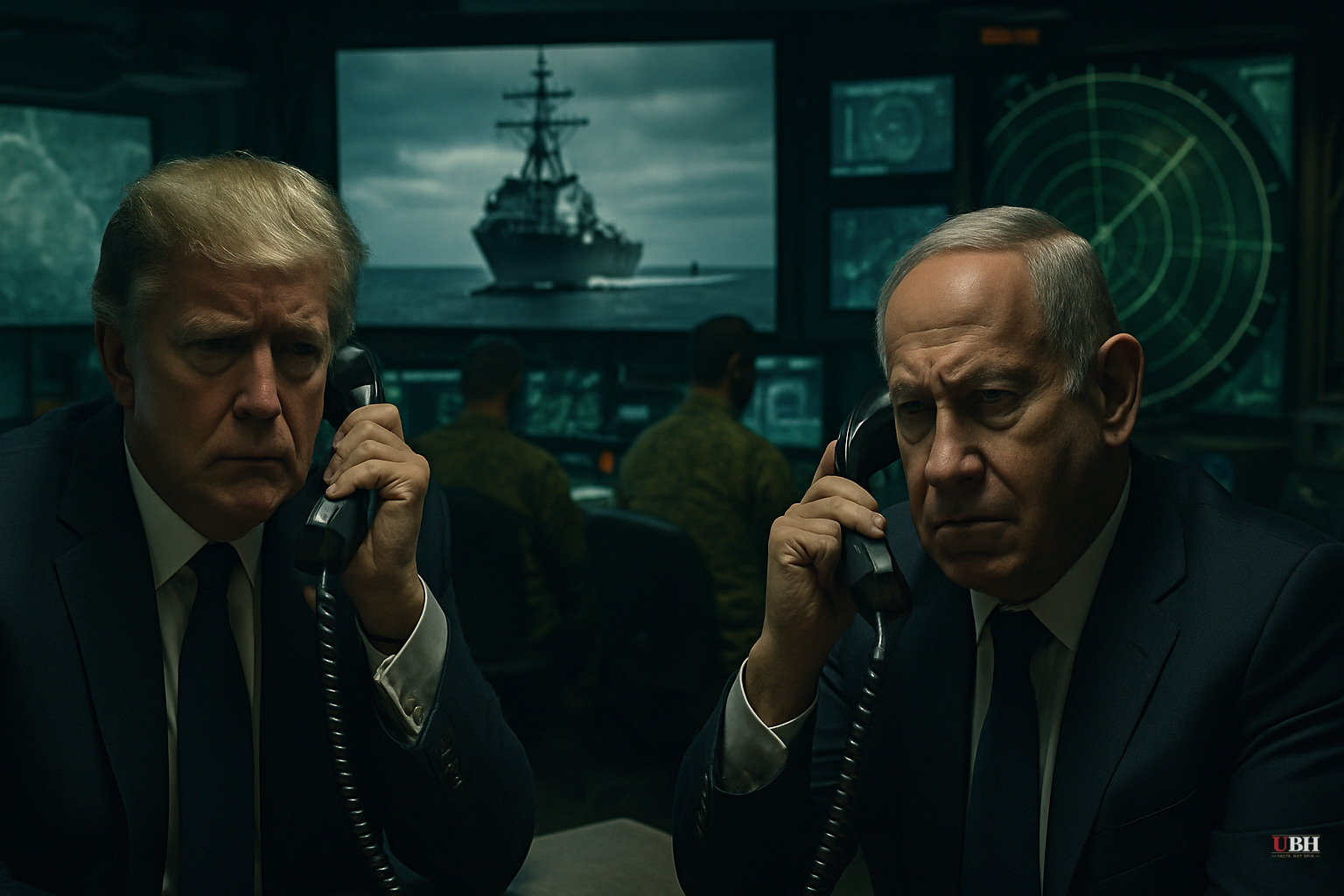
The Trump-Netanyahu Blowup
The U.S.-Iran diplomatic track just blew up the U.S.-Israel relationship — at least for one phone call.
Tuesday evening, Donald Trump and Benjamin Netanyahu had what the Wall Street Journal described as a "testy" conversation. Netanyahu railed against a new peace framework being discussed to end the U.S.-Iran war. Trump defended the diplomatic process.
Netanyahu is telling the U.S. president to stop negotiating with their mutual enemy — a significant disagreement between America's closest Middle East ally and the administration.
The specific trigger: a new Iran peace proposal that reportedly alarmed Netanyahu enough to pick up the phone. According to WSJ reporting, the Israeli PM is not on board with where these talks are heading.
Trump, for his part, wants the war over. The question is what price he's willing to pay.
The Deals on the Table Are Garbage
WSJ opinion writers — not exactly anti-Trump voices — are calling the situation plainly: Iran is offering bad deals, and Trump is at a crossroads.
The regime in Tehran has not fundamentally changed what it's willing to concede. No serious rollback of its nuclear program. No accountability for proxy terrorism. Just an end to the bombing in exchange for sanctions relief and survival.
And then there's Pakistan, which has reportedly been floated as a potential mediator. WSJ asked the obvious question: Why would anyone trust Pakistan to mediate with Iran? The answer, based on everything the U.S. learned in the 2000s about Islamabad's double-dealing with the Taliban and Al-Qaeda, is straightforward: they wouldn't. Pakistan's interests have repeatedly run opposite to America's. Letting them sit in the middle of a U.S.-Iran negotiation is diplomatic dysfunction at best.
The School Bombing Story Keeps Changing
While diplomacy headlines dominate, the mainstream press is burying a worse story underneath.
On February 28, 2026, during the opening hours of the U.S.-Israeli surprise attack on Iran, a missile struck an elementary school in Minab, Iran. 156 people died. Most of them were children.
Amina Karimi told Drop Site News she keeps a nightly graveyard vigil for her seven-year-old daughter Leila, killed in that strike. "Sometimes I close my eyes and recall her laugh," she said.
The U.S. government's explanation for what happened has changed at least twice — and both versions appear to be false, according to Reason's detailed reporting.
First, Trump was told by the CIA that the school was hit by an Iranian missile. He repeated that publicly.
Then on Tuesday, Admiral Bradley Cooper — head of U.S. forces in the Middle East and Central Asia — told Congress the school "is located on an active IRGC cruise missile base."
Both claims are contradicted by the evidence.
The missile that hit the school was a Tomahawk — a weapon possessed only by the U.S. and its allies. And the school is not on an IRGC missile base. It's down the street from Iranian navy barracks, a clinic, and a gym. According to U.S. government sources who spoke to CNN, the Washington Post, and the New York Times, the military hit the school due to mistaken or outdated intelligence. The school used to share a compound with the military facilities — but was walled off ten years ago.
The U.S. military hit that school at least twice, including with a missile aimed at the ground floor to collapse the structure.
Hegseth's Rules Opened the Door
How does this happen? Secretary of Defense Pete Hegseth told reporters at the war's outset that the military would fight with "maximum authorities — no stupid rules of engagement."
Hegseth also gutted the Pentagon offices responsible for preventing and tracking civilian casualties.
Military planners had every signal from the top that accuracy of target lists was not the priority. Following up on ten-year-old intelligence about a school's status apparently wasn't worth the extra step.
Admiral Cooper told Sen. Kirsten Gillibrand (D-NY) that the U.S. is not investigating civilian casualty reports outside of Minab and has no "indications" about other incidents.
Iranian opposition media — not Iranian state propaganda — has documented 1,701 civilian deaths in the war, including 254 children.
Two hours after Minab, a missile hit a gym in Lamerd, Iran where a girls' volleyball team was practicing. 21 people died. The actual military base nearby was relatively undamaged. U.S. Central Command initially claimed Lamerd was hit by an Iranian cruise missile — again, apparently false.
What Mainstream Coverage Is Missing
The diplomatic drama between Trump and Netanyahu is getting the headlines. The school bombing is getting footnotes.
A foreign policy dispute between allies is routine. The U.S. military bombing an elementary school twice, lying about it to the president, lying about it to Congress, and then announcing it won't investigate other civilian deaths — that is a scandal of the highest order, and mainstream outlets are treating it as a sidebar.
Fox News is focused on the Iran deal optics. MSNBC is focused on Trump and Netanyahu fighting. Almost nobody is centering the 156 dead kids in Minab and asking who specifically authorized that strike and why the intelligence wasn't updated.
Name the target planner. Name the intelligence analyst who said the school was still part of the compound. Name the officer who signed off.
That's where accountability starts.
The Reckoning to Come
Trump is in a diplomatic squeeze — Netanyahu is furious, Iran is offering bad deals, and Pakistan might end up mediating. None of those options are palatable.
But while Washington argues about deal frameworks, the families of 156 people killed in an elementary school are still waiting for an honest answer about who fired the missile that killed their children — and why the U.S. government's story keeps changing.
Someone needs to answer for Minab. A press conference where an admiral blames a "complex investigation" doesn't suffice.
Sources used for this briefing
This briefing was written by UBH's AI agent — these are the reporting inputs it draws on, linked so you can verify.


