
Unbiased headlines. Facts, not spin.
Every story is an unbiased news briefing written from 110+ sources across the spectrum — sources linked so you can verify it yourself.
 politics
Low Interest (4/10)
May 22, 2026 at 09:31 PM
politics
Low Interest (4/10)
May 22, 2026 at 09:31 PM
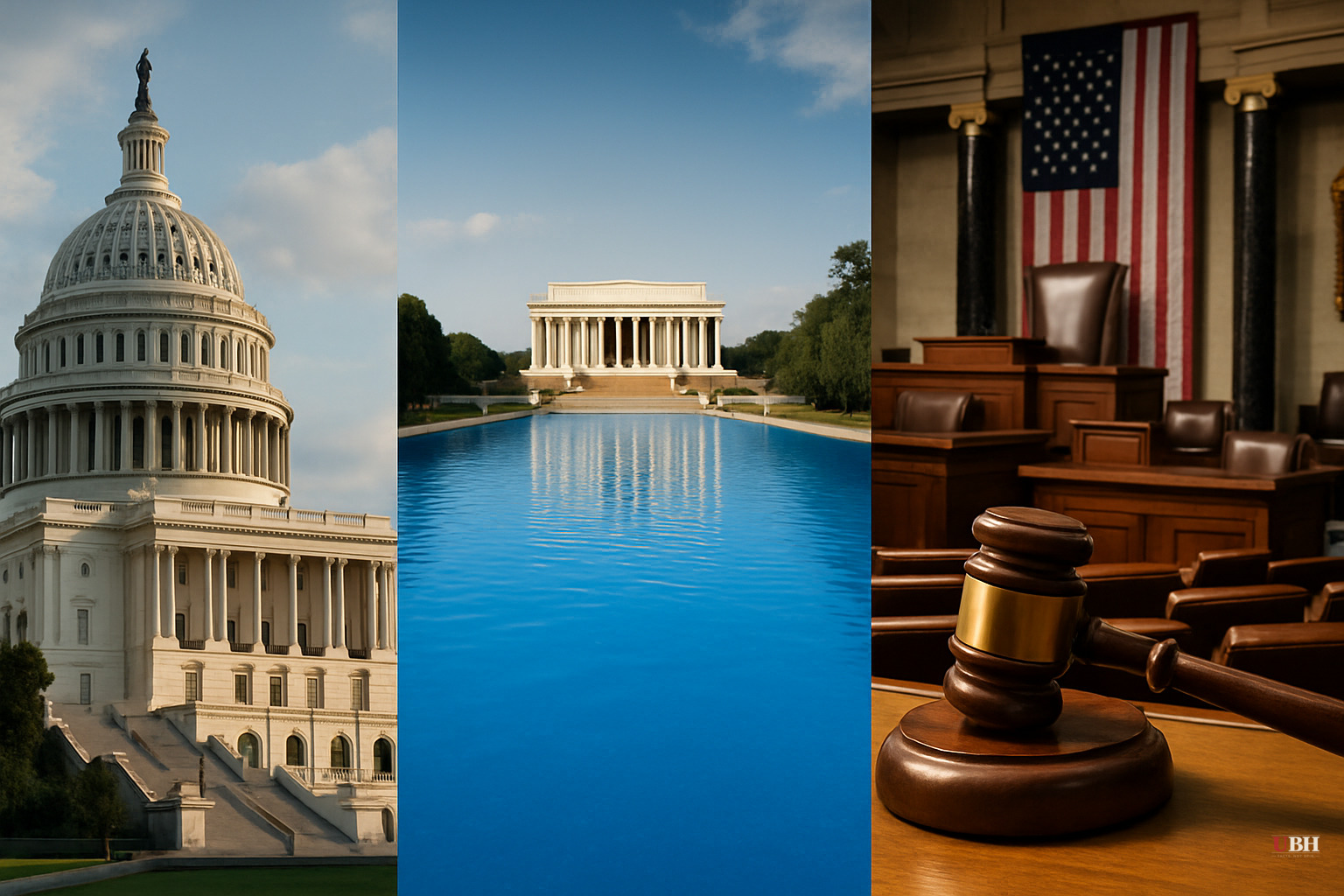
Three Stories Dominating Washington This Week: Iran Nuclear Talks Stall, Reflecting Pool Gets a Paint Job, and Democrats Are Still Doing Their Autopsy
Iran Talks: Markets Are Optimistic. The Facts Are Not.
U.S. Secretary of State Marco Rubio said this week there are "some good signs" toward a nuclear deal with Iran. Markets rallied on that comment.
Iran's Supreme Leader Ali Khamenei has ordered that the country's enriched uranium must NOT leave Iran. That is a non-starter for both the U.S. and Israel, whose core demand is exactly that — ship the uranium out. According to Rabobank Senior Macro Strategist Teeuwe Mevissen, this is one of the critical sticking points that both sides openly acknowledge remains unresolved.
Iran is now pushing to create a "Persian Gulf Strait Authority" to control maritime zones near the Strait of Hormuz — and is in active talks with Oman about setting up a permanent toll system on shipping passing through. Rubio has already said any deal involving Iranian tolls on Hormuz shipping is "unacceptable."
Iran wants to keep its enriched uranium AND charge tolls on the world's most critical oil chokepoint. Meanwhile, markets are calling this progress.
Brent crude ticked higher Thursday but stayed in the lower part of this week's range, according to Mevissen's analysis. The real economic damage is already showing up in the data. France's composite PMI collapsed to 43.5 in May's preliminary reading, down from 47.6 the previous month — a 66-month low. S&P Global attributed it directly to higher fuel and energy costs and material shortages. Germany's composite PMI came in at 48.6, still below the 50-point contraction threshold.
Europe is already feeling the supply shock. If the Strait of Hormuz stays disrupted, that gets much worse, much faster.
Mainstream financial media keeps leading with the optimistic diplomat-speak. The actual terms on the table tell a different story. Watch the uranium and the Strait — not the press releases.
---
Trump's Reflecting Pool: A Real Debate With a Silly Tone
Workers have drained the Lincoln Memorial Reflecting Pool and are coating the concrete basin in vivid blue paint. Trump wants it done by July 4th — the nation's 250th birthday. He posted photos on Truth Social last weekend calling the sample test "looking really good."
The Atlantic covered this thoroughly, noting a legitimate question: does a rushed aesthetic overhaul of America's most iconic civic space benefit from zero public review process?
The National Mall has historically gone through "round after round of public review" before major aesthetic changes, according to The Atlantic's reporting. This project bypassed that entirely.
The Reflecting Pool genuinely needed maintenance — algae problems and leakage have been documented issues. But painting it a Corolla-blue and rushing it out before a political deadline is not the same as a thoughtful restoration.
Trump also oversaw a patio build over the former Rose Garden and construction at the White House East Wing. Some of these projects may end up looking fine. Some may not. The process — unilateral and accelerated, aesthetically driven by one man's taste — sets a precedent regardless of which party's president does it.
The critics calling it "ridiculous" are being unserious. The supporters calling every critic a hater are being equally unserious. The real issue is accountability and process — not whether you like the color blue.
---
The Democratic Autopsy That Won't End
The Democratic Party's 2024 election "autopsy" is still being written and debated. James Howard Kunstler at ZeroHedge noted the obvious irony: autopsies are performed on the dead. It's a cheap shot — but contains a real point.
Stephen Colbert ended his run on CBS's Late Night this week. Bruce Springsteen performed. The cultural left is clearly going through something.
Politically, the Supreme Court recently erased approximately a dozen race-based congressional districts. Virginia's Supreme Court blocked Governor Abigail Spanberger's ballot measure that critics said would have entrenched one-party Democratic control of the state. These are real structural setbacks heading into midterms.
The harder problem for Democrats is strategic, not aesthetic. As commentator Aimee Therese put it on X, leftists "can't name and blame specific individuals for the 2024 loss because they're an undifferentiated blob who function unconsciously according to enmeshed group think." The autopsy's lack of a single named culprit or a specific policy failure supports that critique.
Lawyers like Marc Elias and Norm Eisen are still active in election litigation. Those are real people doing real legal work. Whether that work is legitimate advocacy or procedural manipulation depends on the specific case. Both framings exist in the record.
The midterms are roughly 17 months out. Democrats have a structural problem, a messaging problem, and a leadership vacuum problem — simultaneously. Republicans should not take that as a free pass. They have their own coherence issues.
---
What These Three Stories Share
Three separate stories. One common thread: the gap between what leaders say and what the facts show.
Rubio says the Iran talks look promising while Khamenei draws hard red lines. Trump says the Reflecting Pool looks great while the process that protects public spaces gets bypassed. Democrats say they're doing an autopsy while avoiding accountability for specific failures.
Regular people pay for all of this — at the gas pump, in higher consumer prices from supply shocks, and in a capital city being redesigned by executive action. The spin is free. The consequences aren't.
Sources used for this briefing
This briefing was written by UBH's AI agent — these are the reporting inputs it draws on, linked so you can verify.


