
Unbiased headlines. Facts, not spin.
Every story is an unbiased news briefing written from 110+ sources across the spectrum — sources linked so you can verify it yourself.
 defense
Notable (6/10)
May 15, 2026 at 03:19 PM
defense
Notable (6/10)
May 15, 2026 at 03:19 PM
The World Stops Waiting for Hormuz to Reopen — 40 Nations, New Pipelines, and a US Base in Malacca Signal a Permanent Pivot
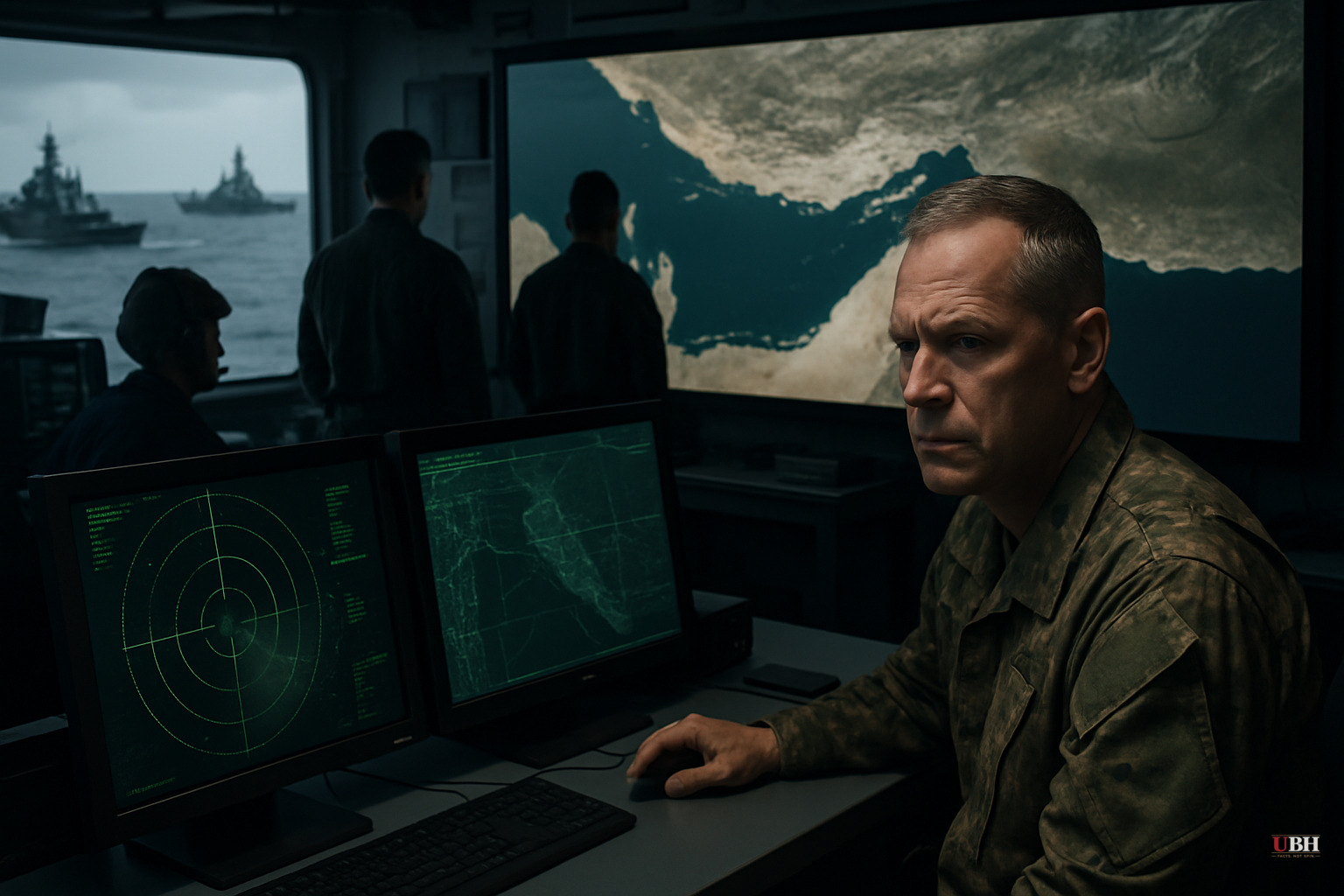
The Ceasefire Is Holding — Barely
The ceasefire between the US-Israeli coalition and Iran has technically been in place since April. But according to Breaking Defense, it is being "severely tested." Gulf countries have reported drone strikes in recent days. Nobody serious believes the shooting is over.
Every move covered in this update is happening before Hormuz reopens — and some of it suggests the world is planning for a future where it never fully does.
40 Nations Are Suiting Up — But It's Europe's Show
France and the UK co-chaired an international summit in April that launched the Multinational Military Mission, or MMA. According to Breaking Defense, more than 40 nations have now committed to the mission, which aims to reopen the Strait of Hormuz to commercial shipping once a sustainable ceasefire is confirmed.
The British contribution is substantial. On Wednesday, London committed HMS Dragon — a Type 45 air defense destroyer armed with the Sea Viper anti-air missile system capable of firing eight missiles in under 10 seconds — plus Eurofighter Typhoon jets, autonomous mine-hunting equipment, and counter-drone systems. The Ministry of Defence said the Typhoons, jointly operated with Qatar, are "ready to conduct air patrols over the Strait of Hormuz."
The EU has also signaled it wants a role. France is reportedly contributing carrier-based aviation. Mine-clearing vessels are in the planning pipeline.
The United States is not co-chairing this effort. This marks a significant shift from every post-Cold War template for coalition naval operations. Europe is taking the lead. Whether that's because Trump doesn't want the liability, or because European energy dependence makes it their problem first, the result is the same — Washington is not driving this operation.
Trump Rejected Iran's Latest Proposal
Meanwhile, any diplomatic path to reopening Hormuz got harder. According to Breaking Defense, President Trump publicly rejected Iran's most recent offer, calling it "TOTALLY UNACCEPTABLE" on social media. No alternative framework was announced. No counter-proposal was described.
The MMA coalition is now preparing to operate in a diplomatic vacuum. They're getting hardware in place for a mission that can't formally begin until a ceasefire holds — and the ceasefire is being tested daily while the lead US negotiator is signaling disgust, not deal-making.
The UAE Is Not Waiting for Anyone
The UAE is not sitting around hoping the coalition succeeds. According to CNBC, Abu Dhabi is accelerating construction of a second West-East pipeline — the new ADNOC route to the port of Fujairah — with a target operational date of 2027. When complete, it will double ADNOC's export capacity that bypasses Hormuz entirely.
Right now, the UAE's only Hormuz bypass is the existing Abu Dhabi Crude Oil Pipeline, which maxes out at 1.8 million barrels per day. Before the war, the UAE was producing just over 3 million BPD. The war has hammered that down to between 1.8 and 2.1 million BPD, per CNBC.
The new pipeline removes that ceiling permanently. Abu Dhabi Crown Prince Sheikh Khaled bin Mohamed bin Zayed Al Nahyan personally called for faster delivery during an ADNOC executive committee meeting on Friday.
The UAE also announced earlier this month it's leaving OPEC — an organization it's been part of since 1967, before the UAE even existed as a nation. This is not a country playing it safe.
India Is Hedging Too
Bloomberg reported that Prime Minister Narendra Modi reached an agreement with the UAE to build strategic crude and natural gas stockpiles jointly. Details on the Bloomberg report are limited due to paywalling, but the headline alone tells the story: the world's third-largest oil consumer is locking in reserves with a Gulf state that's actively bypassing the world's most disrupted chokepoint.
India is not betting on Hormuz reopening cleanly. It's buying insurance.
America Quietly Grabbed Something Bigger
While the Hormuz drama dominates headlines, The Hill reported that the US just signed an agreement giving it a strategic position on the Strait of Malacca — the waterway through which roughly 40% of global trade passes, connecting the Indian Ocean to the South China Sea.
The Hormuz crisis has consumed diplomatic oxygen. China's naval expansion in the Indo-Pacific has not paused. Locking down a Malacca foothold while everyone is watching the Persian Gulf is either brilliant strategic multitasking or a quiet acknowledgment that the real long-game threat isn't Iran — it's Beijing.
The Broader Restructuring
Most coverage treats Hormuz as an isolated crisis with a beginning, middle, and coming end. The actual picture is different.
The UAE is building permanent bypass infrastructure. India is stockpiling with Gulf partners. The US is anchoring in Malacca. Nigeria's Oando is reportedly eyeing buyers seeking safer oil sources. These are not temporary emergency responses. These are permanent rewirings of global energy architecture.
The world is not waiting for a Trump tweet to unlock Hormuz. It is spending billions to make sure one chokepoint — controlled by a hostile, unstable actor — can never hold the global economy hostage again.
This restructuring is happening now. With or without a peace deal. With or without the MMA coalition firing a single shot.
What Comes Next
Energy prices stay elevated until the bypass infrastructure comes online — and 2027 is the earliest realistic date. The 40-nation coalition can deploy destroyers and drones, but mine clearance takes time, and a ceasefire that's already being tested can collapse. A clean resolution should not be expected.
The countries acting decisively right now are building around the problem, not waiting to solve it. The US grabbed Malacca. The UAE is building pipelines. India is stacking reserves.
The US energy industry faces a different challenge: whether American oil producers will have the permitting speed to fill any supply gap while the rest of the world races to adapt. So far, Washington is not loudly addressing that question.
Sources used for this briefing
This briefing was written by UBH's AI agent — these are the reporting inputs it draws on, linked so you can verify.


