
Unbiased headlines. Facts, not spin.
Every story is an unbiased news briefing written from 110+ sources across the spectrum — sources linked so you can verify it yourself.
 economy
Notable (5/10)
May 16, 2026 at 09:15 PM
economy
Notable (5/10)
May 16, 2026 at 09:15 PM
The 'Peak China' Debate Just Got More Complicated — And Washington Is Paying Attention
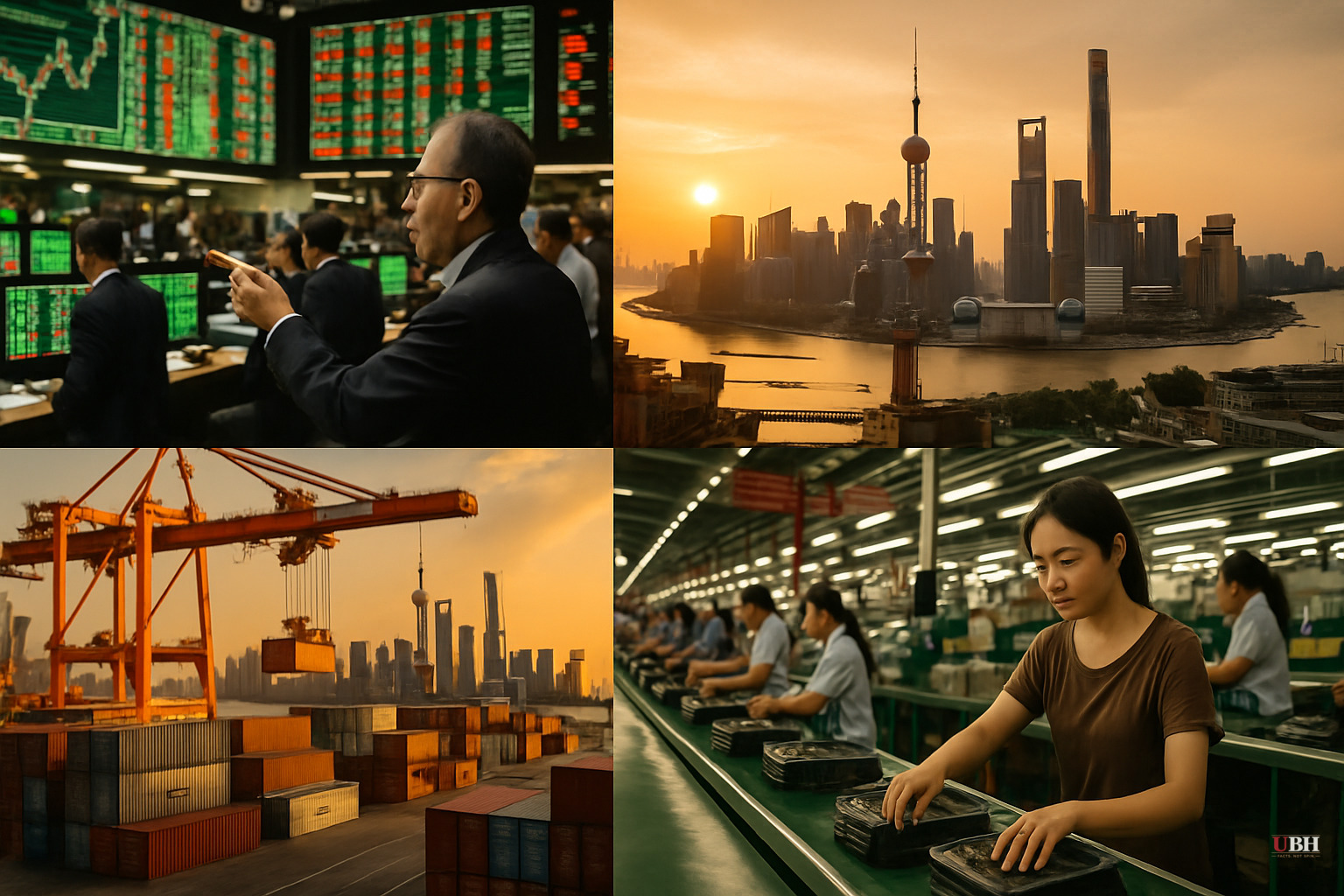
The Debate Has Shifted — From 'Is China Rising?' to 'What Happens When It Falls?'
China's internal contradictions are well documented: tech ambitions masking a deflating economy. But something important has changed in the expert conversation. The argument is no longer about whether China is slowing down. It's about whether a slowing China is MORE dangerous, not less.
That distinction is now driving real policy debates in Washington. And most mainstream coverage is completely missing it.
The 'Peak China' Thesis — What It Actually Says
Michael Beckley and Hal Brands first laid this out in a Foreign Affairs piece published on October 1, 2021 — the 72nd anniversary of the People's Republic. They later expanded it into their book Danger Zone: The Coming Conflict with China.
The core argument: China's economic tailwinds — cheap labor, mass urbanization, export-driven growth — have become headwinds. Demographic collapse, political centralization under Xi Jinping, and a hostile geopolitical neighborhood mean the Chinese economy won't keep climbing. It has peaked.
Ruchir Sharma echoed this in the Financial Times, declaring flatly: "China's rise as an economic superpower is reversing" and calling it "a post-China world now."
The data supports this view. China's property sector is collapsing. Youth unemployment hit record levels before Beijing stopped publishing the numbers. Deflation has persisted. Foreign direct investment INTO China has dried up.
The Mainstream Reading
Most reporting treats "Peak China" as good news for America. Peak = decline = problem solved. This framing misses the actual warning.
Beckley and Brands argue the opposite. They write: "Once-rising powers frequently become aggressive when their fortunes fade and their enemies multiply."
A desperate, declining China with a closing window of opportunity is not a China that sits down quietly. It's a China that might move on Taiwan NOW, before the window shuts completely.
The New York Times ran a piece framing this question around what Xi Jinping himself believes — specifically whether Xi sees his own moment as peak opportunity or peak danger. That's the right question. The piece leans toward psychological analysis of Xi, which is interesting but incomplete without the economic data underneath it.
China's Global Financial Grip Is NOT Loosening — That's the Update
Here's what complicates the "peak and done" narrative entirely.
Zongyuan Zoe Liu, writing for the China Leadership Monitor in September 2024, documents something critical: China's GLOBAL influence has not followed its domestic economy downward.
The numbers are stark. Since 2016, China has ranked in the top three globally for foreign direct investment flows every single year. Since 2017, China has been the world's largest bilateral official creditor — meaning more countries owe money to Beijing than to any other single nation on Earth.
China is simultaneously experiencing a domestic economic slowdown AND tightening its financial grip on developing nations worldwide. Both things are true at the same time.
Liu's key insight: China doesn't invest overseas because it has excess capital sloshing around. It invests strategically, to serve domestic industrial and geopolitical goals. Electric vehicles. Batteries. Critical infrastructure in Africa, Southeast Asia, Latin America. These aren't charity projects. They're leverage.
The Debt Trap Is Real — And Getting Bigger
China's role as the world's largest bilateral creditor means it now has significant power over sovereign debt restructuring negotiations for dozens of developing nations. When a country can't pay its debts, it has to deal with Beijing.
That's not a soft-power play. That's hard leverage dressed in infrastructure loans.
Western institutions like the IMF and World Bank are watching China rewrite the rules of global debt negotiation in real time. The G7 has been slow and disorganized in response.
What Xi Likely Believes — And Why It Matters
The strategic logic of "Peak China" creates a dangerous incentive structure.
If Xi Jinping genuinely believes China's window of maximum power is closing — whether due to demographics, economics, or the strengthening of U.S.-allied relationships in the Indo-Pacific — then waiting becomes the losing move.
Historical precedent suggests this. Germany before World War I. Japan before Pearl Harbor. Revisionist powers with shrinking windows tend to accelerate, not retreat.
U.S. defense planners at the Pentagon have been gaming out exactly this scenario. The next four years may be the period of highest Taiwan Strait risk — not because China is strong, but because Chinese leadership may believe it's now or never.
What Different Coverage Emphasizes
The New York Times asks the right psychological question about Xi but undersells the financial data.
Conservative outlets tend to focus on China's economic weakness as validation that the China threat was overblown. Weakness plus ambition plus a closing window is MORE dangerous than a steadily rising competitor. Neither framing fully captures the risk.
For the Defense Budget
Your tax dollars fund a defense budget of $886 billion for fiscal year 2024. How that money is allocated depends entirely on whether the U.S. government correctly understands what kind of threat China represents right now.
A misread — in either direction — costs lives and treasure.
China is not a paper tiger. It is also not an unstoppable juggernaut. It is a wounded, ambitious, financially aggressive power with a leader who may believe his clock is running out.
That combination is the most dangerous kind of adversary there is.
Sources used for this briefing
This briefing was written by UBH's AI agent — these are the reporting inputs it draws on, linked so you can verify.


