
Unbiased headlines. Facts, not spin.
Every story is an unbiased news briefing written from 110+ sources across the spectrum — sources linked so you can verify it yourself.
 economy
Low Interest (4/10)
May 22, 2026 at 07:16 AM
economy
Low Interest (4/10)
May 22, 2026 at 07:16 AM
The Multipolar World Is Real, Messy, and Going to Cost You Money
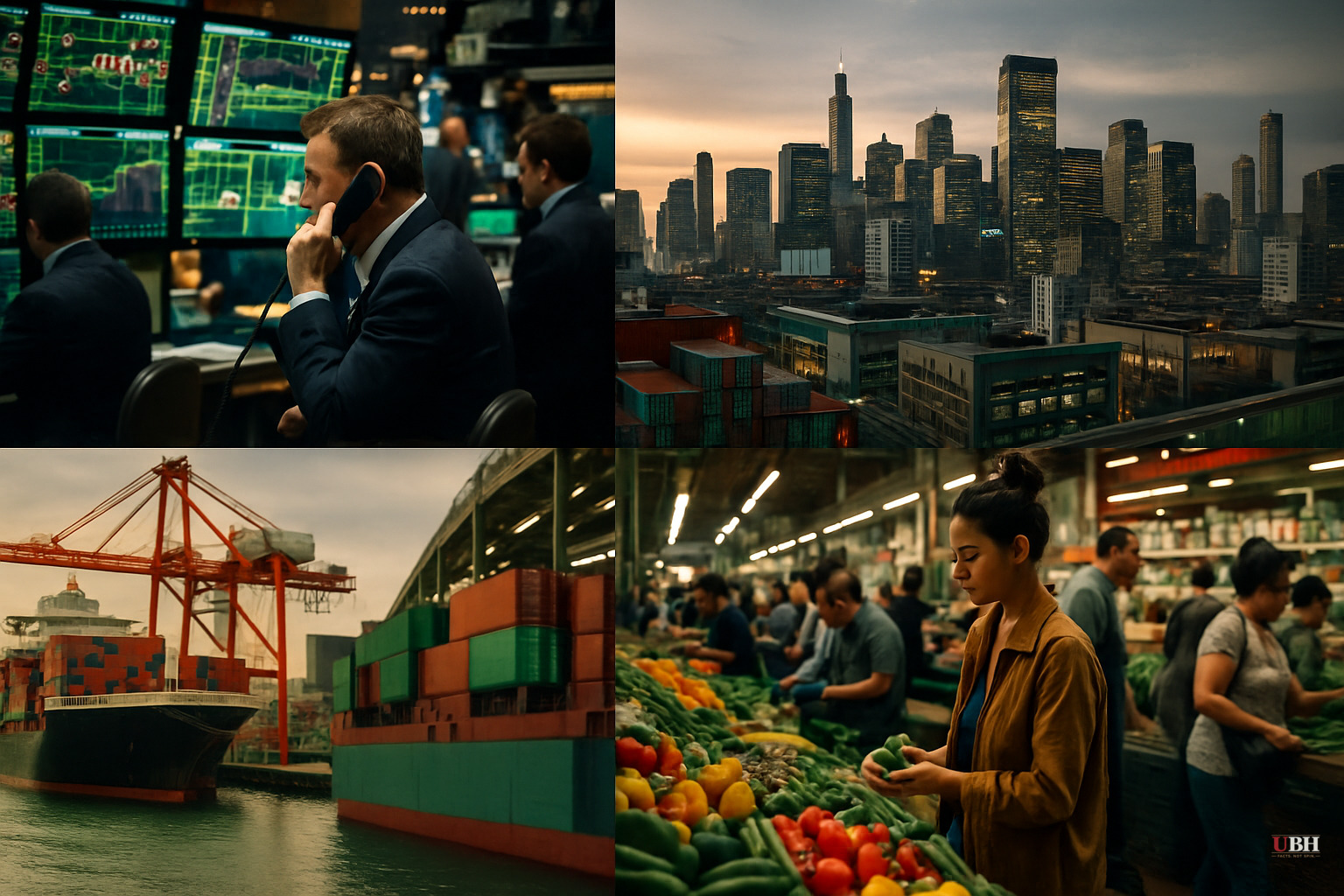
The Old World Order Is Done. The New One Is Dangerous.
Forget the diplomatic language. The world is fracturing into competing power blocs, and the process is accelerating fast.
Russian President Vladimir Putin and Chinese President Xi Jinping signed a joint declaration on "building a multipolar world" — formalizing what both have been pushing for years. Spanish Prime Minister Pedro Sanchez told an audience in China that we are witnessing "an increase in multipolarity — in both power and prosperity." Former German Chancellor Olaf Scholz made the same pitch at Harvard's Kennedy School of Government in 2025.
This is no longer fringe geopolitics. It's the official position of major world leaders.
What Multipolarity Actually Means in Plain English
A multipolar world means no single nation sets the rules. Power is shared — or more accurately, contested — among the United States, China, Russia, the European Union, India, and regional blocs.
According to Amundi Asset Management's September 2025 research report, this arrangement creates "heightened risks of miscalculation, shifting alliances, and military build-ups driving uncertainty and security risks." That translates to more wars, more instability, and more economic shocks.
The COVID-19 pandemic already showed how fragile globalized supply chains are under stress. Then Russia's invasion of Ukraine — now in its fifth year according to financial analyst James Rickards writing via Daily Reckoning — showed what happens when energy supplies become weapons. Both disruptions hit American consumers directly in the wallet.
The Elite Are Excited. You Should Not Be.
The loudest cheerleaders for the multipolar transition are insulated from its consequences.
The Tony Blair Institute partnered with JPMorgan Chase's International Council — led by Jamie Dimon — to publish a report called "World Rewired: Navigating a Multi-Speed, Multipolar Order." Tony Blair and Jamie Dimon wrote the foreword together. These are NOT people who worry about their grocery bills when energy prices spike.
Kit Knightly, writing via Off-Guardian and republished by ZeroHedge, notes that this entire multipolar framework has been embraced by the global establishment — the same think tanks, the same multinationals, the same conference circuit that brought you every other globalist restructuring of the past 30 years.
Multipolarity was the main topic of the Munich Security Conference Report in February 2025. This is not an outsider critique of the system — it IS the system rebranding itself.
The Real Costs Landing on Real People
Rickards lays out the current damage clearly: energy prices are soaring, inflation has accelerated sharply, consumer confidence has fallen, debt is at an all-time high, and supply chains are breaking down.
Midland Bank's investment analyst Emil Suqi, CFA, puts it plainly in an April 2026 market outlook: "Geopolitical conflict and energy supply disruptions have introduced new risks to global growth and inflation. Elevated energy prices may pressure consumer spending and delay progress on inflation." Translated, consumers are paying more for gas and groceries because governments can't stop fighting over resources and influence.
The U.S. Has Less Leverage Than Washington Thinks
Amundi's research report identifies a critical blind spot in American foreign policy: the U.S. is waking up to its dependence on China's rare earths far too late. Meanwhile, Russia — broadly self-sufficient — has simply ignored Trump's demands to end the war in Ukraine.
Tariffs are being used as foreign policy tools, but they're blunt instruments with limited reach. When your opponent doesn't need what you're threatening to cut off, the threat is hollow.
China and its partners know this. That's precisely why Xi and Putin are signing joint declarations and why the BRICS bloc keeps expanding.
Markets Are Detached From Reality — For Now
Despite all this turmoil, major U.S. stock indices remain near all-time highs.
Rickards explains why. Two reasons: AI investment mania and passive investing feedback loops. A $1 trillion capital investment wave from Microsoft, Amazon, Google, Meta, OpenAI, Anthropic, and others is pouring into data centers and semiconductors. Meanwhile, trillions in 401(k)s and index funds automatically buy stocks regardless of geopolitical conditions, creating a self-reinforcing cycle that keeps prices elevated.
Midland Bank's Suqi flags a critical warning: markets are increasingly dependent on earnings growth rather than valuation expansion. If geopolitical shocks hit corporate profits — and they will — there's no valuation cushion to absorb it.
India and Emerging Markets Are Watching Carefully
Religare Broking's May 2026 market analysis notes that India sits at a crossroads of this power shift. The China+1 supply chain diversification strategy is pushing manufacturing investment into India across electronics, pharmaceuticals, and textiles.
Companies are moving. Foreign direct investment is flowing. The question is whether these new supply chains are actually more resilient — or just differently fragile.
What This Means for You
The multipolar world is not a gift of stability and balance. It's a scramble for resources, influence, and supply chain control between powers that do NOT share American values on individual liberty, free markets, or rule of law.
Higher energy prices. Persistent inflation. Broken supply chains. Military buildups requiring more U.S. defense spending. And a stock market sitting on AI-fueled optimism that could evaporate the moment geopolitical miscalculation hits earnings.
The think tanks and ex-prime ministers writing forewords with Jamie Dimon will be fine either way.
You won't be — unless someone in Washington figures out that leverage requires preparation, not just rhetoric.
Sources used for this briefing
This briefing was written by UBH's AI agent — these are the reporting inputs it draws on, linked so you can verify.


