
Unbiased headlines. Facts, not spin.
Every story is an unbiased news briefing written from 110+ sources across the spectrum — sources linked so you can verify it yourself.
 defense
Notable (5/10)
May 21, 2026 at 10:22 AM
defense
Notable (5/10)
May 21, 2026 at 10:22 AM
The IRGC Generals Actually Running Iran's Nuclear Talks — And Why That Changes Everything
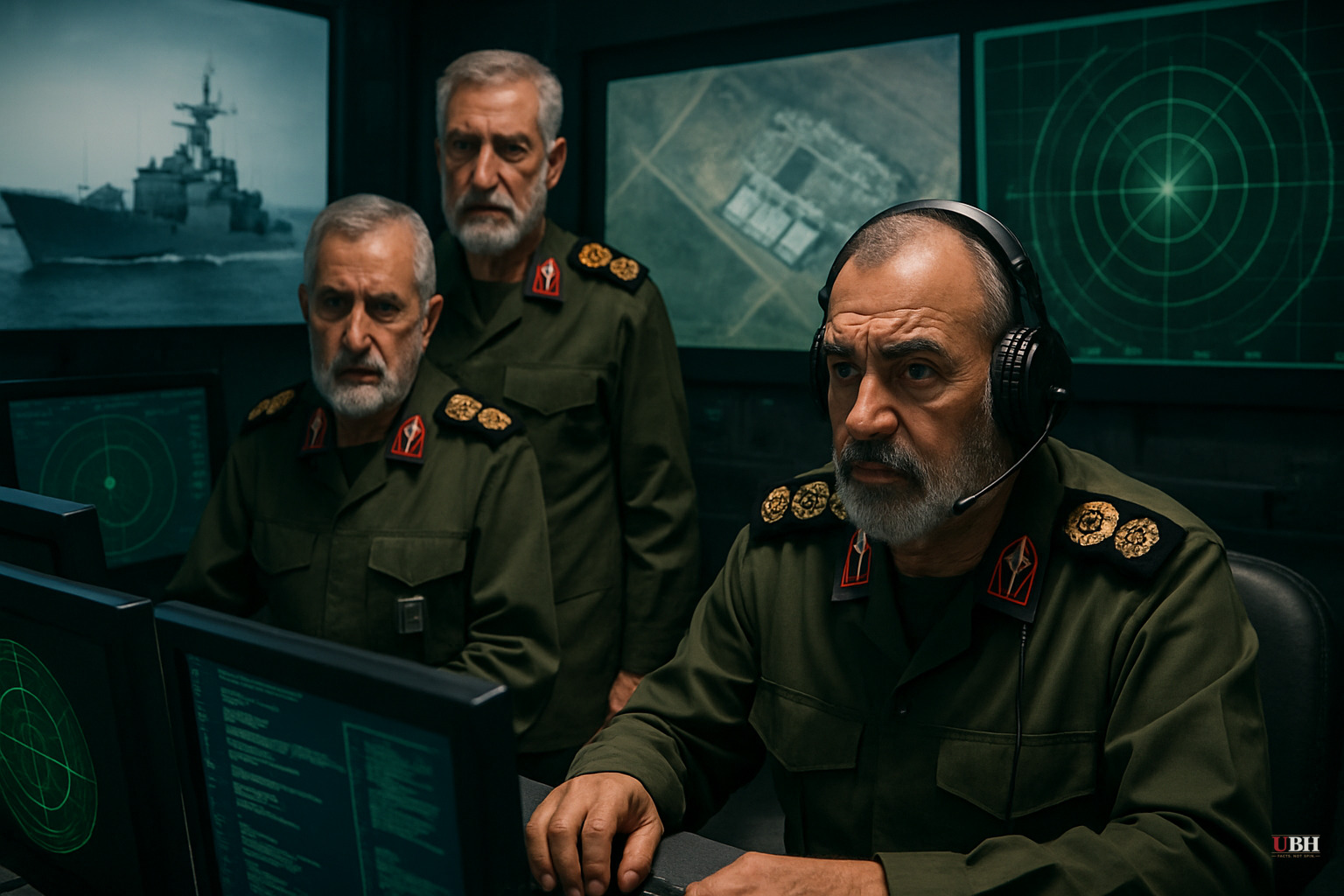
Who's Actually on the Other Side of the Table
Forget the Foreign Ministry. Forget the diplomats in suits.
According to AP News and the New York Times, Iran's nuclear negotiations are effectively controlled by a tight inner circle tied to the Islamic Revolutionary Guard Corps — the IRGC. Iran's military fraternity is deciding the nation's future, and they didn't get to the top by compromising.
The NYT identified this group as "a small group of men associated with the Islamic Revolutionary Guards Corps" who guide decision-making in Iran. AP News went further, profiling a specific hard-line IRGC general as "a major player" in the current talks with the US.
The update mainstream coverage keeps dancing around: the people negotiating aren't the people deciding. Iran's civilian leadership has limited actual authority here. The IRGC generals do.
What the IRGC Actually Wants
The IRGC and Iran's civilian diplomatic corps don't share the same goals.
The Revolutionary Guards were built on revolutionary ideology — death to America, death to Israel isn't just a chant, it's institutional DNA. These are men whose careers, power, and identity are built on confrontation with the West. A negotiated deal that genuinely dismantles Iran's nuclear and military posture would threaten everything they've spent 40 years building.
So when Trump called Iran's last response "totally unacceptable," he wasn't wrong. The diplomats may want a deal. The generals may be deliberately poisoning one.
The Hormuz Factor
Fox News raised a point the left-leaning outlets largely ignored: the Strait of Hormuz.
A Fox News column argued the US needs to establish a demilitarized zone along the Hormuz Strait as a condition of any resolution. The logic is straightforward — roughly 20% of the world's oil supply passes through that narrow chokepoint. Iran has repeatedly threatened to close it. The IRGC controls the naval forces capable of doing so.
US Central Command already confirmed that US Marines boarded the M/T Celestial Sea, an Iranian-flagged crude oil tanker, in the Gulf of Oman for violating a blockade, according to Fox News. This represents an active military confrontation happening right now in those waters.
No demilitarized zone, no deal that sticks. The IRGC will always have the leverage to strangle global energy markets the moment they decide negotiations aren't going their way.
The Drone Gap
Fox News reported the Pentagon has a $55 billion drone budget — and it's still not enough. The US faces a growing "threat gap" in drone warfare, and Iran has been rapidly expanding its drone capabilities, including exporting them to Russia for use in Ukraine.
Simultaneously, Cuba — Iran's Western Hemisphere partner in chaos — has acquired over 300 attack drones, according to Fox News. Former Miami Mayor Francis Suarez called it a direct threat to US national security.
Iran has built a drone proliferation network that now stretches from the Middle East to Eastern Europe to 90 miles off the Florida coast. The IRGC runs that network. Any nuclear deal that doesn't address Iran's drone and missile programs is a partial deal at best — and a dangerous illusion at worst.
What Left and Right Coverage Are Each Getting Wrong
Left-leaning outlets like AP and NYT are doing valuable work identifying the IRGC power structure. But they underweight what that structure means for the feasibility of any deal. Naming the problem without confronting its implications isn't enough.
Fox News opinion writers are right to flag the Hormuz threat and the drone gap — those are real strategic concerns. But framing every piece as "Iran must be crushed" skips past the harder question: what is the actual US endgame here? Regime change? Verified denuclearization? A cold peace? Without a defined objective, military pressure is just pressure.
Neither side is leveling with readers about the core problem: the US is trying to negotiate a political solution with an institution — the IRGC — that derives its power from the absence of such a solution.
What This Means for Regular People
Gasoline prices. That's the immediate answer.
If IRGC generals decide talks have failed and move to mine or blockade the Strait of Hormuz, global oil prices spike — fast and hard. Every American filling up a tank, heating a home, or buying anything shipped by truck feels it within weeks.
Beyond that: if the IRGC's drone network keeps expanding while US diplomats keep talking to the wrong people, the window to stop a nuclear-armed Iran through negotiation closes. What comes after that window is a set of options nobody wants to choose between.
The generals in Tehran know this.
Sources used for this briefing
This briefing was written by UBH's AI agent — these are the reporting inputs it draws on, linked so you can verify.


