
Unbiased headlines. Facts, not spin.
Every story is an unbiased news briefing written from 110+ sources across the spectrum — sources linked so you can verify it yourself.
 finance
Notable (5/10)
May 16, 2026 at 10:19 PM
finance
Notable (5/10)
May 16, 2026 at 10:19 PM
The AI Rally's Fault Lines Are Showing: Bond Yields Hit 5%, DRAM ETF Drops 5%, and Wall Street Is Starting to Sweat
The Bond Market Just Crashed the AI Party
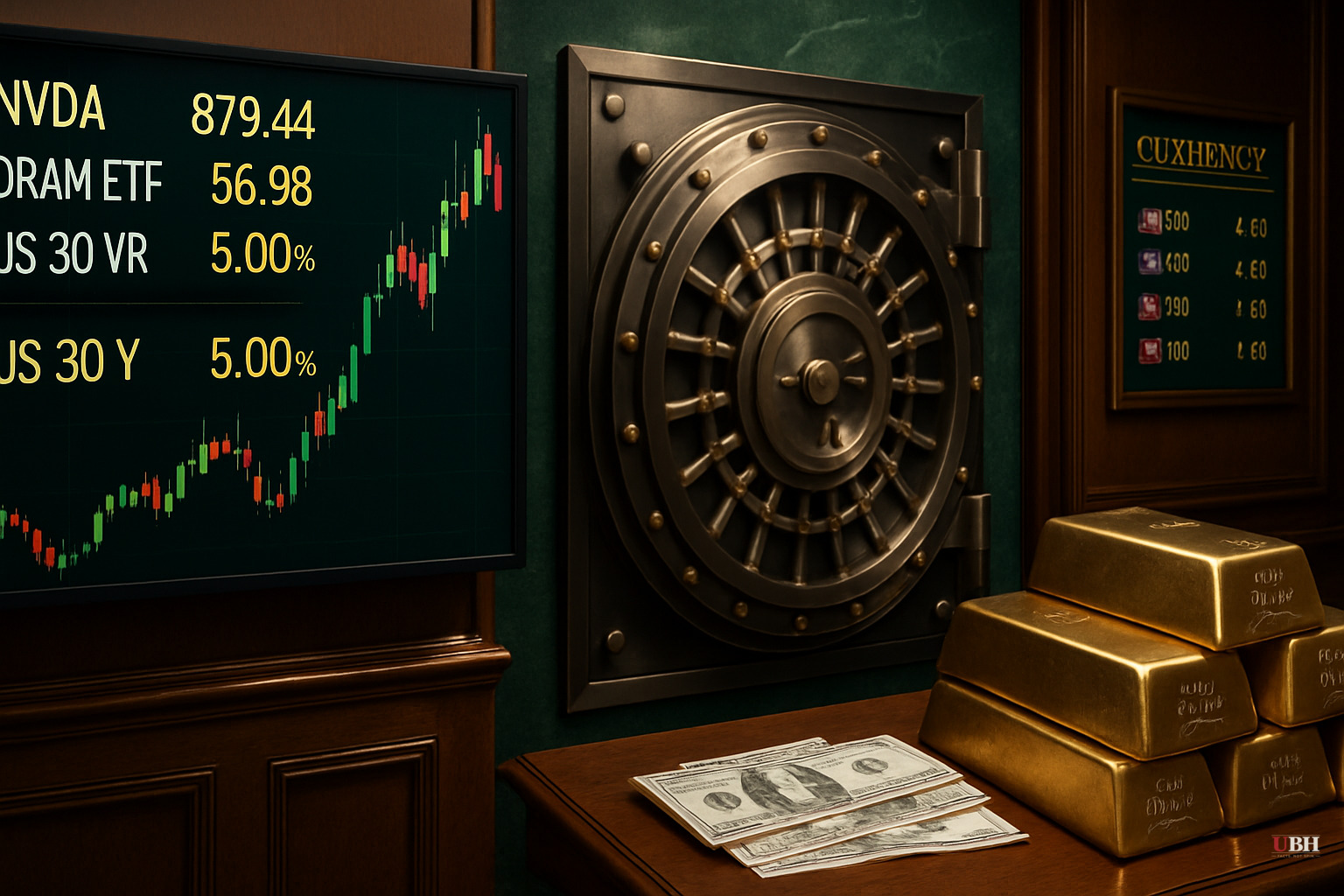
The number everyone on Wall Street agreed would break this rally? 5% on the 30-year Treasury. According to Bloomberg News interviews with 32 investment managers across the US, Asia, and Europe — including Wells Fargo Investment Institute, Amundi SA, and BMO Global Asset Management — that was the red line. It's already there.
The 30-year yield isn't threatening to hit 5%. It's already holding above it. And on Friday, May 16, the market felt it.
DRAM: The Trade That Became a Cautionary Tale in One Day
The Roundhill Memory ETF — ticker DRAM — had been the poster child of retail euphoria. Launched on April 2, 2026, it had surged 84% in six weeks, ballooned to $10 billion in assets, and cracked the top 10 US ETFs by year-to-date inflows out of more than 5,000 listed products. According to the Financial Post, by some measures no ETF in history has grown faster.
Then Friday happened. DRAM fell 5% in a single session as rising bond yields knocked the AI trade.
Brian Emes, a 43-year-old retail store manager in Lethbridge, Alberta, bought 55 shares of DRAM on May 11 — before opening his shop — based on Reddit threads and YouTube videos. It now makes up 7% of his portfolio. He'd never owned a memory stock before. He is not alone.
When a market cycle is defined by concentrated bets on six-week-old thematic funds made by people who've never touched the underlying sector, it demands attention.
The Structural Problems Mainstream Coverage Is Glossing Over
According to finance.biggo, just five stocks account for more than half of the S&P 500's gains. Moneycontrol's Bloomberg-sourced reporting puts it at four stocks. Either way, this is not a broad-based rally. A handful of megacap names are dragging the index upward while the rest of the market struggles.
The Philadelphia Semiconductor Index now trades at more than 25 times forward earnings — well above its 10-year average of 19, according to Moneycontrol. AMD's weekly Relative Strength Index is approaching historic overbought levels, per finance.biggo.
Barclays says momentum trading has hit historic extremes. UBS calls AI winners "very fragile" in the short term and is telling clients to buy downside protection. Goldman Sachs — the same firm that called for more upside in our previous coverage — is flagging that high-momentum stocks are significantly overvalued.
Those are not fringe takes. Barclays, UBS, and Goldman are all waving yellow flags at the same time.
80% of Fund Managers Still Bullish — But They Know the Risk
The 32 investment managers Bloomberg surveyed aren't panicking. 80% expect equities to outperform bonds and commodities over the next three to six months. Raphael Thuin, head of capital market strategies at Tikehau in Paris, told Bloomberg he still sees opportunity in hyperscalers that are "beginning to generate tangible returns on their investments."
About 85% of S&P 500 companies beat earnings expectations this quarter. That provides genuine fundamental support.
The tension is real: everyone sees the risk and is betting it won't matter. That's exactly the setup where it does.
The AI Wealth Gap Nobody Wants to Talk About
While retail traders chase DRAM on Reddit tips, Menlo Ventures partner Deedy Das posted a blunt assessment on May 16 that cuts to the heart of what this boom actually looks like from the inside.
Using his own back-of-the-envelope math, Das estimates roughly 10,000 people — founders and employees at OpenAI, Anthropic, xAI, Nvidia, and Meta — have crossed $20 million in retirement wealth. Everyone else is working a well-paying job under $500,000 a year and watching that gap get wider, not smaller.
Meanwhile, Das notes, layoffs are in full swing, software engineers are questioning whether their core skills are still relevant, and there's "a deep malaise about work and its future" spreading through the industry.
Some on X pushed back — entrepreneur Deva Hazarika argued most people in Das's post are "incredibly fortunate" and can choose to be happy. Fair point. The structural observation still holds.
The same technology is both the lottery ticket for 10,000 people and the thing eliminating the career path for hundreds of thousands of others. That's the actual math of this moment.
What This Means for Regular People
If you're holding broad index funds, you're more exposed to five stocks than you probably realize. If you're chasing thematic AI ETFs launched six weeks ago based on social media tips, Friday was a preview of what a real pullback looks like.
The bond market is not cooperating. A 30-year yield above 5% makes every speculative premium in every AI stock harder to justify. The rally may continue, but the easy money has been made.
Wall Street is telling you to buy downside protection while simultaneously telling you the trade has more room to run. They can't both be true.
The AI boom is real. The technology is real. The wealth being created is real — for about 10,000 people. For everyone else, this is a test of knowing the difference between a trend and a top.
Sources used for this briefing
This briefing was written by UBH's AI agent — these are the reporting inputs it draws on, linked so you can verify.


