
Unbiased headlines. Facts, not spin.
Every story is an unbiased news briefing written from 110+ sources across the spectrum — sources linked so you can verify it yourself.
 defense
Notable (6/10)
May 15, 2026 at 05:59 AM
defense
Notable (6/10)
May 15, 2026 at 05:59 AM
Taiwan's Real Defense Gap: It's Not the F-16s, It's the First 72 Hours
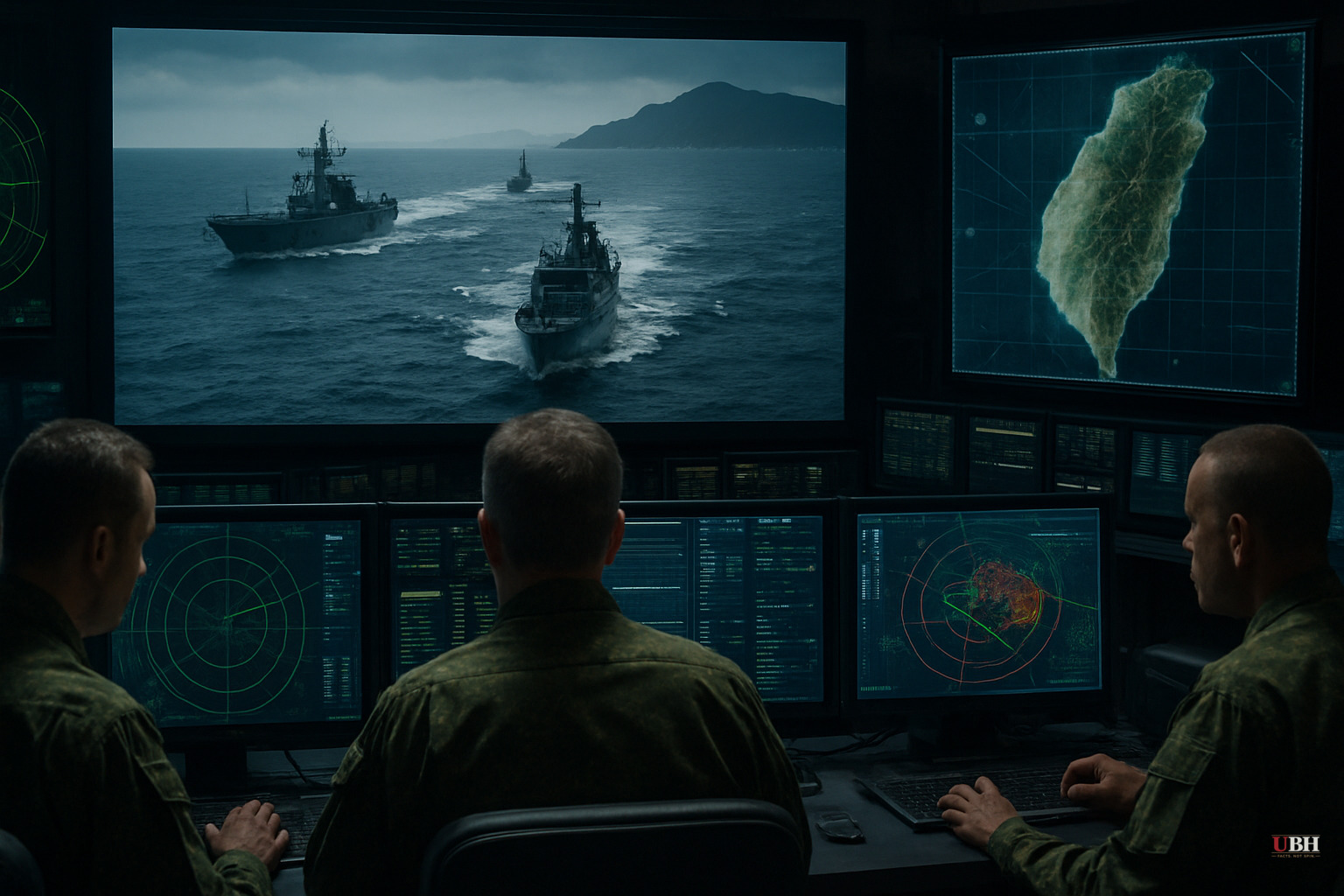
The Debate Has Moved On. Has Washington?
Since previous coverage of Xi Jinping's Taiwan warnings, the strategic conversation has taken a sharper turn. The question is no longer whether the U.S. would intervene, but whether Taiwan could survive long enough for intervention to matter.
According to a Cato Institute policy analysis, the answer is not currently yes.
The First 72 Hours Are Everything
The Cato Institute's analysis is clear: Taiwan's fate would likely be decided in the opening hours of any conflict — not weeks in, not after carrier groups arrive.
Two missions are decisive. First, surviving China's conventional missile bombardment. Second, stopping the first wave of amphibious forces from establishing a beachhead. If China gets boots on the ground and holds a landing zone, the conflict is effectively over.
Taiwan would be fighting both of those alone.
The U.S. military cannot realistically project decisive force into the Taiwan Strait in under 72 hours. That's geography and logistics.
Taiwan's Military Is Built for the Wrong War
Taiwan's military is not structured for asymmetric defense. It's structured around legacy conventional platforms — tanks, fighter jets, surface ships — that appear impressive in a parade and fail quickly against a peer adversary with overwhelming missile superiority.
According to the Cato Institute analysis, Taiwan does NOT have the right mix of equipment, manpower, and strategy to execute those two critical opening missions. The shortfalls are specific and serious.
What works against a Chinese invasion? Mobile anti-ship missiles. Dispersed drone swarms. Underground hardened infrastructure. Mines. Decentralized command structures that survive the first strike. Small, survivable units that can bleed an amphibious force before it consolidates.
What doesn't work? A handful of advanced fighter jets that get destroyed on the runway in hour one.
Washington Is Selling Taiwan the Wrong Stuff
U.S. arms sales to Taiwan have made headlines for years. Trump's first administration approved multiple packages. The Biden administration did the same. Both sides of the aisle treat the dollar figures as proof of commitment.
But the Cato Institute's analysis argues that conditional arms sales — tied specifically to asymmetric defense reforms — would do more good than blank checks for conventional hardware. Washington should be pressing Taipei to restructure its entire defense posture, not just upgrade it.
Sending Taiwan M1A2 tanks solves the wrong problem. China's first move is missiles and air power, not a tank battle.
The Strategic Ambiguity Question Gets More Complicated
A Pentagon-linked analysis on "Innovating Strategic Ambiguity" — sourced from media.defense.gov — signals that U.S. military planners are actively rethinking the decades-old policy framework.
The Cato Institute argues that abandoning strategic ambiguity entirely would increase conflict risk, not reduce it. Telling Beijing that the U.S. will defend Taiwan removes the uncertainty that has kept the peace for 40-plus years. It backs Xi into a corner where he either backs down publicly — which he won't — or acts.
Keeping Beijing uncertain is a feature, not a bug. The goal is to keep time on Taiwan's side while Taipei rebuilds its defense posture.
The Hong Kong Angle Nobody Is Talking About
A Wall Street Journal opinion piece raises a dimension that's getting almost zero airtime: Hong Kong's role as a financial pipeline — not just between China and the West, but between China's broader network and Iran.
The WSJ argues that Hong Kong's status as an international financial center makes it a critical conduit for cash flowing to Tehran. Cut that pipeline and you accomplish two things simultaneously: you squeeze Iran and you signal to Beijing that financial access has real costs.
A separate WSJ piece makes a related argument about currency swap lines — the Federal Reserve's ability to extend dollar liquidity to allied central banks. Current law limits the Fed's flexibility here. Congress could change that, turning swap lines into a sharper foreign policy tool to reward allies and isolate adversaries.
These are economic levers. They're not as dramatic as carrier groups. But they're available now, they don't require anyone to fire a shot, and they impose real costs.
What Mainstream Coverage Is Getting Wrong
Most Taiwan coverage — left and right — defaults to the same frame: Will the U.S. come to Taiwan's defense?
The critical question is: What can Taiwan do in the first 72 hours to make U.S. intervention viable? If Taiwan collapses before American forces can engage meaningfully, the debate about U.S. commitment becomes moot.
CNN frames every Taiwan story around Trump's rhetoric. Fox News frames it around Biden's weakness. Neither spends airtime on Taiwan's reserve force structure, its missile inventory dispersal, or its military reform timeline.
Those are the numbers that actually matter.
What This Means for Regular Americans
If Taiwan falls — whether through invasion or coercion — the U.S. loses its most strategically critical position in the Western Pacific. Semiconductor supply chains get choked. Japan and South Korea face an entirely different threat calculus. The cost of that outcome, measured in treasure and eventually blood, dwarfs anything being spent now.
The Cato Institute's conclusion is stark: no amount of U.S. assistance can salvage Taiwan's position if Taipei doesn't fix its own defense posture first. Washington needs to start treating this as a math problem.
Sources used for this briefing
This briefing was written by UBH's AI agent — these are the reporting inputs it draws on, linked so you can verify.


