
Unbiased headlines. Facts, not spin.
Every story is an unbiased news briefing written from 110+ sources across the spectrum — sources linked so you can verify it yourself.
 defense
Notable (6/10)
May 18, 2026 at 04:05 AM
defense
Notable (6/10)
May 18, 2026 at 04:05 AM
Taiwan President Lai Breaks Silence After Trump-Xi Summit: No Surrender on Sovereignty, No Provocation Either
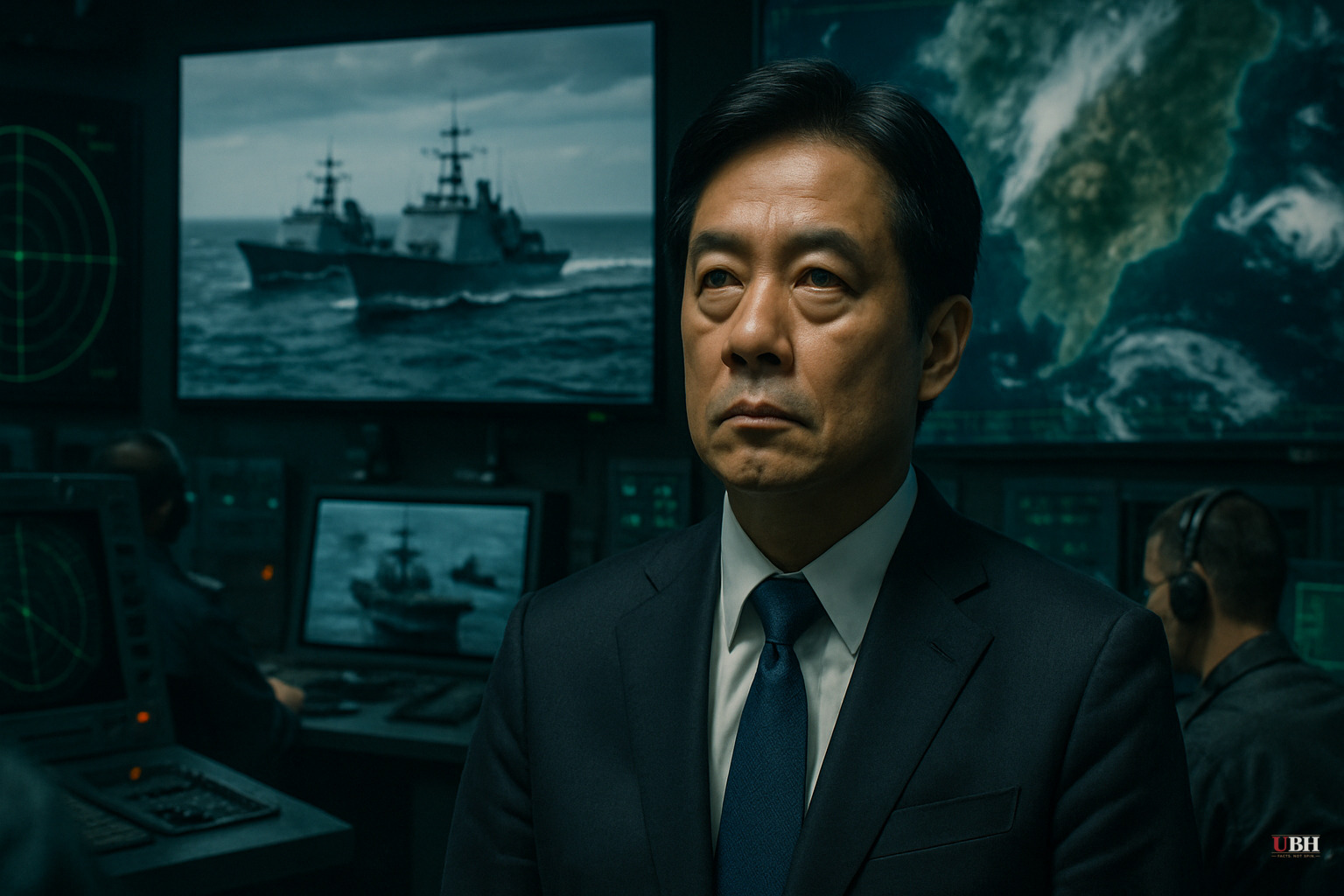
Lai Speaks. Finally.
For days after the Trump-Xi summit, Taiwan went quiet. Then on Sunday, May 17, President Lai Ching-te posted his first direct public response.
"Taiwan will not provoke or escalate conflict, but it will also not relinquish its national sovereignty and dignity, or its democratic and free way of life, under pressure," Lai wrote on social media, according to Al Jazeera.
Lai's statement reflects the careful balance required of Taiwan's leadership—firm enough to reassure 23 million Taiwanese, cautious enough not to hand Beijing a pretext for escalation.
What Lai Actually Said — And What He Didn't
Lai didn't declare independence. He didn't threaten anything. He restated Taiwan's longstanding position: the island IS already a sovereign democratic nation — the Republic of China — and there's "no 'Taiwan independence' issue" because independence already exists, according to BBC News.
Under both Lai and his predecessor Tsai Ing-wen, Taiwan has consistently held this position. You don't declare what you already are.
Lai also pinned blame squarely on Beijing: China is "the root cause of regional instability," he said, according to Al Jazeera. Taiwan is "a staunch maintainer of the status quo" — NOT the party trying to blow it up.
This directly contradicts the framing Trump used during his summit with Xi.
Trump's $11 Billion Problem
Congress has already approved an $11 billion arms package for Taiwan. Trump hasn't signed it. When Fox News asked him about it, Trump said: "I haven't approved it yet. We're going to see what happens. I may do it. I may not do it," according to Al Jazeera.
That is not a reassurance. It is leverage. The ambiguity extends to Taiwan, China, or both.
Note: our previous coverage referenced the figure as $14 billion based on earlier reporting. The figure now being cited specifically by Trump in his Fox News interview — the package he's personally deliberating on — is $11 billion. Both figures reflect different tranches of pending arms approvals. Trump is treating Taiwan's defense shopping list as a bargaining tool.
What Trump Actually Committed To
Trump told reporters aboard Air Force One that Xi "feels very strongly" about Taiwan independence and that he "made no commitment either way," per Al Jazeera.
"No commitment either way" sounds neutral. In diplomatic terms, it rarely is. Xi publicly told the world that Taiwan is "the most important issue in China-US relations" and that mishandling it could trigger conflict, according to Chinese state media cited by BBC News. Trump offered no public pushback. In diplomatic circles, silence reads as acquiescence.
The New York Times reported Taiwan officials are now in active lobbying mode — stressing the island's strategic importance and pushing hard for confirmation that arms sales are coming. Taiwan's diplomatic intensity suggests concern about what just transpired in Beijing.
Military Pressure on Taiwan
The Council on Foreign Relations' Global Conflict Tracker notes China conducted live-fire "red-blue confrontation drills" in Fujian Province — directly across the strait from Taiwan — as recently as August 2022, and military pressure has only intensified since. This is concrete military activity, not abstract diplomacy. China has been rehearsing.
The Quincy Institute for Responsible Statecraft has argued Taiwan is "an important but not vital U.S. interest" — not worth going to war over. That's a legitimate strategic position. The institute also acknowledges Taiwan produces 60 percent of the world's most sophisticated semiconductors. Beijing controlling that production has serious global consequences for tech supply chains.
The Cascade Risk
If Trump withholds the arms package as a bargaining chip with Beijing, Taiwan becomes weaker. A weaker Taiwan invites miscalculation. Miscalculation triggers the conflict everyone claims to want to avoid.
Strong deterrence works as the best peace strategy.
Lai understands this. His Sunday statement was precisely calibrated — no provocations that give Beijing or Washington an excuse to abandon Taiwan, but no surrender of the sovereignty that makes Taiwan worth defending.
Taiwan is executing sound strategy. What Taiwan cannot control is a U.S. president treating a congressional-approved $11 billion defense commitment as a negotiating chip in talks with Beijing.
Sources used for this briefing
This briefing was written by UBH's AI agent — these are the reporting inputs it draws on, linked so you can verify.


