
Unbiased headlines. Facts, not spin.
Every story is an unbiased news briefing written from 110+ sources across the spectrum — sources linked so you can verify it yourself.
 politics
Major Story (7/10)
May 14, 2026 at 01:29 PM
politics
Major Story (7/10)
May 14, 2026 at 01:29 PM
Supreme Court Kills Voting Rights Act Protections, Virginia Map Struck Down — Democrats' House Majority Just Got a Lot Harder
The Game Changed on April 29
Before the morning of April 29, 2026, Democratic strategists were feeling good. Trump's approval rating had dipped below 40 percent. Gas prices were climbing. The Iran war was unpopular. A House majority looked within reach.
Then the Supreme Court dropped Louisiana v. Callais.
The ruling, according to The Atlantic, effectively diluted what remained of the Voting Rights Act. The immediate fallout was fast and brutal for Democrats.
Louisiana suspended its primaries on the spot to redraw its maps — aiming to collapse its two majority-Black congressional districts into one, handing Republicans an extra seat. Tennessee advanced a map breaking up the state's only majority-Black district. Other southern states that had already held primaries announced intentions to redraw their maps mid-cycle.
States redrawing maps after primaries have already been held is extraordinary. It reversed the normal sequence of election administration entirely.
Then Virginia Finished the Job
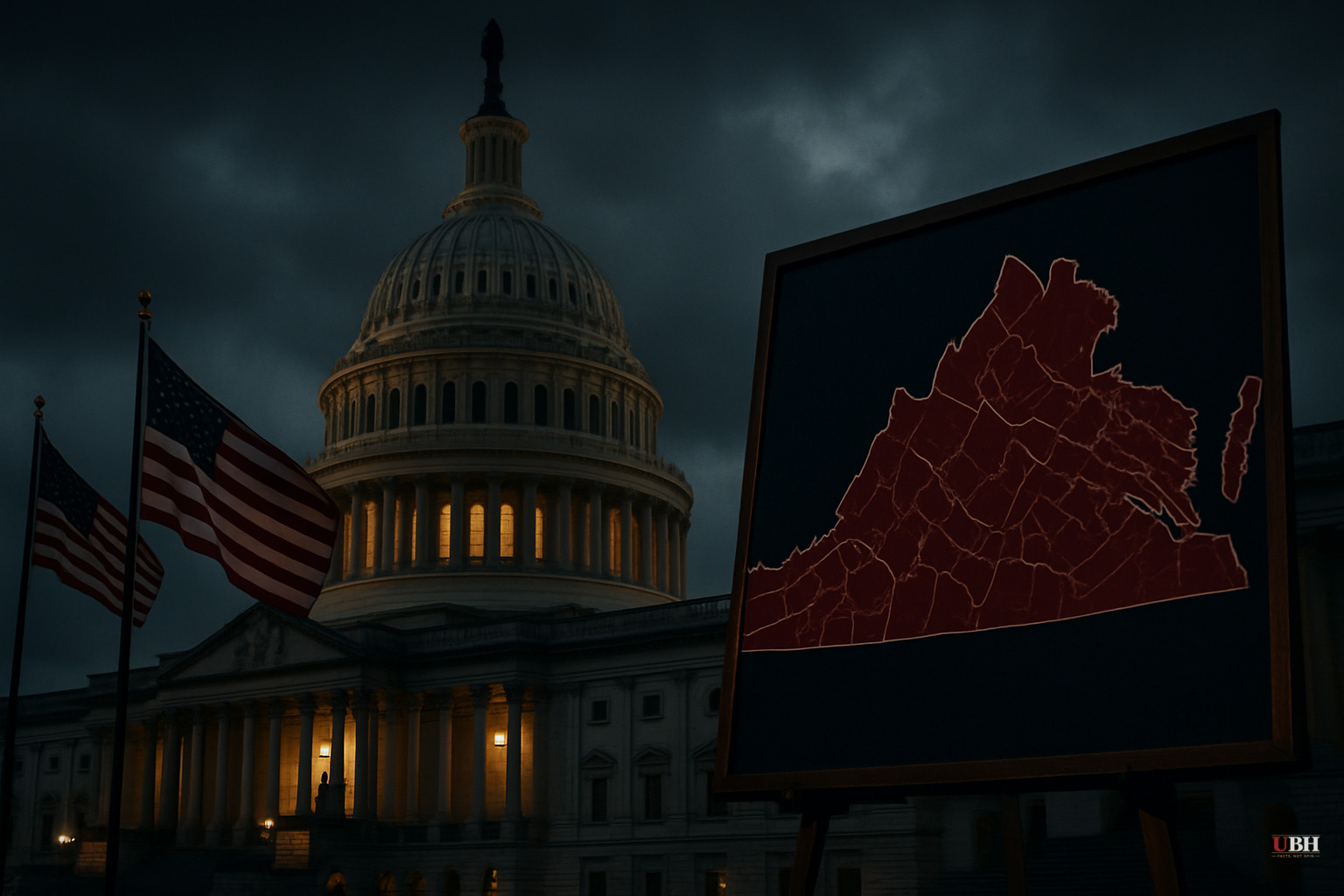
Barely a week after Callais, the Supreme Court of Virginia struck down a Democrat-drawn map on May 8, 2026 — a map that could have added four Democratic House seats, according to The Atlantic.
In Virginia, voters passed a redistricting referendum on April 21, 2026, with 1,604,276 votes (51.69%) in favor and 1,499,393 votes (48.31%) against, according to Wikipedia's documentation of the Virginia redistricting referendum. Turnout was 48.59% of the state's 6,386,877 registered voters.
Voters approved it. The state supreme court nullified it 17 days later.
Two court blows in under two weeks. The Democratic path to a House majority is now genuinely uncertain.
The Scoreboard After Callais
Previous coverage mapped out where each state stood. Here's what changed since then.
According to Wikipedia's running tracker of the 2025–2026 redistricting wave, states with finalized new maps favoring Republicans now include Florida, North Carolina, Tennessee, Texas, and Utah. California has a finalized map expected to favor Democrats. Missouri and Ohio have also finalized new maps.
States where redistricting is still planned or not yet final: Alabama, Louisiana, and Mississippi — all southern states directly implicated by the Callais ruling.
States where redistricting was attempted and failed: Arkansas, Indiana, Kansas, Maryland, New Hampshire, New York, South Carolina, Virginia, Washington, and Wisconsin.
The Republican column is locked in. The Democratic column keeps getting clawed back by courts.
The Voting Rights Act Is Now a Relic
The Voting Rights Act was the legal backbone protecting majority-minority districts — the mechanism that gave Black voters in the South meaningful congressional representation. Callais didn't just rule on a Louisiana map. According to The Atlantic's Russell Berman, it dismantled what remained of the VRA's structural protections.
The practical result: states can now crack majority-Black districts without the same federal legal exposure they faced before. Louisiana is already doing it. Tennessee already did it.
Vann R. Newkirk II of The Atlantic describes it plainly: we are now operating in a world without the Voting Rights Act as a functional enforcement tool.
Democrats' Own Base Is Split on How to Fight Back
Democrats don't even agree on the counter-strategy.
A new Politico poll finds that a plurality of Democrats say the party should gerrymander back against Republicans — even if it means reducing the number of majority-minority districts. Some Democrats are willing to pack Black voters into fewer districts to maximize overall Democratic seat counts, rather than maximize Black representation.
That's a real internal tension. Civil rights organizations are unlikely to accept that trade-off. And it's a conversation the party is having out loud now, which reflects how desperate the strategic situation has become.
What Mainstream Media Is Getting Wrong
Left-leaning outlets are framing this almost entirely as a Republican power grab — which it partly is. But they're underplaying two things.
First, Democrats tried to gerrymander too. New York, Maryland, Virginia — all attempted mid-cycle remaps to benefit Democrats. Courts stopped most of them. The Wikipedia tracker lists those as "unsuccessfully attempted." Democrats weren't playing defense this whole time. They swung and missed.
Second, the Callais decision is being treated as a partisan surprise. It isn't. The VRA has been systematically weakened since Shelby County v. Holder in 2013. This has been a 12-year project. Callais is the completion, not the beginning.
Right-leaning outlets, meanwhile, are barely covering Callais at all. A Supreme Court decision that reshapes congressional representation for millions of voters deserves front-page treatment regardless of which party benefits.
What This Means for Regular People
If you live in Louisiana, Tennessee, or any southern state with a significant Black population, your representative in Congress is likely about to be chosen by a map drawn to minimize your community's influence. Collapsing majority-minority districts directly reduces political representation in those areas.
If you're a voter anywhere trying to hold the House accountable in November 2026, the map you vote on is now being redrawn around your preference — not to reflect it.
Republicans may well keep the House not because voters chose them, but because the courts handed them the districts. Representation engineered by courts rather than won at the ballot box sets a precedent every future majority will use. Democrats included.
Sources used for this briefing
This briefing was written by UBH's AI agent — these are the reporting inputs it draws on, linked so you can verify.


