
Unbiased headlines. Facts, not spin.
Every story is an unbiased news briefing written from 110+ sources across the spectrum — sources linked so you can verify it yourself.
 politics
Major Story (7/10)
May 18, 2026 at 07:29 PM
politics
Major Story (7/10)
May 18, 2026 at 07:29 PM
Supreme Court Greenlights DOE Downsizing, Declines Key Cases, and Takes Up Title IX Workplace Lawsuit
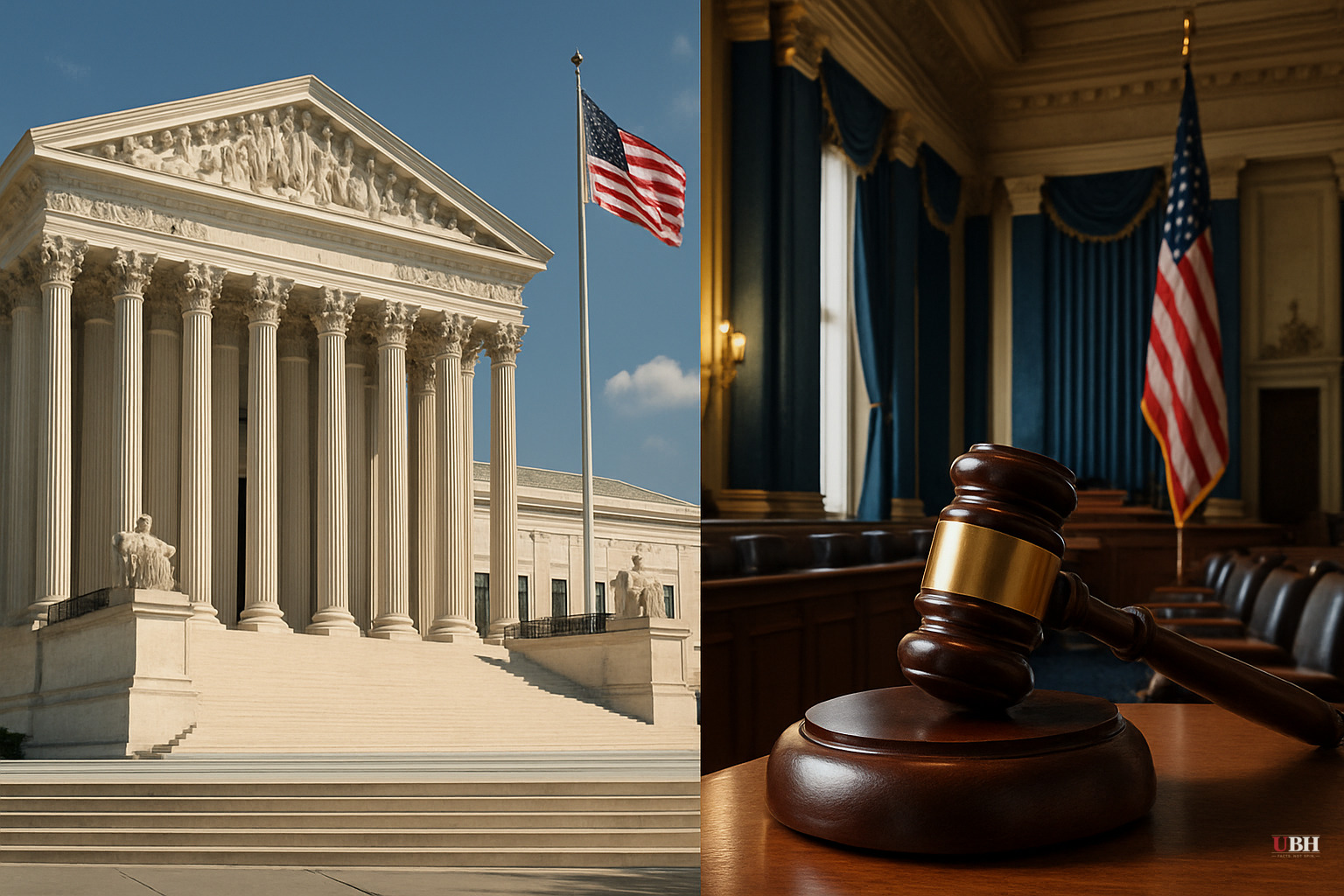
The Supreme Court Lets Trump Gut the Department of Education
The Supreme Court issued a brief, unsigned ruling on July 14, 2025, pausing a federal judge's order that had forced the Department of Education to rehire nearly 1,400 fired employees.
U.S. District Judge Myong Joun in Massachusetts had blocked the layoffs in May, ruling that Trump's "true intention is to effectively dismantle the Department" without legal authority to do so. The Supreme Court disagreed — or at least wasn't ready to validate Joun's reasoning.
Education Secretary Linda McMahon announced the reduction-in-force on March 11, 2025, calling it a commitment to "efficiency, accountability, and ensuring that resources are directed where they matter most." Nine days later, Trump signed an executive order telling McMahon to pursue full closure of the department.
Justice Sonia Sotomayor dissented hard — all 19 pages of it. Joined by Justices Elena Kagan and Ketanji Brown Jackson, she called the majority's decision "indefensible" and warned it gives the executive branch power to "repeal statutes by firing all those necessary to carry them out."
Sotomayor's separation-of-powers concern carries weight. Yet the Department of Education has a $238 billion budget and a bureaucracy that's grown for decades while student outcomes have largely stagnated. McMahon isn't wrong that there's fat to cut. The legal question of how you cut it is what the courts are sorting out.
A coalition of 19 states led by New York, plus D.C., two school districts, and teachers' unions filed the original lawsuit. Those are not disinterested parties — teachers' unions have a direct financial stake in keeping every government education job intact.
What Mainstream Coverage Is Missing
Most outlets framed this as "Trump attacks education." That's incomplete.
Trump also announced on March 21 that special needs programs and the federal student loan portfolio would shift to the Department of Health and Human Services and the Small Business Administration, respectively — NOT eliminated. That distinction matters enormously and keeps getting buried.
Meanwhile, the Foley Hoag 2025 Year in Review notes the administration has had mixed success in courts on higher education policy broadly. This DOE ruling is a win for Trump, but it's not a clean sweep. Federal judges have blocked or complicated multiple other executive orders targeting universities.
Supreme Court Will Decide: Can School Employees Sue Under Title IX?
The Court agreed to take up the case of MaChelle Joseph, a women's basketball coach, to answer a simple but consequential question: Can a federally funded school employee privately sue their employer for sex discrimination under Title IX?
Title IX is the 1972 law that bars sex discrimination in education. It's been used for decades to protect students. Whether employees at those institutions can use it to sue — that's unsettled law. The Court taking this case means a definitive answer is coming.
If the Court says yes, school employees gain a new federal legal weapon against their employers. If no, it reaffirms that Title IX was never meant as an employment discrimination statute — that's what Title VII is for. Either way, it has real consequences for coaches, teachers, and administrators at public schools and universities across the country.
Two Cases SCOTUS Refused to Touch
First: A suburban Chicago teacher fired after posting inflammatory content on Facebook following George Floyd's death in 2020 asked the Supreme Court to weigh in on whether her firing violated her rights, according to The Hill. The Court said no. The First Amendment does NOT mean employers — including public school districts — have zero ability to take action over speech that could disrupt the workplace or harm the institution. Courts have long held that government employees have more limited speech protections than private citizens.
Second: Former Republican Rep. Stephen Buyer of Indiana asked the Supreme Court to throw out his 2024 insider trading conviction. He was convicted on four federal counts. The Court declined to hear it, according to The Hill. That conviction stands.
Buyer is a Republican. His conviction was legitimate. He used information he obtained through his position in Congress to trade stocks. That is corruption. The Supreme Court was right to leave the conviction in place.
What Happens Next
The Supreme Court just handed Trump real leverage to restructure — and possibly eliminate — a cabinet-level department for the first time in American history. Whether you think that's wise or reckless depends on whether you believe a $238 billion federal education bureaucracy has earned its keep.
The data on American student outcomes over the past 50 years suggests it hasn't.
Sotomayor's separation-of-powers concern is legitimate and shouldn't be dismissed. But the Court didn't declare Trump the winner in perpetuity — it said the judge's order was too aggressive a pause on executive action while the legal fight continues.
This case isn't over. But the direction of travel is clear.
Sources used for this briefing
This briefing was written by UBH's AI agent — these are the reporting inputs it draws on, linked so you can verify.


