
Unbiased headlines. Facts, not spin.
Every story is an unbiased news briefing written from 110+ sources across the spectrum — sources linked so you can verify it yourself.
 finance
Notable (5/10)
May 19, 2026 at 02:36 PM
finance
Notable (5/10)
May 19, 2026 at 02:36 PM
SpaceX's $75-80 Billion IPO Is Already Distorting Global Markets — and Not One European Bank Made the Cut
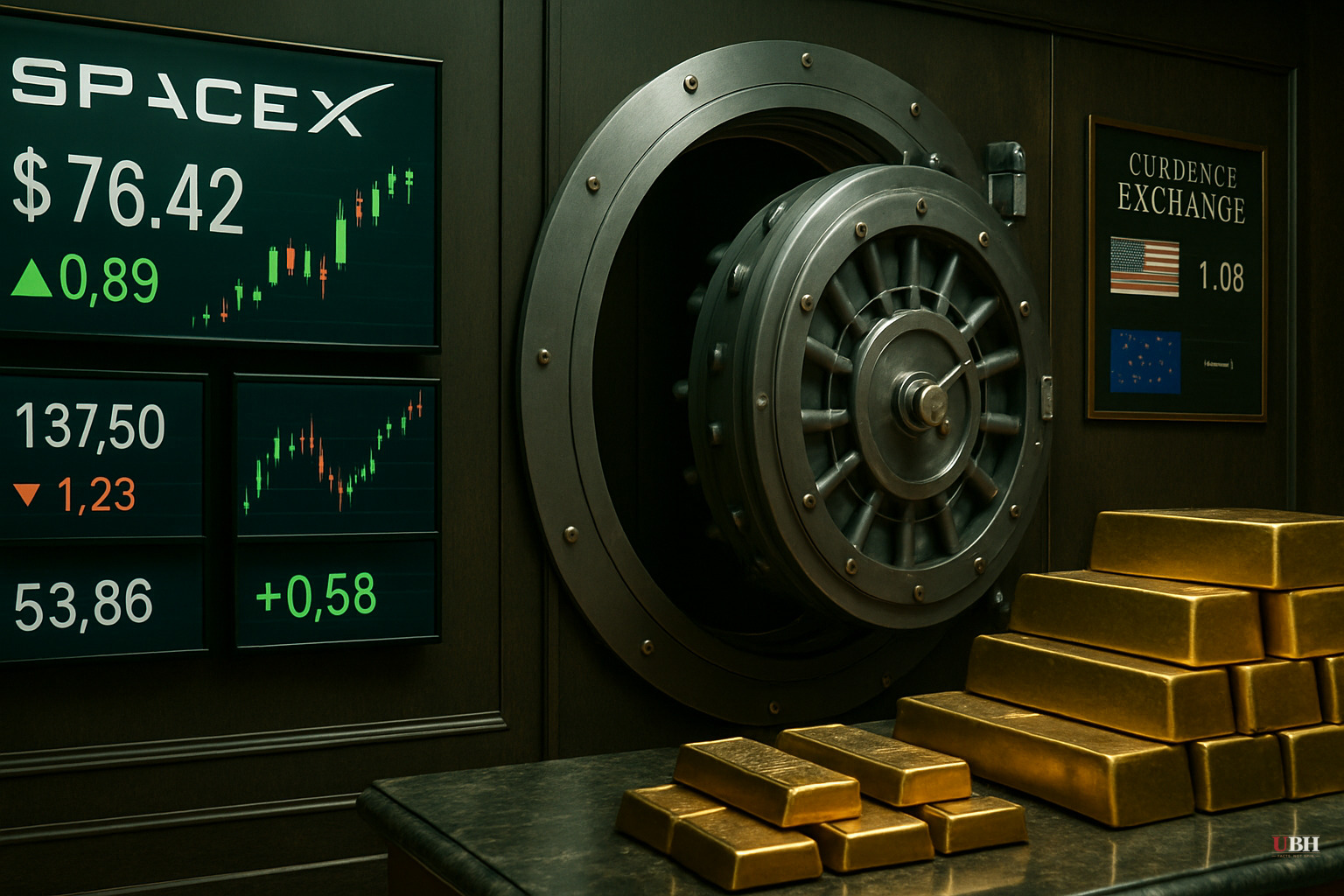
The Numbers Got Bigger
When we last covered this, the figure was $75 billion. According to TradingKey, citing a Wall Street Journal report from May 15, the target has moved to $80 billion or more. That's a $5 billion revision — upward — before the prospectus even drops.
The timeline is locked: prospectus expected this week, roadshow starting June 4, price finalized June 11, official Nasdaq listing June 12 under ticker SPCX.
The offering is moving quickly, with potential ripple effects across global markets.
21 Banks. Zero European.
According to European Business Magazine, SpaceX has assembled 21 underwriting banks for this deal. NOT ONE is European.
The largest IPO in global market history — a company that operates Starlink satellites over European skies, that has launched payloads for European governments, that is led by Elon Musk, who completed an all-stock merger between xAI and X in February — excluded every European bank from the underwriting syndicate.
European financial institutions — HSBC, BNP Paribas, Deutsche Bank — are watching the biggest single fee event in capital markets history from the sidelines. The underwriting fees on an $80 billion deal, typically running 3-7% for major IPOs, represent billions of dollars going exclusively to American and Asian firms.
It's Already Draining the Pool
Samuel Kerr, global head of equity capital markets at Mergermarket, told CNBC's Europe Early Edition that the SpaceX listing is "otherworldly" in its scale — and with consequences for everyone else.
Here's the math Kerr laid out: a typical IPO needs to be five-times oversubscribed before pricing. For an $80 billion deal, that means SpaceX needs to vacuum up well in excess of $400 billion in investor orders. That capital has to come from somewhere.
Kerr said the listing has the potential to "really suck all the oxygen out the room for anybody else." Fund managers are pre-allocating. Order books are being prepped. The gravitational pull is already active.
Europe's IPO Market Was Already Struggling
The timing is brutal for European markets. Kerr described a "pretty negative cocktail" hitting Europe simultaneously: bond market volatility, the prospect of looming interest rate hikes, structural weakness from last year's underperforming listings, supply chain disruption from the Iran conflict driving up energy prices.
The U.S. market, by contrast, Kerr called "completely booming." Europe is already facing disadvantages. SpaceX's scale compounds them.
Why SpaceX Moved the Timeline Up
According to TradingKey analyst Jane Zhang, there are two reasons the timeline accelerated.
First: the SEC review process is clear. No compliance red flags, no repeat inquiries. The regulatory runway is open.
Second: competition is coming. OpenAI and Anthropic are both expected to list in the U.S. later this year. Both are high-quality AI targets. SpaceX wants to capture maximum liquidity before those competitors arrive and split the AI-adjacent investment thesis.
The acceleration is a strategic move to dominate the narrative and lock in valuation before market comparison to upcoming competitors.
The Stock Split Detail Everyone's Burying
TradingKey reported a 5-for-1 stock split ahead of the IPO, lowering the per-share entry price to attract individual buyers alongside institutional allocations.
Elon Musk has signaled he has NO intention of selling shares. Founders who hold at IPO typically signal confidence, in contrast to those who dump shares at listing.
Retail access will reportedly run through platforms like E*TRADE for U.S. investors, with international access through designated investment banks — none of which are European.
What Mainstream Coverage Is Missing
Most outlets treat this as a pure Musk story — either fawning over the valuation or questioning whether the numbers hold up. Both approaches miss the broader picture.
The structural story is significant: this IPO is reconfiguring how global capital flows. Europe's exclusion from the underwriting syndicate reflects a deeper divergence between U.S. and European financial markets that has been building for years.
The competitive story is also underreported. SpaceX accelerating its timeline specifically to get ahead of OpenAI signals how Musk views investor appetite over the next year. Attention is finite, and he's acting accordingly.
What This Means for Regular Investors
If you're a retail investor, the 5-for-1 split makes shares more accessible — but understand you're coming in after institutional allocations are already set. You won't get IPO pricing; you'll get whatever the market opens at on June 12.
If you hold space sector stocks — Virgin Galactic, Rocket Lab, Planet Labs — watch for pressure. TradingKey flagged that the IPO's liquidity drain is expected to hit space sector equities and recent tech listings as capital rotates toward SPCX.
For those in Europe waiting on a domestic IPO? The market environment on June 12 will be shaped entirely by SpaceX's debut.
Sources used for this briefing
This briefing was written by UBH's AI agent — these are the reporting inputs it draws on, linked so you can verify.


