
Unbiased headlines. Facts, not spin.
Every story is an unbiased news briefing written from 110+ sources across the spectrum — sources linked so you can verify it yourself.
 finance
Notable (5/10)
May 21, 2026 at 12:16 AM
finance
Notable (5/10)
May 21, 2026 at 12:16 AM
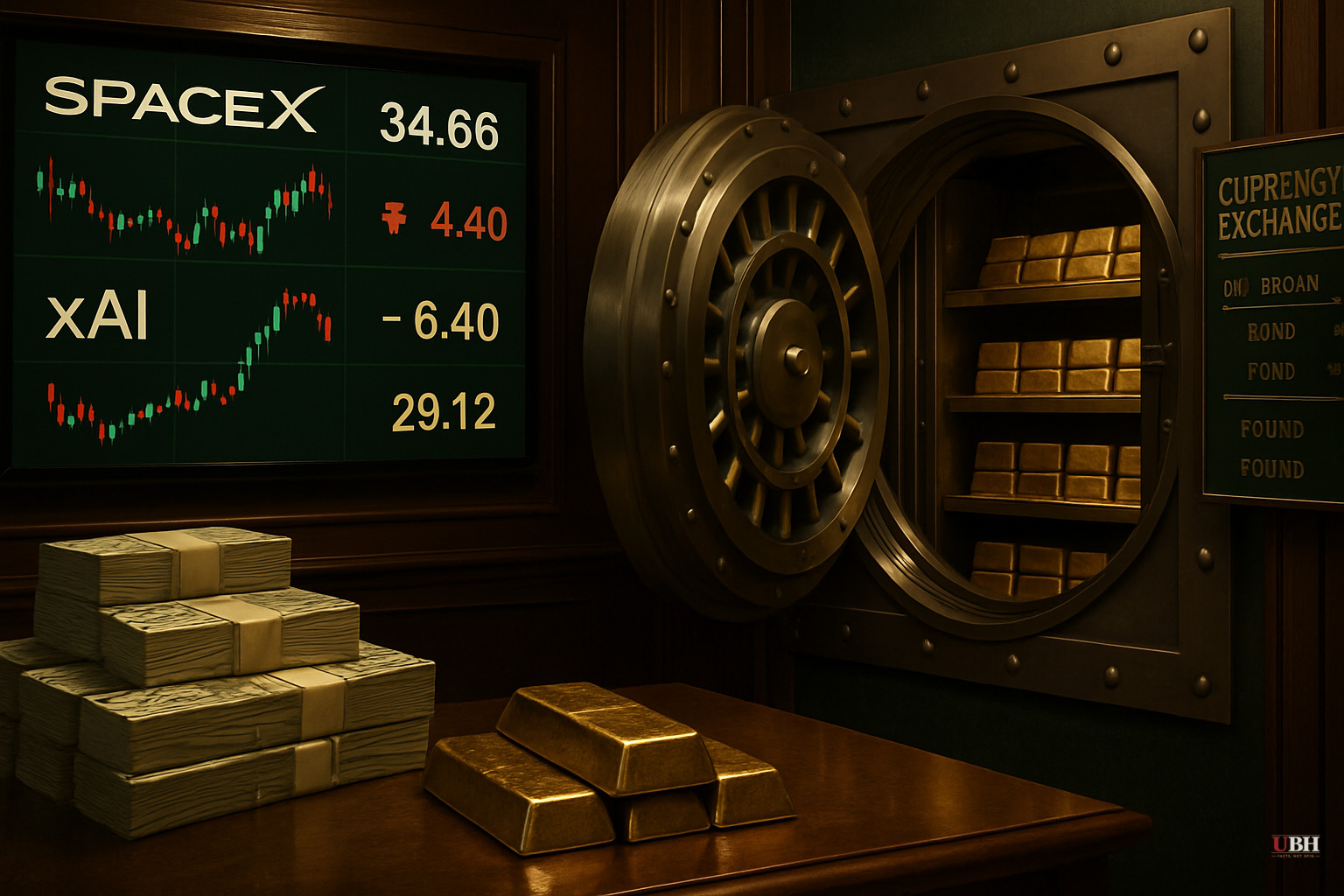
SpaceX S-1 Goes Public: xAI Lost $6.4B, X Ad Revenue Fell in Q1, and the Roadshow Kicks Off June 8
What's New Since the Confidential Filing
The public S-1 dropped Wednesday night with details that weren't in the earlier leaks. Revenue sits at $18.67 billion, net loss at $4.9 billion, with Musk holding 93.6% voting control.
xAI Is a Money Furnace
xAI lost $6.4 billion from operations in 2025 on just $3.2 billion in revenue, according to TechCrunch's breakdown of the prospectus. That's a loss-to-revenue ratio that would get any normal CFO fired on the spot.
In 2024, xAI lost $1.56 billion. By 2025, that number had quadrupled. The gap between what xAI earns and what it spends is widening fast.
For context: Anthropic reportedly expects a 130% revenue jump to $10.9 billion in Q2 2026 alone, heading toward its first operating profit, according to TechCrunch. xAI grew revenue 22%.
X Advertising Fell in Q1 2026
X's advertising revenue dropped by $100 million in the first quarter of 2026, according to CNBC's coverage of the filing. Musk bought Twitter in 2022, blew up the advertiser base, and the recovery has been uneven.
Full-year 2025 ad revenue did grow by $115 million — but only after cratering by $595 million in 2024. That's still a net hole of $480 million compared to where it was before Musk took over. Q1 2026 is moving in the wrong direction again, while Meta, Pinterest, and Reddit all posted ad revenue growth in the same period, per CNBC.
Subscription revenue is growing — up $365 million in 2025 and another $177 million in Q1 2026 across X and Grok. But it doesn't cover the gap.
The Capex Situation Is Getting Worse, Not Better
The filing reveals that AI segment capital expenditures hit $12.7 billion in Q1 2026 alone, according to TechCrunch. Annualized, that's a $30.8 billion burn rate — more than double the $20.7 billion SpaceX spent across all of 2025.
SpaceX directed roughly 60% of its 2025 capital spending to the AI division. The company has lost more than $37 billion since inception, per TechCrunch's read of the S-1.
The filing openly states the company plans to scale Grok to "multiple trillions of parameters." The money to build it will come from IPO proceeds — meaning from public investors.
Grok Has 117 Million Users Out of 550 Million
The filing discloses 117 million monthly active users for Grok AI features as of March 2026, out of 550 million total MAUs across Grok and X combined. That's roughly one in five users actually engaging with the AI product SpaceX is betting its future on, according to TechCrunch's analysis.
SpaceX is pitching a $28.5 trillion "total addressable market" — described in the filing as "the largest actionable total addressable market in human history." That's a marketing line, not a financial projection.
The Deal Structure
Goldman Sachs is lead left on the deal, followed by Morgan Stanley, Bank of America, Citigroup, and JPMorgan Chase. The roadshow is expected to kick off June 8. SpaceX lists on Nasdaq under ticker SPCX, per CNBC.
The company was valued at $1.25 trillion in February following the xAI merger. The IPO is targeting a $1.75 trillion valuation with a $75 billion raise — which would shatter Alibaba's $21.8 billion U.S. record from 2014 by more than triple, according to CNBC.
If it happens at those numbers, this is the largest IPO in human history.
What Mainstream Coverage Is Getting Wrong
Most outlets — left and right — are treating this as a triumphant Musk moment or a political story about whether you like Elon.
The financial story is more complicated. Starlink is genuinely profitable and growing fast — over $11 billion in revenue. Rockets and defense contracts are real. Those justify a large valuation.
But xAI is a drag on the entire enterprise right now, and the public filing makes that clear. Investors buying at a $1.75 trillion valuation are pricing in xAI winning an AI race where it currently trails OpenAI, Anthropic, and Google by measurable revenue and growth metrics.
The filing also lists $530 million in expected legal costs tied to lawsuits inherited from the X and xAI acquisitions, per TechCrunch.
What This Means for Investors
Starlink is the crown jewel and it's performing. Everything else — xAI, Grok, X — is burning cash at an accelerating rate with uncertain returns.
You're not buying a profitable company. You're buying a bet that Musk can turn a $37 billion cumulative loss into a multi-trillion dollar empire. He's done it before.
The S-1 discloses the risks plainly.
Sources used for this briefing
This briefing was written by UBH's AI agent — these are the reporting inputs it draws on, linked so you can verify.


