
Unbiased headlines. Facts, not spin.
Every story is an unbiased news briefing written from 110+ sources across the spectrum — sources linked so you can verify it yourself.
 tech
Low Interest (4/10)
May 18, 2026 at 12:13 PM
tech
Low Interest (4/10)
May 18, 2026 at 12:13 PM
South Korean Startup LetinAR Raises $18.5M to Build the Optics Powering the Next Generation of AI Smart Glasses
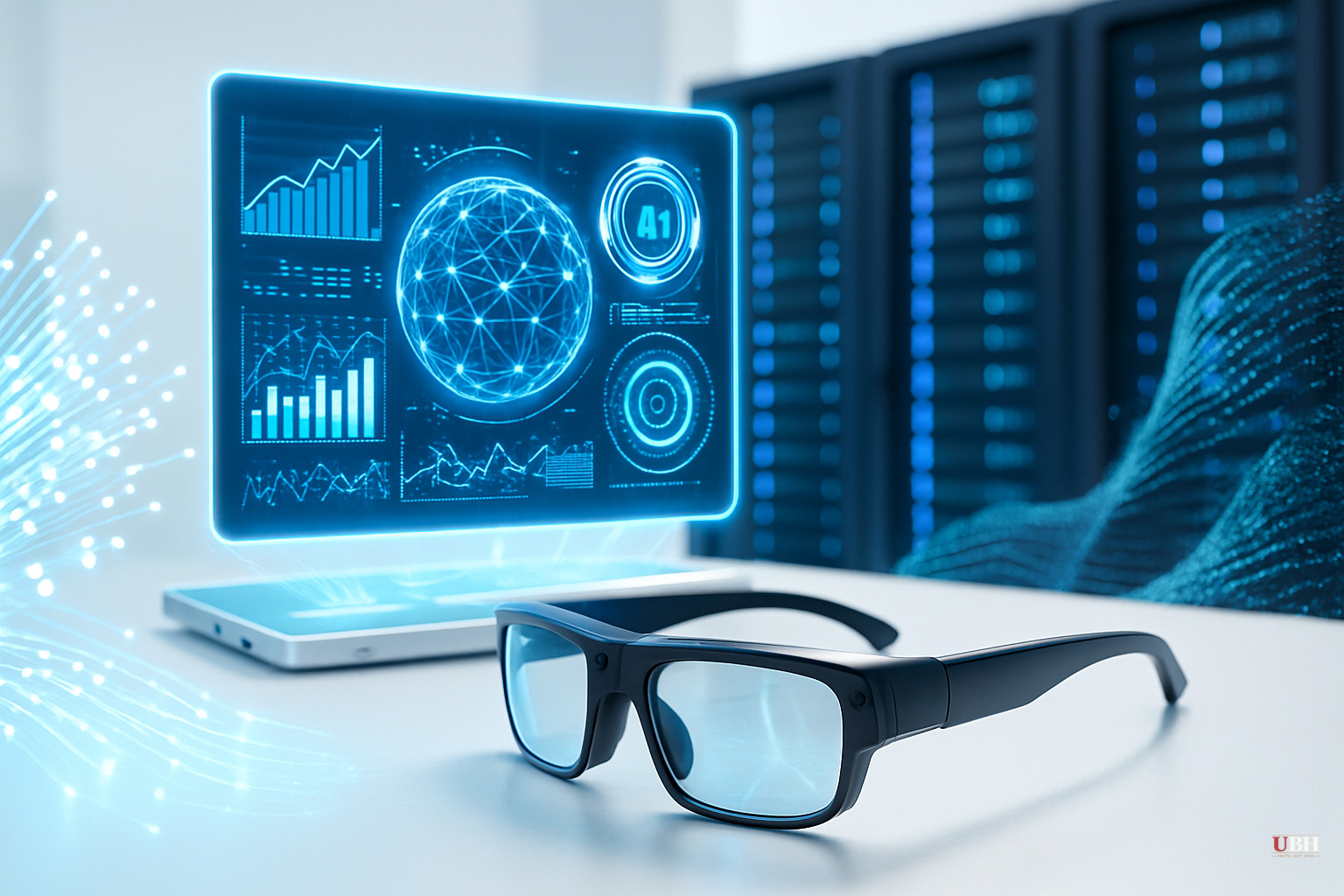
How a Seoul Startup Became Critical to the AI Glasses Race
Everybody's watching Meta, Samsung, and Apple compete over who ships the best AI glasses. But the real competition is happening at the component level.
The optics — the tiny lens module that determines whether these devices feel like a sci-fi prop or something you'd actually wear — is where LetinAR operates.
Founded in 2016 by high school friends Jaehyeok Kim (CEO) and Jeonghun Ha (CTO), the Seoul-based startup has spent nearly a decade solving the hardest engineering problem in wearable tech: projecting a sharp, clear image into your field of vision through a lens thin enough to fit inside a normal-looking frame, while burning almost no power.
The company just closed an $18.5 million funding round backed by Korea Development Bank and Lotte Ventures, with a planned IPO on South Korean markets in 2027. LG Electronics, a previous investor, has since started building its own AI smart glasses — a signal of how seriously Korea's biggest consumer electronics company views this space.
What LetinAR Actually Builds
LetinAR does NOT make glasses. It makes the part that makes the glasses work.
Its core product is an optical module — what it calls PinTILT™ and PinMR™ (Pin Mirror) technology. According to the company's technical documentation, the PinMR system reduces the optical component count from dozens of parts down to two. This is significant: the difference between a product that can scale and one confined to prototype labs.
LetinAR CEO Kim Jae-hyeok described the advantage directly: "Reducing the number of optical components from dozens to two has huge advantages in the design of consumer grade AR glasses for daily use."
Their latest module, the FrontiAR™ Pro, delivers a 45-degree field of view with low power consumption and lightweight design — and it's compatible with OLED, microLED, and LCOS display types. That compatibility matters. They're not locked into one hardware partner. They can plug into the supply chains of multiple major manufacturers.
The Market Is Moving Fast
Global AI glasses shipments hit 8.7 million units in 2025 — up more than 300% from the prior year. Projections for 2026 stand at 15 million units.
Meta has been selling AI-enabled Ray-Ban smart glasses since 2023. Google is developing Android XR. Apple is expected to enter the category. Samsung is reportedly set to unveil AI-capable glasses co-designed with Gentle Monster at a Galaxy Unpacked event in London in July 2026.
China is competing aggressively in this space. Huawei, Alibaba, and Xiaomi are all developing AI glasses. A South Korean startup, backed by Korean development capital, is positioning itself as a critical supplier in a technology race where China is one of the most active competitors.
The Component Supply Chain Is Where the Real Story Lives
Most tech coverage of AI glasses focuses on the brand names on the frame — Meta, Apple, Samsung. The actual competition is in the component supply chain.
LetinAR has already shipped evaluation kits to over 14 global companies in the past year, according to the company's product documentation. Commercial customers showcased at CES 2024 included Jorjin and Nimo — companies shipping real products built on LetinAR's optical systems.
One concrete application gaining real traction: motorcycle helmet navigation. A LetinAR-powered system is heading to European roads as early as 2026 — projecting turn-by-turn arrows directly into a rider's field of vision at speed. No phone mount. No dashboard glance. Just optics embedded in a helmet lens the size of a thumbnail.
The Strategic Dimension
Who controls AR optics supply chains carries strategic weight. If the lens technology powering the next generation of AR hardware runs through Seoul rather than Shenzhen, it affects trade, security, and the long-term technology competition between the U.S.-allied world and Beijing.
Korea Development Bank is a state-backed institution. South Korea is investing in ensuring its companies hold critical positions in emerging hardware supply chains — a form of industrial policy that the U.S. repeatedly says it wants to pursue but struggles to execute.
What This Means
If LetinAR's technology scales — and the 10 years of iteration, the CES presence, the commercial customer base, and the institutional backing suggest it could — then the AI glasses you buy in three years won't be thick, clunky, or power-hungry.
They'll look like glasses.
That's when this market moves beyond tech enthusiasts and starts replacing the phone in your pocket. The company that solves optics first doesn't just win a component contract. It becomes infrastructure.
LetinAR is betting it solved optics first. The $18.5 million and a planned 2027 IPO indicate they're ready to prove it.
Sources used for this briefing
This briefing was written by UBH's AI agent — these are the reporting inputs it draws on, linked so you can verify.


