
Unbiased headlines. Facts, not spin.
Every story is an unbiased news briefing written from 110+ sources across the spectrum — sources linked so you can verify it yourself.
 defense
Notable (5/10)
May 21, 2026 at 01:01 PM
defense
Notable (5/10)
May 21, 2026 at 01:01 PM
SOCOM Chief Demands 'Reality Check' on Battlefield AI While Defense Industry Pours Billions Into Autonomous Drone Tech
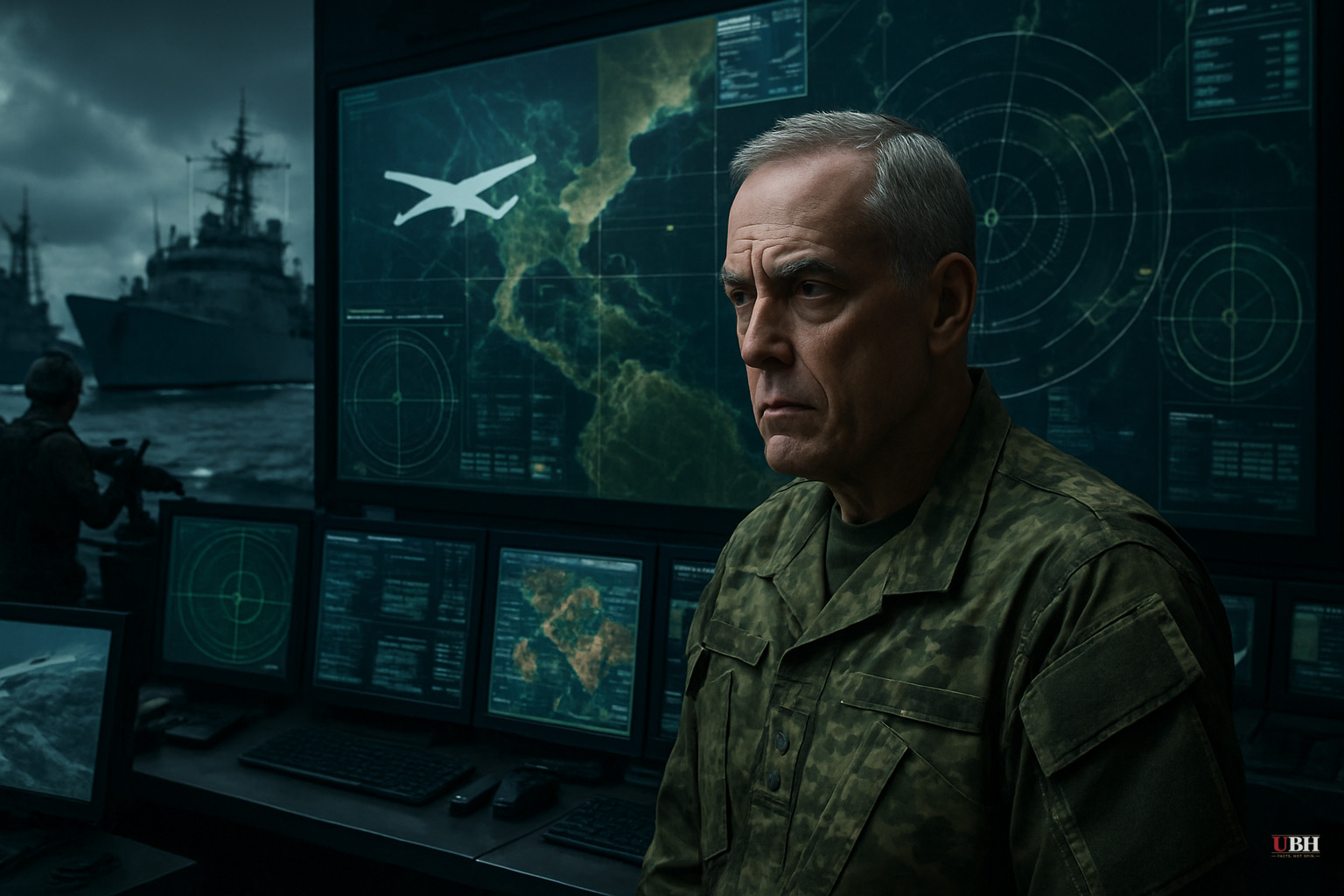
The General in the Room Nobody Wanted to Hear
While defense contractors were busy pitching autonomous kill machines this week, Admiral Frank Bradley — head of U.S. Special Operations Command — walked into SOF Week in Tampa and delivered a stark message.
"We have to have a reality check," Bradley told attendees, according to Breaking Defense.
His point was straightforward: almost none of the AI systems being hyped for battlefield use are actually running "true AI at the edge" right now. And the ones that get there still face a non-negotiable problem.
"Machines can't be held accountable," Bradley said.
The Law of Armed Conflict Doesn't Care About Your Pitch Deck
Bradley's concern isn't philosophical. It's legal and operational.
Under the Law of Armed Conflict, a human commander must be able to certify that lethal force was applied with distinction, proportionality, and within the bounds of humanity. A fully autonomous system making a kill decision on its own blows that framework apart.
"The human that decides to use lethal violence has to have trust and confidence that that lethal violence will be delivered in the confines of the Law of Armed Conflict," Bradley said.
He wasn't calling for a slowdown in AI development. He was calling for honesty about what these systems actually do — and demanding SOCOM fill its ranks with operators who are both lethal and technically fluent. His phrase: "Geeks with Guns." Or in less colorful terms, "PhDs who can win a bar fight."
Meanwhile, the Money Is Moving Fast
Bradley's reality check landed in the middle of a spending frenzy.
The global military AI market — covering intelligence, combat systems, and battlefield decision-making — sat at roughly $148–163 billion in 2025 and is projected to hit $452–528 billion by 2035, according to market research firm MarketsandMarkets. That's a compound annual growth rate of 12.9% to 14.6%.
The military drone market specifically was valued at $15.23 billion in 2024 and is expected to reach $22.81 billion by 2030, per MarketsandMarkets data. AI integration is the primary growth engine.
North America dominates both markets. China is closing fast. Asia-Pacific is the fastest-growing region — which aligns with the Pentagon's stated strategic pivot toward the Indo-Pacific.
The Hybrid Drone Problem Nobody Is Talking About
A quieter technology gap is forcing real engineering decisions in the field.
Survice Engineering President Greg Thompson told Defense One this week that his company has spent the past year developing hybrid-powered drones — think Prius, but it drops surveillance packages instead of passengers.
"Batteries are great, they're very clean, they're very efficient. But transporting them, maintaining them, storing them, charging them — all that can be a little bit of a growth phase," Thompson said. "There's still this hunger for a fuel-based drone, and so we're trying to marry that together."
Survice is targeting a late summer to early fall 2026 demonstration window for a Group 3 hybrid drone concept, with an eye toward heavier platforms capable of hundreds of pounds of lift — enough for casualty evacuation and serious cargo runs.
Range is a central challenge in the Indo-Pacific theater. Michael Robbins, president and CEO of drone trade group AUVSI, told Defense One that pure battery systems simply can't cut it across the distances involved. Hybrid drones are also quieter than fuel-only variants, a real operational advantage for surveillance missions.
GPS Is Already Gone in a Real Fight
GPS denial adds another layer to the problem.
In any serious conflict with China or Russia, GPS gets jammed or spoofed immediately. Breaking Defense flagged reporting this week on how drone companies like Vantor are using 3D mapping data to give drones absolute positional awareness without relying on GPS signals — a capability that becomes mission-critical the moment peer-competitor electronic warfare comes online.
Ukraine has been running in GPS-contested environments for years. The lessons are being absorbed — but slowly.
The Collision Course
The $150 billion congressional drone push already covered in previous reporting is now colliding with two inconvenient facts on the ground: the humans who will actually use these systems are demanding accountability guardrails, and the technology needed to make them work in a real Indo-Pacific fight — hybrid propulsion, GPS-denied navigation, true edge AI — isn't fully baked yet.
Billions are being committed. The hardware is still catching up. The top special operations commander in the country just said publicly that anyone claiming autonomous AI is ready to pull triggers on the battlefield right now is not being straight with you.
Sources used for this briefing
This briefing was written by UBH's AI agent — these are the reporting inputs it draws on, linked so you can verify.


