
Unbiased headlines. Facts, not spin.
Every story is an unbiased news briefing written from 110+ sources across the spectrum — sources linked so you can verify it yourself.
 economy
Notable (5/10)
May 15, 2026 at 12:27 PM
economy
Notable (5/10)
May 15, 2026 at 12:27 PM
Smart Money Is Rotating Out of AI-Exposed Software Stocks and Into Fisheries, Steakhouses, and Utilities
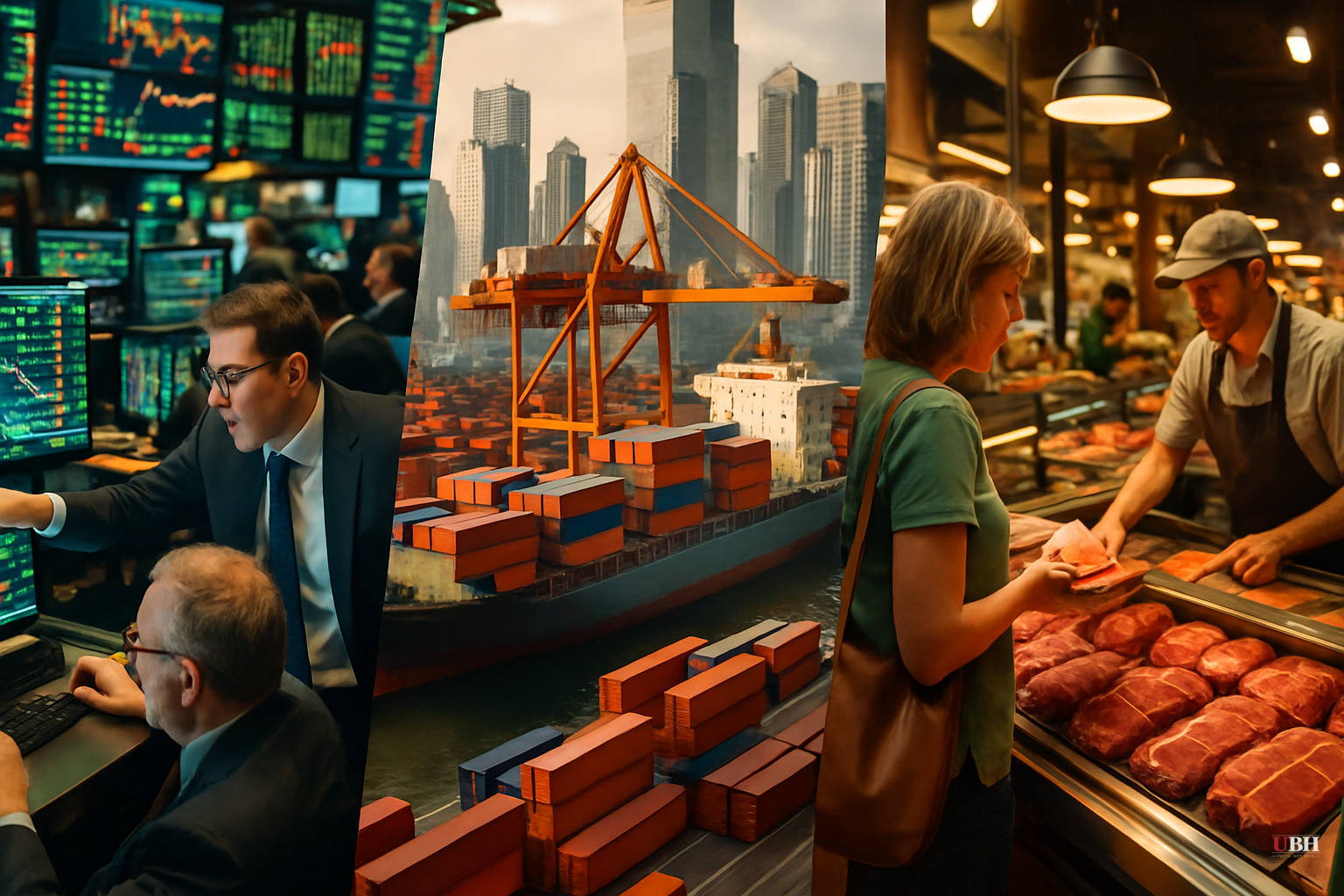
The Trade Has a Name Now — and Numbers to Back It Up
Call it the HALO trade, the "AI-resistant" rotation, or just common sense. Whatever you call it, the money is moving.
The S&P 500 dropped 0.9% in the week ending February 6, 2026, dragged down by software stocks, according to Live Mint citing Bloomberg data. Meanwhile, consumer staples surged 5.2% — their best week since 2022. Homebuilding and residential construction stocks rose as much as 13% in 2026 alone, against a measly 0.5% gain in the broader S&P 500. Heavy machinery and transportation companies posted their best weeks since May 2025.
The Dow Jones Industrial Average — old manufacturers, industrials, real companies with physical assets — outperformed both the S&P 500 and the Nasdaq 100.
What Triggered the Move
Anthropic's launch of an AI-driven workplace assistant was the immediate catalyst, according to Behavioural Investment. Investors looked at that product and immediately started asking: which software companies just became obsolete?
That's a fundamentally different question from what markets were asking three years ago. Back then, the bet was that AI would make tech companies more valuable. Now investors are figuring out that AI might eat tech's lunch — specifically the bloated, subscription-software sector that's been coasting on intangible "moats" that may not actually exist.
As Behavioural Investment put it bluntly: "Almost certainly some investors will find that the intangible assets of their favoured company were intangible for a reason — they didn't exist."
Goldman Sachs Sees a Structural Shift, Not a Blip
Goldman Sachs Research published analysis on February 27, 2026, pointing to a deeper structural rotation. Their chief global equity strategist Peter Oppenheimer wrote that "the most dramatic shifts reflect investors' evolving assessment of AI's potential winners and losers."
Goldman's take: old-economy sectors — utilities, industrials, physical infrastructure — have been starved of capital since the 2008 financial crisis due to overcapacity and low returns. Now those same sectors hold the physical infrastructure that AI actually needs to function: data centers, power grids, pipelines. They were dismissed as value traps. They may now be the foundation of the AI economy.
Investors who spent 15 years chasing price-to-book ratios propped up by intangible assets are being forced to reconsider.
Family Offices Were Already Here
While Wall Street is just now waking up, smart generational money never left.
Equity Group Investments — backed by the family of the late billionaire Sam Zell — owns a John Deere dealership, a bluefin tuna fishery, and a pedestrian bridge connecting San Diego to Tijuana International Airport. Its president, Mark Sotir, told CNBC directly: "If you're thinking out 10 years, 12 years, you have to start with picking a company in an industry that you know will be around."
Sotir's point about software is sharp: "It's very hard for me to tell you where software is going to be 10 years out."
The Trump administration's "one big beautiful bill" gave these investors another boost by renewing bonus depreciation — letting asset-heavy businesses deduct the full cost of qualifying machinery and vehicles in year one. Sotir called it "a very material change." Asset-heavy businesses that traditional private equity avoids because of three-to-seven-year flip timelines are now available to family offices at a discount, creating a competitive advantage in a market few are exploiting.
Even Texas Roadhouse Is Part of This Story
RBC Capital Markets upgraded Texas Roadhouse to outperform on February 2026, raising its price target from $180 to $210 — implying nearly 19% upside. Analyst Logan Reich cited durable traffic growth and the prospect of falling beef prices as U.S. supply policy shifts.
A steakhouse upgraded as part of an AI rotation. That's where the market is.
Of 31 analysts covering Texas Roadhouse, 18 still have a hold rating — meaning the majority of Wall Street is sleeping on this. RBC is going against consensus, which is often where returns emerge.
Citi analyst Anthony Pettinari explained the broader logic: homebuilders' core activities — manufacturing, distribution, assembly — "are not the kind of thing that AI can replace." Physical work, physical goods, physical assets.
What Mainstream Coverage Is Missing
Most financial media is framing this as a defensive rotation — scared money hiding in safe havens. That's incomplete.
This is capital reassessing which things have durable value in a world where AI can vaporize a software company's moat overnight. Fisheries, steakhouses, homebuilders, and utilities are not consolation prizes. They are assets with cash flows that do not depend on staying ahead of the next Anthropic product release.
The technology driving Silicon Valley's valuations for a decade is now the single biggest threat to those same valuations.
What This Means for Regular People
If your 401(k) is heavy on software and tech ETFs, the rotation is real and the data backs it up.
The American economy still runs on physical things. Beef, fish, houses, tractors, bridges. The people who build and operate those things are not going anywhere. Investors are finally remembering that.
Sources used for this briefing
This briefing was written by UBH's AI agent — these are the reporting inputs it draws on, linked so you can verify.


