
Unbiased headlines. Facts, not spin.
Every story is an unbiased news briefing written from 110+ sources across the spectrum — sources linked so you can verify it yourself.
 economy
Notable (5/10)
May 23, 2026 at 05:00 PM
economy
Notable (5/10)
May 23, 2026 at 05:00 PM
Six Months After APEC Truce, U.S. and China Are Still Talking Past Each Other on Trade
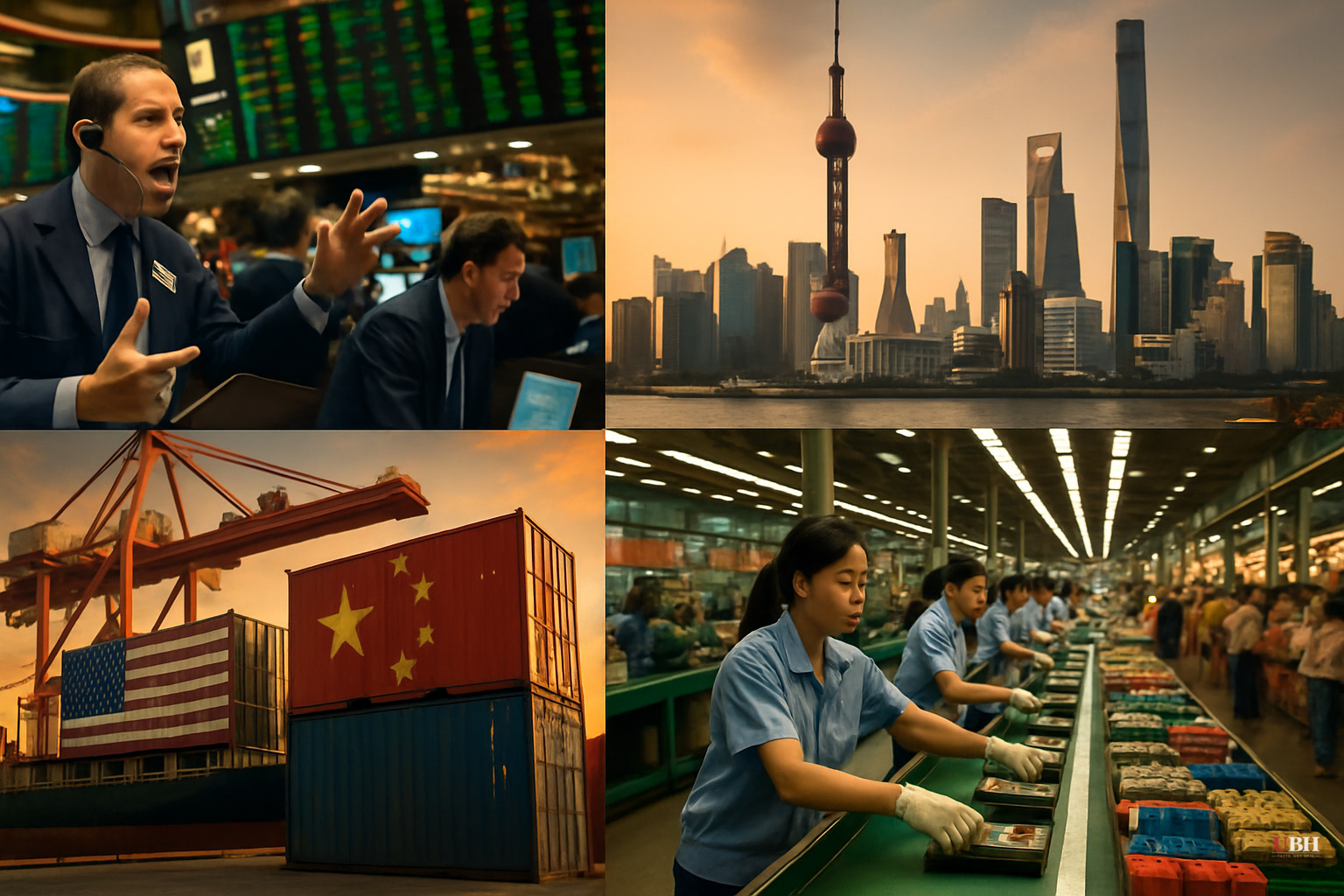
The Truce Is Holding. The Disagreement Is Not.
Trump and Xi met for 100 minutes in Gyeongju on October 30–31, 2025. Overall U.S. tariffs on Chinese goods dropped from 57% to 47%. Fentanyl-specific tariffs were cut from 20% to 10%. China pledged to buy $17 billion annually in U.S. agricultural products and 200 Boeing aircraft. Trump confirmed a planned visit to China in April 2026. According to The Nation Thailand, analysts at Greenpoint Business Consulting called the outcome "exceeded expectations."
That was six months ago.
Now: Suzhou, May 2026. Two Different Stories.
APEC trade ministers wrapped up in Suzhou, China this week — and the headline out of Beijing is completely different from the one coming out of Washington.
According to CNBC, China's Commerce Minister Wang Wentao declared at a May 23 press conference that reaffirming the "vision" of the Free Trade Area of the Asia Pacific (FTAAP) was a key outcome of the meeting. Wang quoted an official communiqué about advancing "economic integration" across the region. Free trade. Open markets. Multilateralism.
The U.S. delegation didn't mention FTAAP at all.
When CNBC asked a U.S. official directly about FTAAP, Casey K. Mace, the U.S. Senior Official to the APEC Forum, called it "more an agenda than a destination" and pivoted to talking about balanced trade — the core Trump rationale for tariffs in the first place.
One side wants lower barriers for everyone. The other side wants trade flows that don't run at a $300-billion-plus annual deficit for America. Those positions are incompatible.
The Beijing Spin vs. The Washington Spin
Beijing and Washington aren't just negotiating differently — they're describing the same agreement differently to their own audiences.
According to CNBC, China's official readouts from the Trump-Xi summit in Gyeongju emphasized that lower tariffs would remain "lower for longer." The U.S. readout didn't mention tariffs at all. Same meeting. Completely different takeaways published for domestic consumption.
This reflects a fundamental gap in what both sides think they agreed to.
What the Truce Actually Produced
The Gyeongju deals were real. The U.S. cut overall tariff rates on Chinese goods from 57% to 47%. China pledged fentanyl precursor crackdowns, agricultural purchases, and Boeing contracts. According to Al Jazeera, the APEC Leaders' Declaration from Gyeongju endorsed "robust" trade and investment — but notably did NOT reference the WTO or multilateralism directly. That omission was deliberate and reflects how fragile the consensus actually is.
The Gyeongju summit also produced other significant developments that got overshadowed. According to APF Canada, Nvidia CEO Jensen Huang met with the heads of Samsung, SK Group, Hyundai Motor, and Naver. Nvidia joined a deal supplying 260,000 advanced chips for South Korea's AI push and entered a $3 billion AI joint venture with Hyundai Motor Group — a substantial technology and investment story buried under Trump-Xi headlines.
Japan Quietly Enters the Room
According to Bloomberg, Japan's chief trade negotiator Ryosei Akazawa held a brief conversation with China's Wang Wentao on the sidelines of the Suzhou APEC meetings. Details are sparse. But Japan's presence in these margins matters: Tokyo has its own tariff standoff with Washington, and Beijing has every incentive to pull Tokyo closer as U.S. allies start recalculating their exposure to American trade unpredictability.
What Mainstream Coverage Is Getting Wrong
Most outlets are framing this as a "thaw" story — U.S. and China step back from the brink, crisis averted, handshakes all around.
The 90-day tariff truce from Geneva earlier in 2025 already demonstrated that both sides can agree to pause without agreeing on anything structural. Gyeongju produced more — actual tariff cuts and purchase commitments — but zero framework for resolving the underlying imbalances.
CNBC identified the specific divergence on FTAAP. Most other outlets treated the Suzhou ministerial as a follow-up photo op.
Almost nobody is focusing on the rare earth angle. According to The Nation Thailand, Trump confirmed a one-year rare earth minerals agreement — renewable annually. The U.S. Embassy later clarified that deal is NOT legally binding. A non-binding, one-year rare earth deal with the country that controls 60%+ of global rare earth processing is a delay, not a solution.
The Bottom Line
The truce is real. The Boeing orders are real. The ag purchases are real.
China is hosting APEC all year — culminating in Shenzhen in November 2026 — and Xi is using every meeting to position Beijing as the adult in the room defending free trade while Washington defends tariffs. That's a strategic narrative win for China regardless of what's in the fine print.
Trump is expected to visit China in April and meet Xi again at Shenzhen in November. The 47% tariff rate remains historically high. China's export machine is still running. The core disagreement — free trade versus balanced trade — has not moved.
Talking is better than not talking. A pause is not a peace.
Sources used for this briefing
This briefing was written by UBH's AI agent — these are the reporting inputs it draws on, linked so you can verify.


