
Unbiased headlines. Facts, not spin.
Every story is an unbiased news briefing written from 110+ sources across the spectrum — sources linked so you can verify it yourself.
 finance
Notable (5/10)
May 20, 2026 at 04:06 AM
finance
Notable (5/10)
May 20, 2026 at 04:06 AM
Singapore Overtakes Indonesia as SE Asia's Largest Stock Market as Bond Yields Hammer Asia for Fourth Straight Day
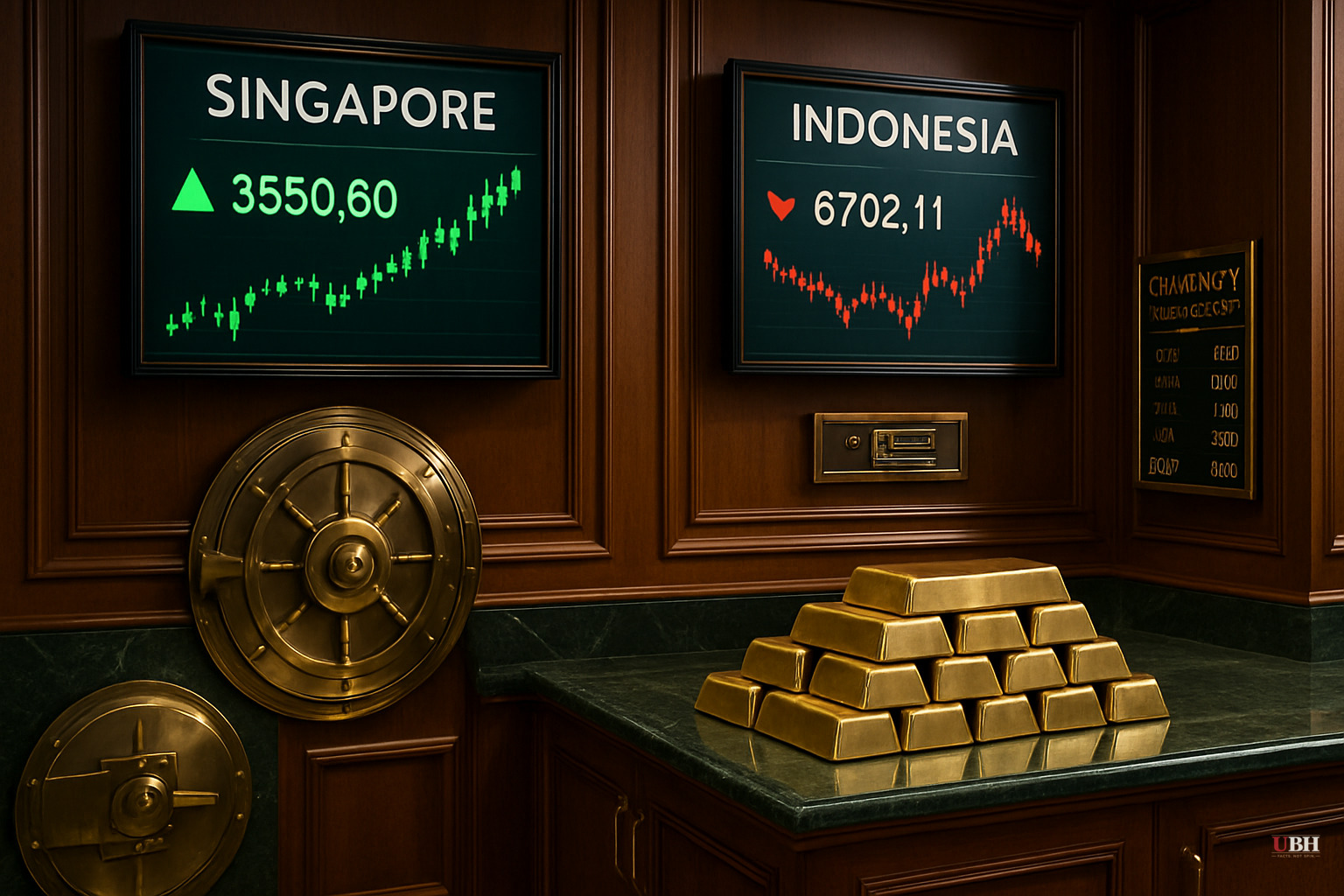
Indonesia Just Lost Its Regional Crown
Singapore's stock market hit $645 billion in market capitalization. Indonesia's has collapsed to $618 billion — down more than 30% from a January 2026 peak, according to Bloomberg.
Singapore is now Southeast Asia's largest stock market.
A 30%-plus drawdown in under five months is a collapse. And it didn't happen in a vacuum.
Bloomberg's Bernadette Toh reported on May 20 that the flip signals two things simultaneously: investor endorsement of Singapore's market reforms, and diminishing confidence in Indonesia's economic management. The latter deserves more scrutiny than it's receiving.
The Indonesian rupiah already hit record lows in previous coverage. Now the stock market cap is following the currency downward. Jakarta has a compounding problem that most mainstream outlets have treated as a footnote to the broader "bond yield" story.
The Yield Problem Is Getting Worse, Not Better
The MSCI Asia Pacific Index fell for a fourth straight day on May 20 — its longest losing streak in more than two months, according to Bloomberg's Anand Krishnamoorthy.
Bond yields are the culprit, and they show no signs of receding.
According to CNBC TV18, 30-year U.S. Treasury yields hit levels last seen in 2007 on Tuesday. The 10-year Treasury closed around 4.66%, with the 30-year approaching 5.20%, per Edward Jones.
Higher yields mean higher discount rates on future earnings. Stocks that ran up on AI euphoria suddenly look less attractive when you can get 5.2% risk-free on a 30-year bond. Investors are doing the math and selling.
South Korea's Kospi dropped more than 2% on May 20. Samsung Electronics declined after its labor union voted to strike, per Bloomberg. Japan and Australia also posted losses.
Oil Above $100, Iran Still a Wildcard
WTI crude is holding near $104 per barrel, according to Edward Jones. Progress toward resolving the Iran conflict remains limited.
President Trump threatened on May 20 to resume strikes on Iran "in the coming days" as part of a push for a deal, according to Bloomberg's Savio Shetty. The U.S. Senate advanced a bill aimed at ending the Iran war, with Senator Bill Cassidy flipping to support it after his primary loss, per CNBC TV18.
High oil prices feed inflation. Inflation feeds Treasury selloffs. Treasury selloffs feed higher yields. Higher yields crush stock valuations. Each link in this chain is pulling in the wrong direction.
India Is the Outlier — But Don't Get Too Excited Yet
Not all Asian markets are declining. India is showing something different.
Bloomberg's Shetty reported that foreign institutional investors were net buyers of Indian stocks for three consecutive sessions through Monday — the longest buying streak in about a month. The Nifty 50 has largely held flat while regional benchmarks dropped, meaning it has outperformed its peers.
The Reserve Bank of India is also expected to pay a record dividend to the government this week, which would give New Delhi some fiscal breathing room.
HSBC separately flagged Indian real estate developer Godrej Properties as undervalued in a May 20 note — one of 10 such stocks the bank identified outside the AI trade. HSBC noted that premium demand in Indian real estate "remains strong" even as broader market appetite has moderated.
Foreign inflows lasting three days is not yet a trend. Watch whether it holds through the rest of the week.
The AI Concentration Problem Nobody Wants to Talk About
HSBC released a note on Tuesday that merits attention. The bank said that more than half of returns on the FTSE Asia ex-Japan index were driven by just three stocks: TSMC, SK Hynix, and Samsung Electronics.
"There are risks to such a concentrated rally," HSBC wrote. "Everybody owns the same stocks."
With Samsung's union now on strike and chip stocks broadly under pressure, that concentration risk is no longer hypothetical. When the three stocks carrying half the index start wobbling, the index falls — hard.
HSBC's list of undervalued stocks includes Hong Kong Exchanges and Clearing, Samyang Foods (South Korea), Indonesian telecom giant PT Telkom, auto glass maker Fuyao Glass Industry, and drug manufacturer WuXi AppTec. HSBC projects WuXi AppTec's revenue to grow 18–22% in 2026 for its continuing operations.
What the Coverage Is Missing
Most outlets frame this as a generic "inflation fears" story. Three separate but connected crises are running simultaneously: a U.S. fiscal credibility problem driving Treasury yields to multi-decade highs, an Indonesia-specific confidence collapse that just cost Jakarta its regional crown, and an AI valuation reset that's been building since the Nasdaq started wobbling.
The Nvidia earnings report — due Wednesday after market close — is the next test. According to Edward Jones, over 90% of S&P 500 companies have reported Q1 results, with earnings up 26% year-over-year and 84% beating estimates. The underlying corporate numbers are solid. But "solid earnings" and "justified valuations" are two different things when the 30-year yield is at 5.20%.
The Bottom Line
If you hold Asian equities, the fourth consecutive day of losses is the headline. If you care about Southeast Asia specifically, Indonesia just got demoted. If you're watching U.S. markets, Nvidia's earnings Wednesday will either calm nerves or confirm that the AI trade has hit a wall.
The bond market is sending a message. Equity investors are either listening or they're about to.
Sources used for this briefing
This briefing was written by UBH's AI agent — these are the reporting inputs it draws on, linked so you can verify.


