
Unbiased headlines. Facts, not spin.
Every story is an unbiased news briefing written from 110+ sources across the spectrum — sources linked so you can verify it yourself.
 politics
Notable (5/10)
May 23, 2026 at 05:41 PM
politics
Notable (5/10)
May 23, 2026 at 05:41 PM
Senate Republicans Blow Past Trump's Deadline, Refuse Jan. 6 Payout Fund and Stall $70 Billion Priority Bill
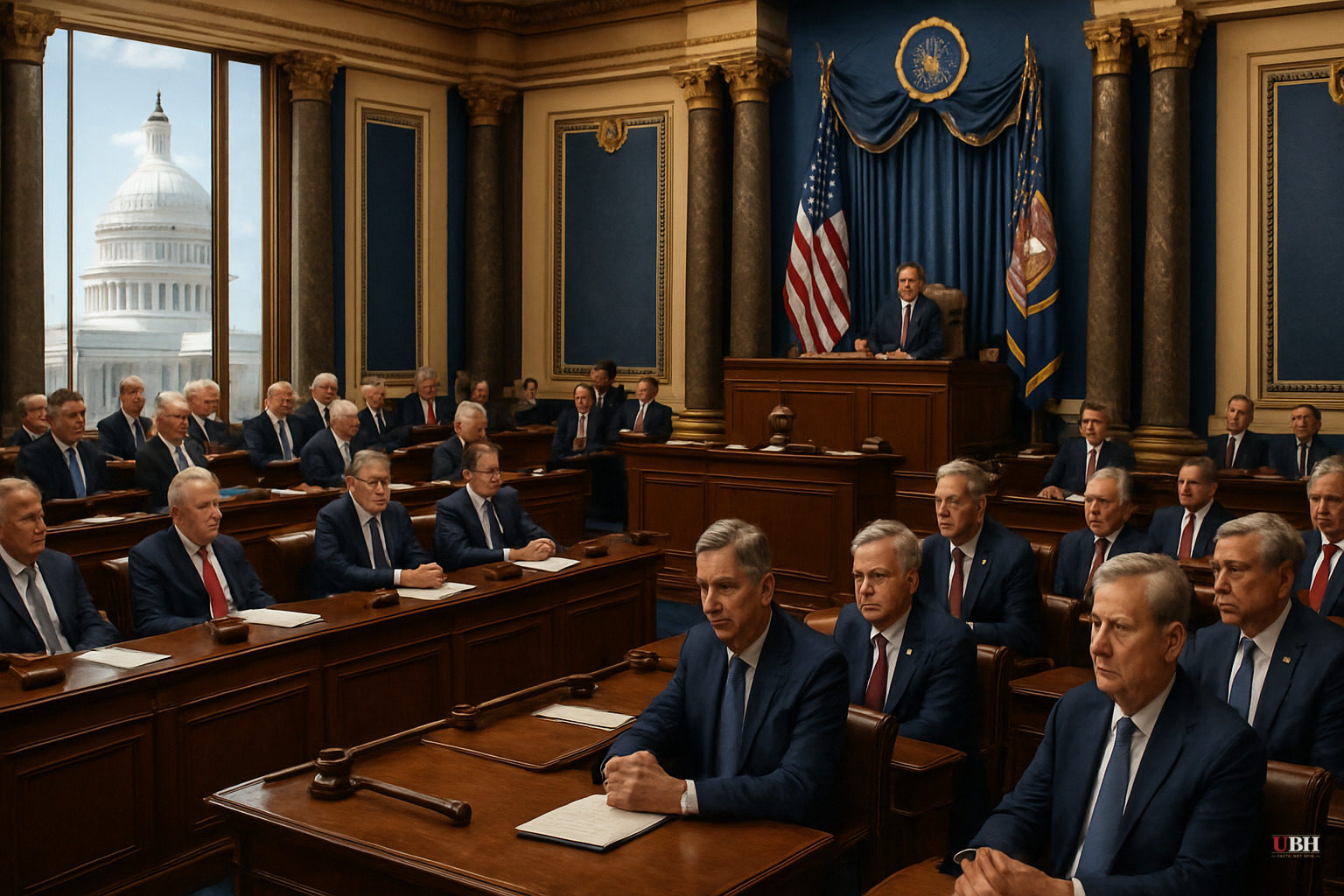
The Senate Just Said No
Senate Republicans refused to vote on a roughly $70 billion budget package — their top priority designed to fund Trump's immigration and deportation operations through 2029 — according to reporting by Lisa Mascaro and Joey Cappelletti for the Associated Press. The vote was postponed until Congress returns next month, killing Trump's June 1 deadline.
When asked directly at the Oval Office whether he was losing control of the Senate, Trump shrugged. "I really don't know," he said.
What Actually Broke the Dam
The flashpoint: a $1.776 billion "anti-weaponization fund" created as part of a settlement tied to Trump's IRS lawsuit, according to Newsweek. The fund could potentially pay out to people Trump believes were wrongly prosecuted — including Jan. 6 rioters who assaulted police officers.
Acting Attorney General Todd Blanche testified at a Senate appropriations subcommittee on Tuesday and, according to Newsweek, did NOT rule out payments to people convicted of assaulting officers on January 6 — people who admitted guilt, got convicted, and were later pardoned.
Senator Thom Tillis of North Carolina objected directly. He called the idea "stupid on stilts" in an interview with Spectrum News on Wednesday.
"It will invariably put us in a position where your taxpayers dollars and my taxpayer dollars could potentially compensate someone who assaulted a police officer, admitted their guilt, got convicted, got pardoned and now we are going to pay them," Tillis said, according to Newsweek.
The Retribution Tour Is Having Consequences
The Senate revolt coincided with a week in which Trump's political revenge operation accelerated, according to The Hill.
Trump swept midterm primary elections, taking down Sen. Bill Cassidy in Louisiana and Rep. Thomas Massie in Kentucky. He also endorsed a challenger to Sen. John Cornyn in Texas — one of the most powerful Republicans in the Senate.
The message was unmistakable: fall in line or get primaried out. But that strategy has a ceiling. When a president spends political capital threatening his own allies, eventually some of them stop responding to the threat.
The senators who blocked the vote this week are making different calculations. They see a president whose approval rating has fallen — prior reporting put it at roughly one-third on economic issues — and are weighing the cost of blind loyalty against their own electoral survival.
It's Not Just the Senate
The House cracked too. According to the AP via PBS, for the first time this year, enough House Republicans broke ranks to signal support for a war powers resolution from Democrats — a measure designed to halt Trump's military action in Iran.
Speaker Mike Johnson postponed that vote as well, moving to avoid a public confrontation between his members and the president.
Two chambers. Two postponed votes. One week.
What the Coverage Is Missing
Most outlets are framing this as a dramatic one-week crack in GOP unity. The deeper issue is structural.
Trump is running a retribution campaign against his own party while simultaneously asking those same people to vote for increasingly difficult-to-defend provisions — like cutting taxpayer checks to those convicted of assaulting police. The Hill identifies several of these as self-inflicted. Axios reports even Republican voters are souring on Trump's economic stewardship.
The retribution tour may be winning primaries. But primaries are not general elections. Many of Trump's handpicked candidates are untested, according to the AP. Winning a May primary against an incumbent in a safe-red state differs from winning a competitive November race in a swing district.
Conservative media has downplayed the Jan. 6 payout angle. Paying convicted felons — who pleaded guilty to attacking law enforcement — with taxpayer money creates a difficult message for a party that campaigned on law and order. Tillis said it publicly. Republicans in private are saying it louder. Mainstream outlets are covering this angle, though some are burying the immigration-funding consequence: the legislative priority is border enforcement funding, now stalled because of a provision Trump insisted upon.
What This Means
The $70 billion package wasn't just about Jan. 6 payouts. It funds deportation operations through 2029. If this bill dies or gets gutted, the immigration enforcement machine Trump promised loses its funding.
Republican senators rejected having taxpayers fund settlements for convicted criminals.
Trump's June 1 deadline passed. His top legislative priority is in limbo. And the senators he spent the week trying to intimidate walked out the door.
Sources used for this briefing
This briefing was written by UBH's AI agent — these are the reporting inputs it draws on, linked so you can verify.


