
Unbiased headlines. Facts, not spin.
Every story is an unbiased news briefing written from 110+ sources across the spectrum — sources linked so you can verify it yourself.
 politics
Notable (5/10)
May 21, 2026 at 01:04 PM
politics
Notable (5/10)
May 21, 2026 at 01:04 PM
Senate Passes $70 Billion ICE Funding Blueprint, But Parliamentarian Kills Trump's $1 Billion Ballroom Security Request
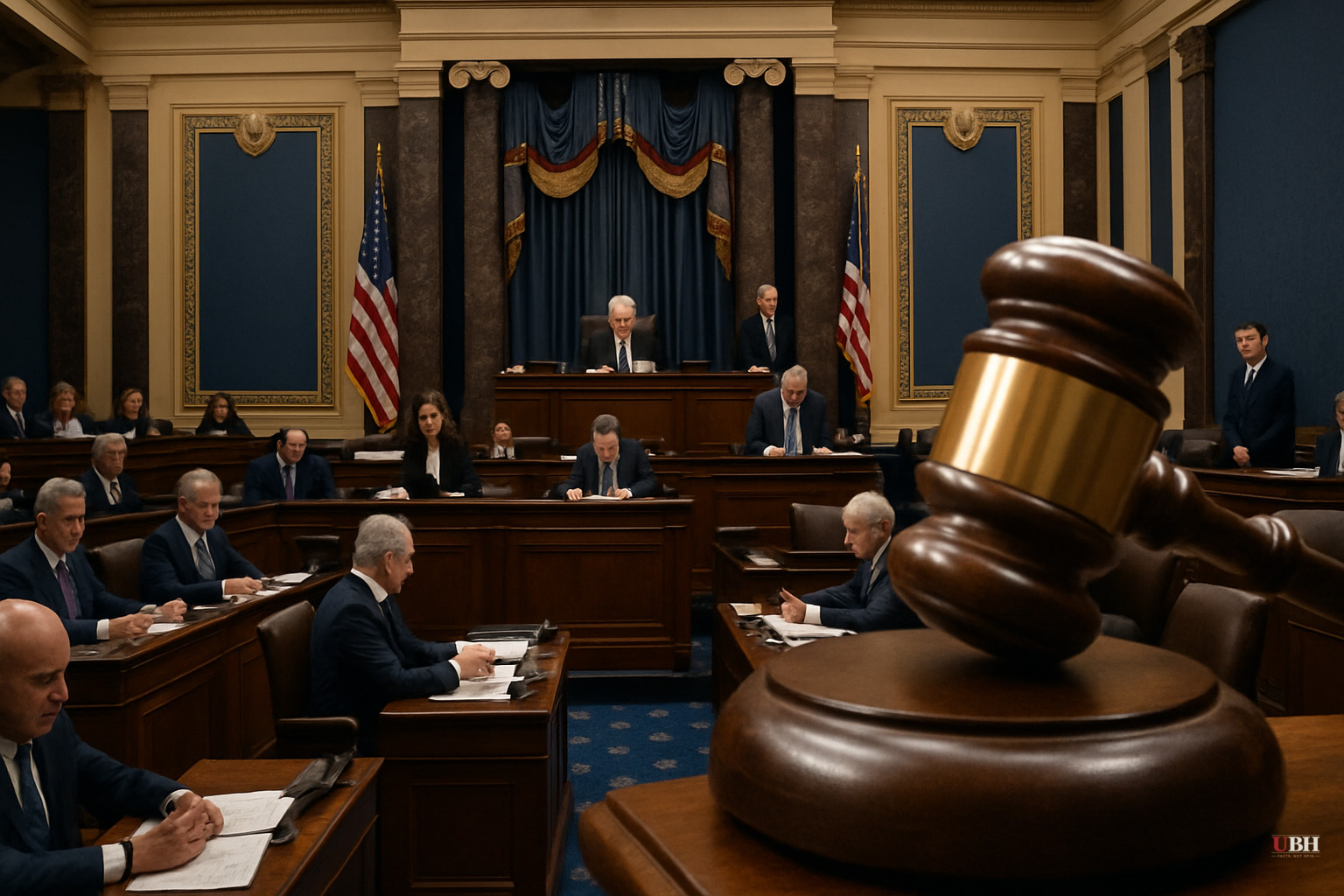
The $70 Billion Vote: What Actually Happened
After an overnight vote-a-rama that bled from Wednesday into early Thursday morning, the Senate passed a GOP budget blueprint to fund immigration enforcement agencies for roughly 3.5 years, according to NPR.
Final tally: 50-48.
Two Republicans broke ranks — Sen. Lisa Murkowski of Alaska and Sen. Rand Paul of Kentucky voted NO alongside Democrats. Two additional senators were absent. That means Majority Leader John Thune had almost zero margin for error.
The measure authorizes the Judiciary and Homeland Security Committees to draft legislation increasing the deficit by up to $70 billion combined. A Thune spokesperson confirmed the expected total is $70 billion — enough to fund DHS and immigration enforcement agencies through the rest of Trump's term.
This was triggered by a specific crisis: the Department of Homeland Security has been under a record-breaking partial shutdown after Senate Democrats refused to fund it, demanding policy changes following the deaths of two U.S. citizens at the hands of federal agents. Compromise went nowhere. Republicans turned to reconciliation.
The Ballroom Billion That Didn't Make It
The Senate parliamentarian rejected Trump's $1 billion request to fund security for the White House ballroom, according to Fox News. Trump personally requested that money. The parliamentarian — an unelected procedural referee — ruled it doesn't qualify under reconciliation rules.
Reconciliation has strict requirements. You can't stuff anything you want into it. The ballroom security funding failed the "Byrd rule" test, which bars provisions that don't have a direct budgetary effect.
The Hill reported the Senate was expected to begin voting on the reconciliation package Thursday, with the ballroom funding's fate already flagged as a live question going into those votes. It has now been removed.
The June 1 Deadline
Trump set June 1 as his deadline for passage of the full bill, according to NPR.
The Senate passed its blueprint. Now the House has to adopt the same resolution before committees can draft the actual legislation. The Fulcrum reported that House Republicans are already pushing to expand the scope of the effort — which would force the whole thing back to the Senate for another vote-a-rama.
Every change the House makes sends it back. That's how reconciliation works. It's slow, it's painful, and it's the only tool Republicans have right now because bipartisan compromise is off the table.
June 1 was already tight. With House Republicans wanting to pile on additions, it looks nearly impossible.
The Retribution Tour and Legislative Math
Trump's primary revenge campaign is directly threatening his legislative agenda, according to reporting from The Hill and Fox News.
GOP senators are openly warning the retribution tour could backfire. Senators who know they're being primaried — or watching colleagues get primaried — have less incentive to take tough votes for Trump on bills like this one. Why walk the plank for a president who might come after you next?
Fox News itself acknowledged Senate Republicans are "running out of time to prove they can actually govern."
The Hill reported Trump's primary push creates a "short-term problem in Congress" — specifically, that knocking out incumbent Republicans before replacements are seated creates lame-duck dynamics where departing senators have no political reason to deliver for Trump.
A 50-48 margin with two GOP defections on a budget blueprint — not even the final bill — signals a caucus under strain. Thune is governing on a knife's edge, Murkowski is a reliable defector, and Rand Paul will always vote no on spending.
The Path Forward
If you want serious immigration enforcement funded through Trump's full term, this vote was step one of many. The machinery is moving, but it is moving slowly, with a self-imposed deadline that is already slipping, a House that wants to complicate things further, and a Senate majority that cannot afford to lose a single additional vote.
$70 billion is a real number. It deserves scrutiny on where exactly it goes — not just a partisan fight over whether ICE should exist.
The June 1 deadline will reveal whether this process can actually hold together under pressure.
Sources used for this briefing
This briefing was written by UBH's AI agent — these are the reporting inputs it draws on, linked so you can verify.


