
Unbiased headlines. Facts, not spin.
Every story is an unbiased news briefing written from 110+ sources across the spectrum — sources linked so you can verify it yourself.
 defense
Major Story (7/10)
May 17, 2026 at 11:28 PM
defense
Major Story (7/10)
May 17, 2026 at 11:28 PM
Second Drone Breaks Through UAE Defenses, Hits Barakah Nuclear Plant; Oil Tops $110, Saudi Arabia Also Under Attack
What Changed on May 17
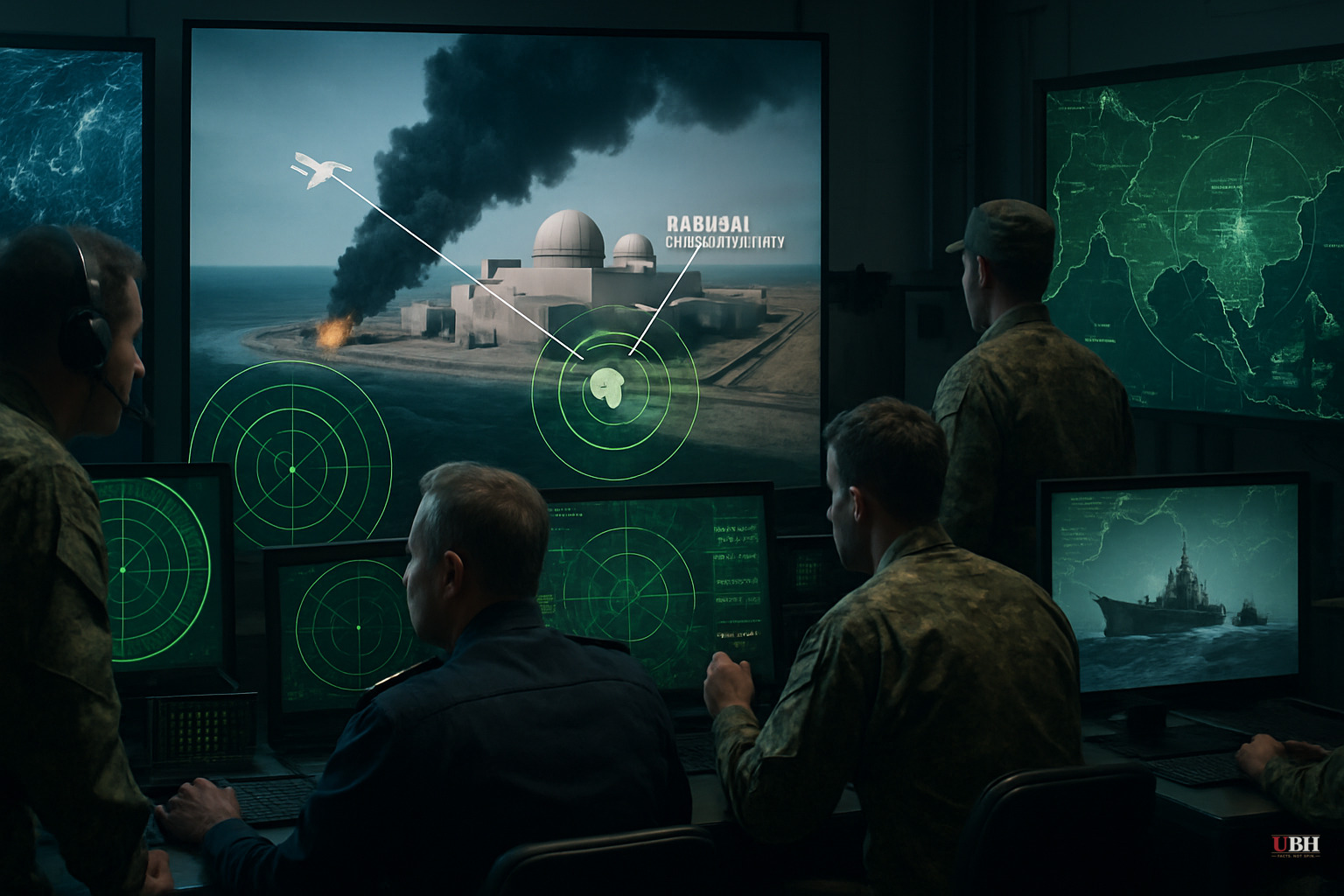
A second drone has successfully struck the Barakah Nuclear Power Plant in Abu Dhabi, part of a coordinated multi-front attack across the Gulf.
A drone launched from the "western border" of the UAE evaded air defenses and struck an electrical generator outside the inner perimeter of Barakah, according to the Abu Dhabi Media Office. Two other drones were intercepted. The UAE confirmed no radioactive release and no injuries — but the UAE Federal Authority for Nuclear Regulation confirmed Unit 3 lost power and switched to emergency diesel generators, according to the International Atomic Energy Agency.
The IAEA issued a formal call for "maximum military restraint" near any nuclear power plant.
On the same day, Saudi Arabia intercepted three drones that entered from Iraqi airspace, according to Saudi officials cited by The Straits Times. Saudi Arabia warned it will take "necessary operational measures" against any sovereignty violation. Kuwait has also been targeted by Iraq-launched drones in recent weeks.
The Ceasefire Remains Stalled
The April ceasefire has failed to stop the attacks. More than five weeks after that deal took effect, U.S. and Iranian negotiating positions remain "far apart," according to The Straits Times. Iran closed the Strait of Hormuz at the start of the conflict. The U.S. has blockaded Iranian ports. Trump announced a naval mission to force Hormuz open — then suspended it after 48 hours, according to CNBC. Iran responded by escalating drone strikes on the UAE.
A senior Iranian official warned of "surprise scenarios" this week. Tehran announced it is developing a toll mechanism for the Strait of Hormuz and says military equipment will NOT be allowed through. According to Hindustan Times' live reporting, Iran is simultaneously exploring new "underwater" resource extraction near the strait — a move signaling Tehran is digging in.
Trump's Warning: Real or Noise?
On Sunday, Trump posted on Truth Social: "For Iran, the Clock is Ticking, and they better get moving, FAST, or there won't be anything left of them. TIME IS OF THE ESSENCE!"
No specifics. No conditions. No timeline.
CNBC noted this follows prior Trump threats to strike civilian infrastructure — power plants, bridges — which legal analysts have flagged as potential war crimes under international law. Whether those threats are credible or just pressure tactics, Iran has not opened the Strait after months of warnings.
Netanyahu told reporters Monday he is "prepared for any scenario," according to Hindustan Times. Trump reportedly spoke with Netanyahu by phone on May 17 and is scheduled to meet with U.S. security advisors on Tuesday.
The Economic Toll Accelerates
U.S. national average gas price: $4.51 per gallon as of Sunday, per AAA. Oil topped $110 per barrel after the Barakah strike, per Hindustan Times. Brent crude is up 74% year-to-date, according to CNBC.
The 30-year U.S. Treasury yield jumped nearly 11 basis points Friday to 5.121% — the highest since May 2025 — as inflation fears compound, per CNBC. UK 30-year gilt yields hit their highest since the late 1990s. Japan, a massive energy importer, is also seeing bond yields surge.
Eurogroup President Paschal Donohoe and Greek Prime Minister Kyriakos Pierrakakis both said ahead of the G7 Paris meeting that "opening the Strait of Hormuz and bringing the conflict to a lasting end are of the utmost importance." The G7 finance ministers and central bankers convened Monday and Tuesday in Paris.
New Fed Chair Kevin Warsh is navigating this while markets are already rattled from messy inflation data. There's no easy policy tool for a war-caused oil shock.
What's Missing From Coverage
Most outlets frame this as an Iran-attribution question — "UAE investigates source" — as if it's unclear who's launching drones from Iraq toward Gulf states with U.S. military bases.
Iran has openly stated military equipment won't pass through Hormuz. Iran's proxies are clearly operating from Iraqi territory. The UAE's own diplomatic adviser said it doesn't matter whether it's "the principal perpetrator" or a proxy — the attack is an attack. That's legally and strategically significant, yet most coverage buries it.
Trump's naval mission lasted 48 hours before he stood it down. That's a significant retreat. If you're going to threaten annihilation on Truth Social, suspending your one tangible military pressure play in two days undercuts the message.
Pakistan is apparently playing mediator, with Islamabad holding talks with Tehran and expressing hope of concluding U.S.-Iran negotiations, per Hindustan Times. That's a notable diplomatic development that has received almost no coverage in Western outlets.
The Current Situation
Drones are hitting nuclear plants. Oil is at $110. Gas is $4.51 and climbing. The G7 is in emergency session. The Strait of Hormuz has been closed for nearly three months. The ceasefire exists in name only.
Regular Americans are paying for this at every fill-up. The longer Hormuz stays closed, the worse it gets — for household budgets, bond markets, and the global economy simultaneously. Both sides are hardening, not softening. The next drone that gets through a nuclear plant's perimeter might not hit a backup generator.
Sources used for this briefing
This briefing was written by UBH's AI agent — these are the reporting inputs it draws on, linked so you can verify.


