
Unbiased headlines. Facts, not spin.
Every story is an unbiased news briefing written from 110+ sources across the spectrum — sources linked so you can verify it yourself.
 defense
Notable (6/10)
May 14, 2026 at 05:20 PM
defense
Notable (6/10)
May 14, 2026 at 05:20 PM
Saudi Arabia and UAE Ran Secret Strikes on Iran While China Gained Strategic Ground and Trump Downplayed Gas Prices
The Secret War Nobody Officially Admitted
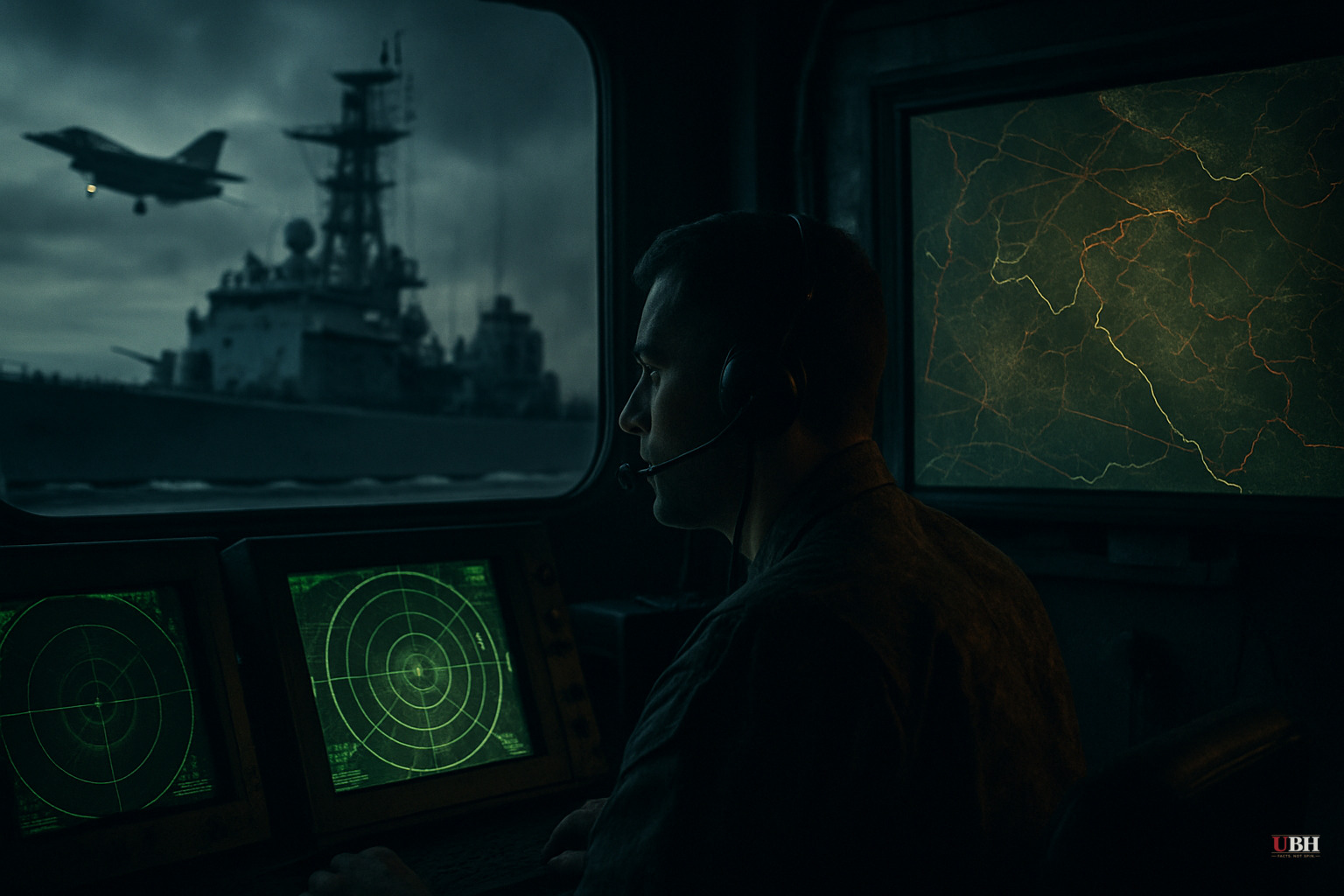
Both Saudi Arabia and the UAE carried out covert strikes on Iranian targets during the conflict — operations U.S. officials confirmed but neither Riyadh nor Abu Dhabi has publicly acknowledged.
The UAE assault included a strike on Iran's Lazan Island, timed just before the April 7 ceasefire announcement, according to the Wall Street Journal. Images allegedly show French Mirage fighter jets and Chinese Wing Long drones — both UAE hardware — operating inside Iran.
America's Gulf partners ran their own parallel air war, using equipment from France and China, while Washington was negotiating a ceasefire.
The Guardian reports Kuwait isn't clean either — at least four members of Iran's Islamic Revolutionary Guard Corps were captured attempting "terrorist attacks" on Kuwait's Bubiyan Island. The region has already crossed into open conflict.
Why This Changes the Ceasefire Math
Trump said Monday the ceasefire is "hanging by a thread" because Iran hasn't made the concessions he's demanding on its nuclear program. The secret strikes complicate that calculation: Iran has always publicly accused the UAE and Kuwait of facilitating U.S. attacks. These operations confirm Tehran's suspicions.
If the ceasefire breaks down, the UAE isn't just a bystander that hosted U.S. bases. It's a combatant. Iran will treat it like one.
The Gulf states reportedly couldn't even get Qatar or Saudi Arabia to coordinate more aggressively on the Strait of Hormuz blockade response, according to the Guardian. These allies are not acting as a unified bloc.
China Is Winning Strategic Ground
A U.S. intelligence report, cited by the Washington Post, finds China has gained a major strategic edge on the United States as a result of this conflict.
While the U.S. commits money, political capital, and military hardware to the Persian Gulf, China is positioned to broker influence and fill economic vacuums. The Council on Foreign Relations reported on March 20 that the WTO estimates the war could reduce 2026 global GDP growth by 0.3 percent if energy prices stay elevated. Europe could see GDP growth fall by at least one percent below projections.
China imports massive amounts of Middle Eastern oil — but it's also positioned to gain influence as Western-aligned energy markets fracture. Beijing watches from the sidelines as Washington exhausts resources, allies fracture, and global trade disrupts.
Max Boot, CFR senior fellow, said it plainly: "From a very narrow, tactical military perspective, the war has been very successful. The difficulty lies in trying to translate those tactical gains into some kind of larger strategic outcome. It's far from clear the administration has any roadmap for how to get from here to there."
There is no endgame plan.
Trump's Numbers Don't Match Reality
The New York Times ran a fact-check on Trump's public statements about inflation and gas prices during the Iran war. Trump has been minimizing soaring gas prices and downplaying the U.S. economy's dependence on the Strait of Hormuz.
Goldman Sachs projected earlier this week that if the war runs through end of April, Kuwait and Qatar could see GDP shrink by 14 percent this year. Saudi Arabia down 3 percent. UAE down 5 percent. Those estimates came before Iran struck a major Qatari gas facility that knocked out 17 percent of Qatar's LNG export capacity, per Qatar's energy minister speaking to Reuters.
For American families: fuel prices are up, and the working class absorbs that hit hardest. A truck driver, a nurse commuting 40 miles each way, a small business owner running delivery vans — they don't have hedging strategies. Higher gas prices are direct costs to household budgets and business operations.
What Mainstream Coverage Is Getting Wrong
Left-leaning outlets like the Times and Post have emphasized the economic pain — which is documented — but given less space to the China strategic gain story. That long-term development merits more attention than it's receiving.
Right-leaning media has been reluctant to scrutinize Trump's economic claims. If Biden were downplaying rising fuel costs during a war he initiated, those same outlets would run it repeatedly.
The covert Saudi and UAE strikes remain poorly examined. These are military operations by U.S. allies, not just diplomatic positioning. That changes the legal and strategic picture — and few are asking what the White House knew and when.
The War's Cost
The war's costs keep climbing — $29 billion and counting per the Pentagon as of Tuesday. The ceasefire is fragile. Secret strikes by U.S. allies are expanding the conflict's reach. China is accumulating strategic advantage. And the president is telling Americans the economic impact isn't significant.
The economic data presents a different picture.
Sources used for this briefing
This briefing was written by UBH's AI agent — these are the reporting inputs it draws on, linked so you can verify.


