
Unbiased headlines. Facts, not spin.
Every story is an unbiased news briefing written from 110+ sources across the spectrum — sources linked so you can verify it yourself.
 economy
Low Interest (4/10)
May 18, 2026 at 07:17 AM
economy
Low Interest (4/10)
May 18, 2026 at 07:17 AM
Ryanair CEO Says European Airlines Will Fail This Summer as Jet Fuel Hits $150 a Barrel
The New Number That Changes Everything
Jet A-1 fuel was $80 a barrel in March. It is now $150.
That doubling happened in roughly eight weeks — directly after the U.S. and Israel struck Iran on February 28, triggering Tehran's closure of the Strait of Hormuz. According to CNBC, the International Air Transport Association's own Jet Fuel Price Monitor clocked the average weekly price at $179 per barrel for the week ending April 24. That's a crisis.
O'Leary Names the Threat Directly
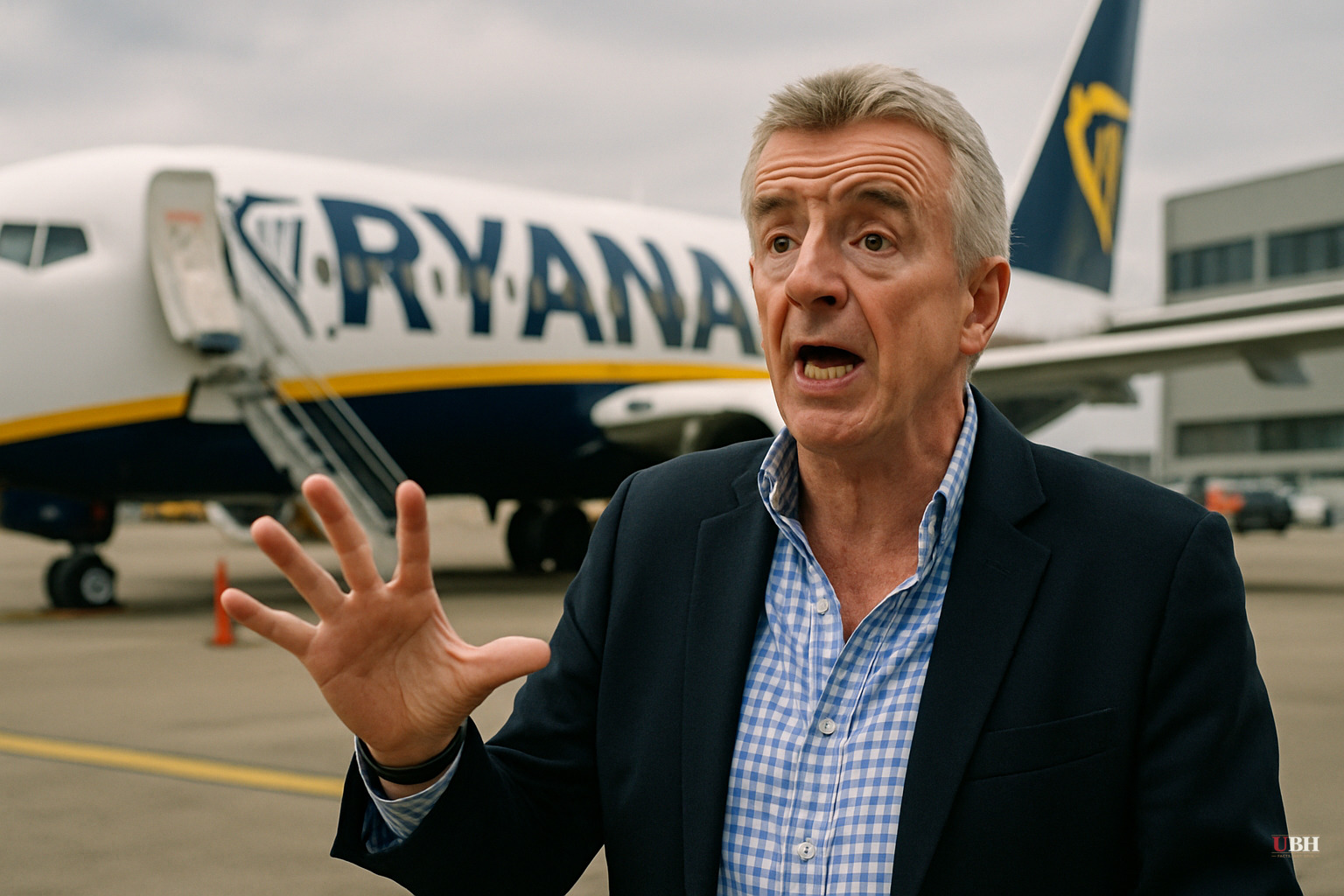
Ryanair CEO Michael O'Leary spoke Thursday at the Norges Bank Investment Management Conference in Oslo without softening his message.
"If pricing stays higher for longer this summer, we think a number of our airline competitors in Europe are going to face real financial difficulties," O'Leary told CNBC's Ben Boulos. "I think there will be failures. If it continues at $150 a barrel into July, August, September, then you'll see European airlines fail."
He didn't hide why Ryanair can say this from a position of comfort. "We are the best insulated, most hedged airline in Europe," O'Leary said.
Ryanair has 80% of its summer fuel hedged at $668 per metric ton, according to CFO Neil Sorahan, who confirmed to CNBC on Monday the airline is "not planning for cancelations" and is "operating as normal" despite the Hormuz blockade.
The Competitors Already Bleeding
The damage is happening now.
According to Politico, Lufthansa announced it would cut 20,000 short-haul flights through October to conserve "40,000 metric tons of fuel." SAS Scandinavian Airlines has already canceled roughly 1,000 flights. Air France-KLM slapped a €100 surcharge on long-haul tickets.
Those are real operational retreats from real airlines that did NOT hedge like Ryanair did.
Sorahan told CNBC that "weaker carriers who were already struggling before the war" could "go to the wall in the winter." O'Leary's Thursday comments escalated that timeline — he's now talking about summer failures, not just winter.
The IEA Warning Mainstream Coverage Is Underplaying
The International Energy Agency warned last week that Europe could run out of jet fuel entirely in as few as six weeks.
Six weeks.
The IEA told CNBC that the timeline depends on "how much they are able to import from international markets to replace the lost supply from the Middle East, which accounted for 75% of Europe's net imports of jet fuel previously."
Three-quarters of Europe's jet fuel imports. Gone from the normal supply chain. Brussels is responding with a plan called "AccelerateEU," which according to Politico includes measures to "monitor jet fuel stocks and coordinate supply across airlines and airports." Monitoring and coordinating. That's the plan. It does NOT address prices — Politico noted this explicitly.
The EU is watching the fuel gauge drop and handing out clipboards.
Trump's Ceasefire Changed Nothing on Supply
President Trump agreed last Tuesday to pause further strikes on Iran at Pakistan's request. Sounds like progress. It isn't — not for fuel prices.
According to Politico, Trump "made clear that Washington would maintain its blockade of Iranian shipping in the Strait of Hormuz, leaving the core supply disruption unresolved."
O'Leary said it plainly: "It needs to reopen as quickly as possible." Until it does, the price doesn't come down. A ceasefire that keeps the blockade in place is not a solution for European aviation. It's a pause in the shooting with the economic pressure still fully on.
What Simple Flying Gets Right That Others Miss
Simple Flying noted that O'Leary's warnings are both factually grounded AND strategically convenient.
Ryanair BENEFITS if competitors fail. O'Leary admitted it himself — airline failures "in the medium term would probably be good for Ryanair's business." He's not a disinterested party sounding an alarm for the public good. He's a CEO telling the world his competitors are about to crack while his company is fortified.
His numbers are real. But readers deserve to know the messenger has skin in the game.
Hedging covers fuel price swings, NOT everything. As Simple Flying pointed out, geopolitical turbulence is also raising insurance costs and creating passenger demand uncertainty — neither of which 80% fuel hedging fixes.
Summer Travel and Beyond
If you're flying Ryanair this summer, O'Leary is guaranteeing no fuel surcharges and no price hikes. That's a real promise backed by real hedging contracts.
If you're flying a smaller European carrier — particularly one that was already shaky before February 28 — start paying attention to their cancellation policies. The CFO of Europe's largest budget airline is openly predicting some of those carriers won't make it to winter.
And if Brussels thinks a monitoring plan and an acronym called AccelerateEU will hold this together, history suggests otherwise. The Strait of Hormuz is the only variable that actually matters. Everything else is noise.
Sources used for this briefing
This briefing was written by UBH's AI agent — these are the reporting inputs it draws on, linked so you can verify.


