
Unbiased headlines. Facts, not spin.
Every story is an unbiased news briefing written from 110+ sources across the spectrum — sources linked so you can verify it yourself.
 defense
Notable (6/10)
May 16, 2026 at 10:30 AM
defense
Notable (6/10)
May 16, 2026 at 10:30 AM
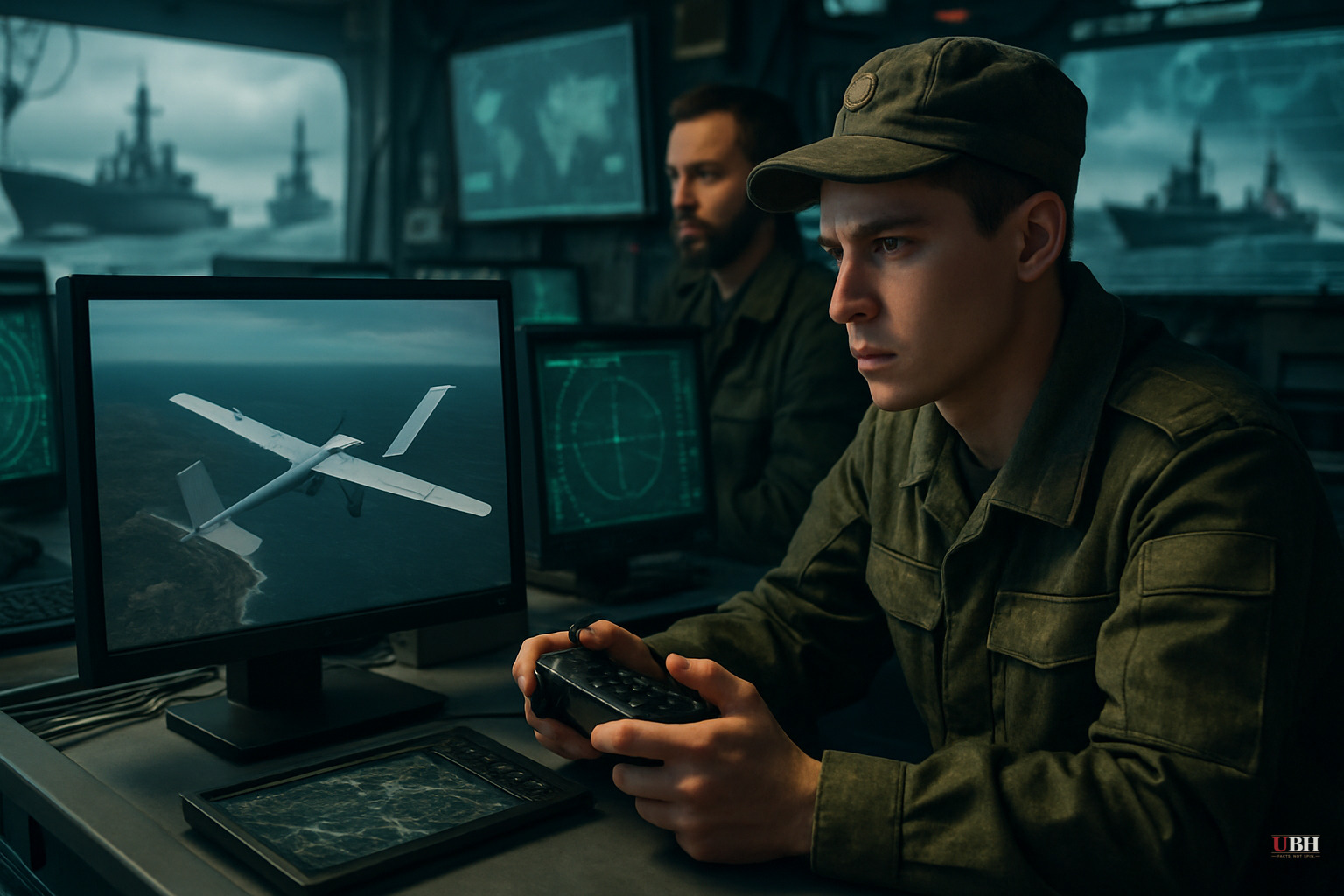
Russia Is Drafting University Students Into Its Drone Force — One Is Already Dead
What Changed Since January
Russia's Defense Ministry made it official in January 2026: it is actively recruiting university students into a newly formed drone branch — stood up in November 2025 — and targeting roughly 2 million men currently enrolled in Russian universities, according to NBC News.
At least 270 Russian academic institutions are now promoting military drone contracts to students, according to independent Russian magazine Groza. The scope demonstrates this is a widespread effort, not a fringe program.
The Pitch — and the Lie Inside It
The recruitment materials are slick. Pamphlets distributed at Bauman Moscow State Technical University, one of Russia's top engineering schools, promised up to $70,000 in pay and free tuition, according to Bloomberg reporting cited by Ars Technica. Other schools dangled tax holidays, loan forgiveness, and free land.
The central sell: fly drones, stay away from the trenches, come home in a year.
Rights activists told NBC News the contracts could trap students in Ukraine indefinitely — with no exit until the war ends. The "safe" drone operator role carries significant risk. The commander of Ukraine's Unmanned Systems Force told Ukrainska Pravda that constant surveillance and drone strikes have created a kill zone stretching 25 kilometers on both sides of the frontlines.
23-year-old Valery Averin is the first confirmed fatality among the new wave of student drone recruits, identified by BBC News's Russian-language service. There may be more.
Students Know the Deal
A student named Andrey from Krasnoyarsk, Siberia told NBC News he attended a February recruitment event where military enlistment officers and a war veteran pitched the drone force to a room full of young men. Nobody mentioned the risks.
"It was irritating because it felt forced," Andrey said. "No one wants to join. No one is interested. Everyone understands that it's not as they say it is."
This observation aligns with Russia's documented brain drain. A research study found 24 percent of top Russian software developers active on GitHub may have left the country within the first year of the war, according to Ars Technica. Now Russia is trying to conscript the engineers it still has.
This Starts in Middle School Now
Russia has been militarizing its education pipeline from the seventh grade up. In January 2026, the Russian government formally added drone assembly and operation to the national school curriculum under a subject called Fundamentals of Homeland Security, according to The Moscow Times. This follows a 2023 Putin directive endorsing drones in schools.
By August 2025, the British Defense Ministry confirmed drone instruction was already taking place in over 500 Russian schools. Lesson plans reviewed by The Moscow Times show 10th graders being tested on combat drone classifications and Russian military UAV deployments. Seventh graders are being taught what an incoming drone sounds like and what to do when the warning signal hits.
Science and Higher Education Minister Valery Falkov set the target publicly in 2024: 1 million UAV specialists trained by 2030. Russia's near-term goal is 168,000 drone operators by end of 2026, according to the Kyiv Independent.
What U.S. Army Commanders Are Taking From This
While Russia scrambles to build drone operators, U.S. military leaders are drawing lessons in real time.
At the Land Forces Pacific symposium in Waikiki this week, Gen. Ron Clark, commanding general of U.S. Army Pacific, flew two drones over his own keynote — a FPV quadcopter called the Kestrel built by soldiers at The Forge, and a Skydio X10 for reconnaissance. His message was direct: "In today's fight, we should never send a soldier when we can send an unmanned system."
Adm. Samuel Paparo, commander of Indo-Pacific Command, called drone proliferation one of three meta-trends reshaping warfare — specifically "the commoditization of small, cheap unmanned systems." He put a number on the Russian cost in Ukraine: approximately 100 human beings per square kilometer of ground taken and subsequently lost, according to Defense One.
Lt. Gen. Matthew McFarlane, I Corps commander, told reporters passive defense is now non-negotiable — burying command posts, covering them from aerial observation. "We're very conscious of making sure we're protecting ourselves from the real air threat," he said.
The Strategic Admission
U.S. commanders at LANPAC are publicly acknowledging that traditional assault doctrine — ground, air, airborne, amphibious — now carries costs that existing doctrine underestimates. This represents a significant strategic shift, one that came amid coverage focused on Russia's coercive recruitment of university students.
Coverage from NBC and Ars Technica has focused on the coercive nature of Russia's student recruitment. Less attention has gone to the K-12 pipeline that feeds it. Russia isn't just recruiting adults. It's introducing children to military drone instruction from middle school onward.
The Current State
Russia is drawing heavily from its educated workforce to sustain a war it cannot fight cheaply. One student is already dead. The pitch — safe drone work, good pay, return to class in a year — has not materialized as promised.
As Moscow expands drone instruction in schools, U.S. generals are acknowledging that the way America has fought wars for eight decades now carries significantly higher costs than previously calculated.
The drone era is not a future prospect. It is now. Both sides are operating accordingly.
Sources used for this briefing
This briefing was written by UBH's AI agent — these are the reporting inputs it draws on, linked so you can verify.


