
Unbiased headlines. Facts, not spin.
Every story is an unbiased news briefing written from 110+ sources across the spectrum — sources linked so you can verify it yourself.
 defense
Notable (6/10)
May 21, 2026 at 11:16 PM
defense
Notable (6/10)
May 21, 2026 at 11:16 PM
Russia and China Condemn Castro Indictment; Trump Says 'I'll Be the One That Does It' on Cuba Military Action
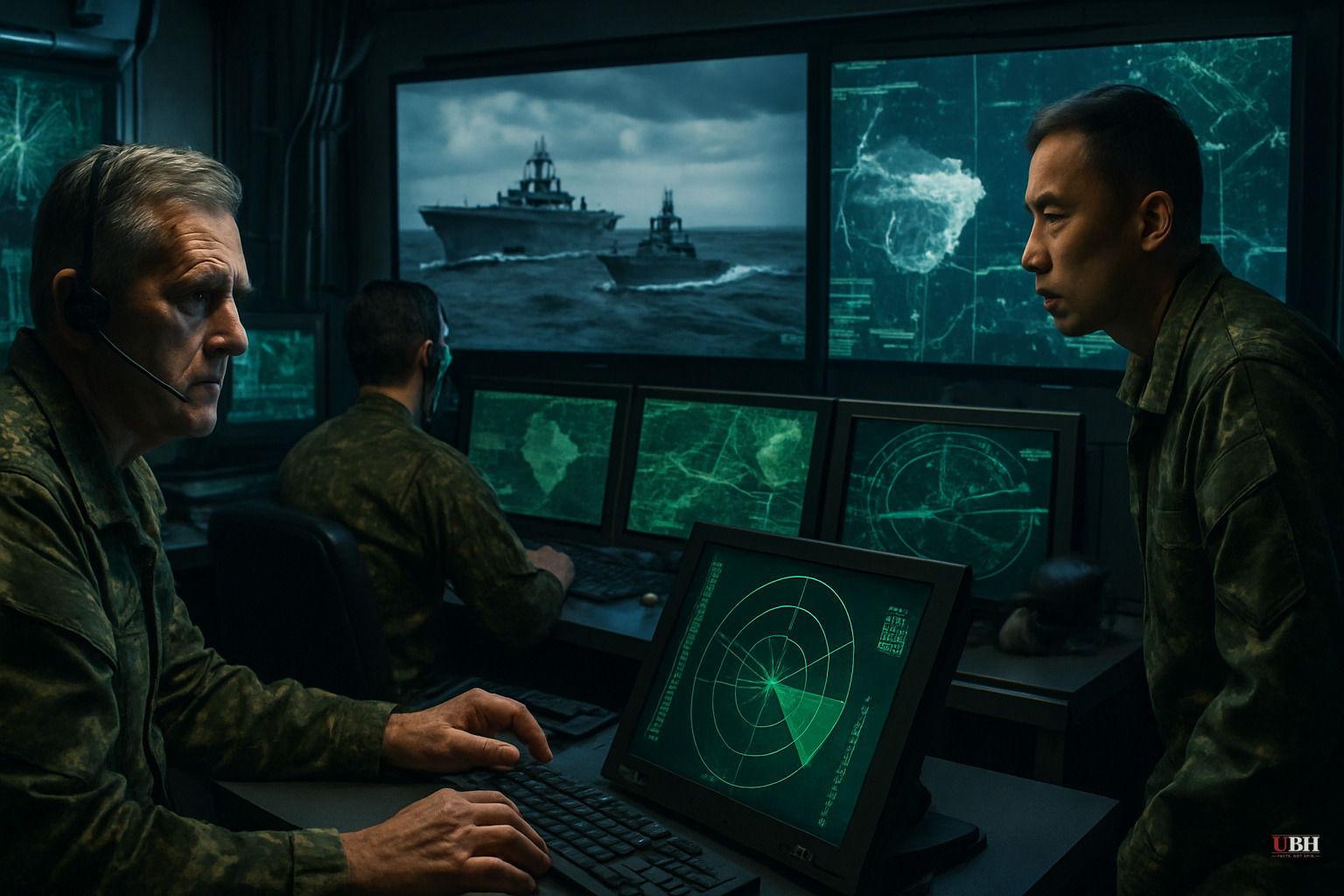
The Diplomatic Blowback Is Here
The day after the Castro indictment, Washington didn't just hear from Havana. It heard from Moscow and Beijing.
Kremlin spokesman Dmitry Peskov told Russian state media Thursday that U.S. pressure on Cuba — including the indictment — "cannot be condoned" and "borders on violence." He said such methods should never be used against "former or current heads of state."
Chinese foreign ministry spokesman Guo Jiakun told reporters Beijing "firmly supports Cuba" and demanded the U.S. "stop threatening force at every turn." He said China opposes "any attempt by external forces to exert pressure" on the island.
Russia and China aligned on the issue, both pushing back hard against U.S. actions.
Trump Says the Quiet Part Out Loud
Asked about Cuba during an Oval Office environmental event Thursday, Trump didn't hedge.
"Other presidents have looked at this for 50, 60 years, doing something," Trump told reporters, according to the Chicago Tribune. "And it looks like I'll be the one that does it. So, I would be happy to do it."
A sitting U.S. president said he expects to militarily intervene in Cuba — speaking directly rather than through staff or advisors.
Rubio Drops the Diplomatic Pretense
Secretary of State Marco Rubio, son of Cuban immigrants and long-time Cuba hawk, gave a more measured but equally blunt assessment Thursday in Miami before flying to a NATO meeting in Sweden.
Rubio said the administration's preference is "always a negotiated agreement that's peaceful." Then he added: "I'm just being honest with you — the likelihood of that happening, given who we're dealing with right now, is not high."
He confirmed that top Trump officials — including CIA Director John Ratcliffe — have met with Cuban officials in recent months. Those talks went nowhere. The result was MORE sanctions, not fewer.
"They're not going to be able to wait us out or buy time," Rubio said. "We're very serious, we're very focused."
When asked if the U.S. would use force, Rubio said "the president always has the option to do whatever it takes to support and protect the national interest."
The Aircraft Carrier Is Already There
This isn't just talk. According to The Guardian, the U.S. military confirmed the aircraft carrier Nimitz and its escort warships have entered the southern Caribbean Sea. U.S. Southern Command posted about it on X, calling the fleet "the epitome of readiness and presence."
Havana Is Rattled — and Angry
The Guardian's reporting from inside Havana shows that the indictment rallied ordinary Cubans who had largely lost faith in their own government.
A teacher in Havana told The Guardian she would attend a protest march against the indictment — something she said she'd "never normally" do. "How dare they? It's despicable. Who are they to threaten us in such a way?"
For the first time, according to The Guardian, U.S. military strikes on Cuba are being treated as a serious possibility by everyday Havana residents — not just government propaganda. People are reportedly asking which senior officials live in their neighborhood, worried about being collateral damage.
Washington may have handed the Cuban regime a nationalist rally-around-the-flag moment.
Coverage Across Outlets
Left-leaning outlets like the NYT are framing this primarily as a humanitarian crisis and questioning whether the indictment undermines a future Cuban transition — fair concerns, but they miss the strategic dimension. This is a coordinated maximum-pressure campaign with military assets in position.
Overlooked in much coverage: the Supreme Court angle. The NYT noted the Supreme Court is permitting a lawsuit by Havana Docks Corporation over U.S.-owned property seized by Fidel Castro's regime in 1960 — backed by the Trump administration. A legal framework for financial liability is being built against the Cuban government simultaneously with the criminal indictment. The administration is attacking on multiple fronts.
Also underreported: BBC's scenario analysis lays out three realistic outcomes — a U.S. operation to seize Castro (similar to the Venezuela/Maduro operation in January), economic collapse and domestic uprising, or full military intervention. U.S. commandos already pulled off a lightning operation to capture a sitting Latin American leader this year. The precedent exists.
The Numbers Behind the Pressure
Since January, according to BBC and The Guardian:
- The U.S. has imposed an effective oil blockade on Cuba
- Cuba is experiencing its worst fuel and energy shortages in decades
- Extended blackouts and food shortages are widespread
- New sanctions on foreign companies doing business with Cuba were threatened within the past week
The island is being squeezed from every direction — economically, legally, militarily, and diplomatically.
Where This Stands
The U.S. has an indicted 94-year-old former head of state, a carrier group in the Caribbean, a president who says he'll "be the one that does it," a secretary of state who calls diplomacy unlikely, and Russia and China openly defending Havana.
The last time the U.S. stood this close to the edge with Cuba, it was 1962.
Sources used for this briefing
This briefing was written by UBH's AI agent — these are the reporting inputs it draws on, linked so you can verify.


