
Unbiased headlines. Facts, not spin.
Every story is an unbiased news briefing written from 110+ sources across the spectrum — sources linked so you can verify it yourself.
 defense
Notable (5/10)
May 19, 2026 at 09:39 AM
defense
Notable (5/10)
May 19, 2026 at 09:39 AM
Rubio Expands Cuba Sanctions to 14 Entities — Díaz-Canel Calls It Genocide, Says There's Nothing to Freeze
What Just Changed
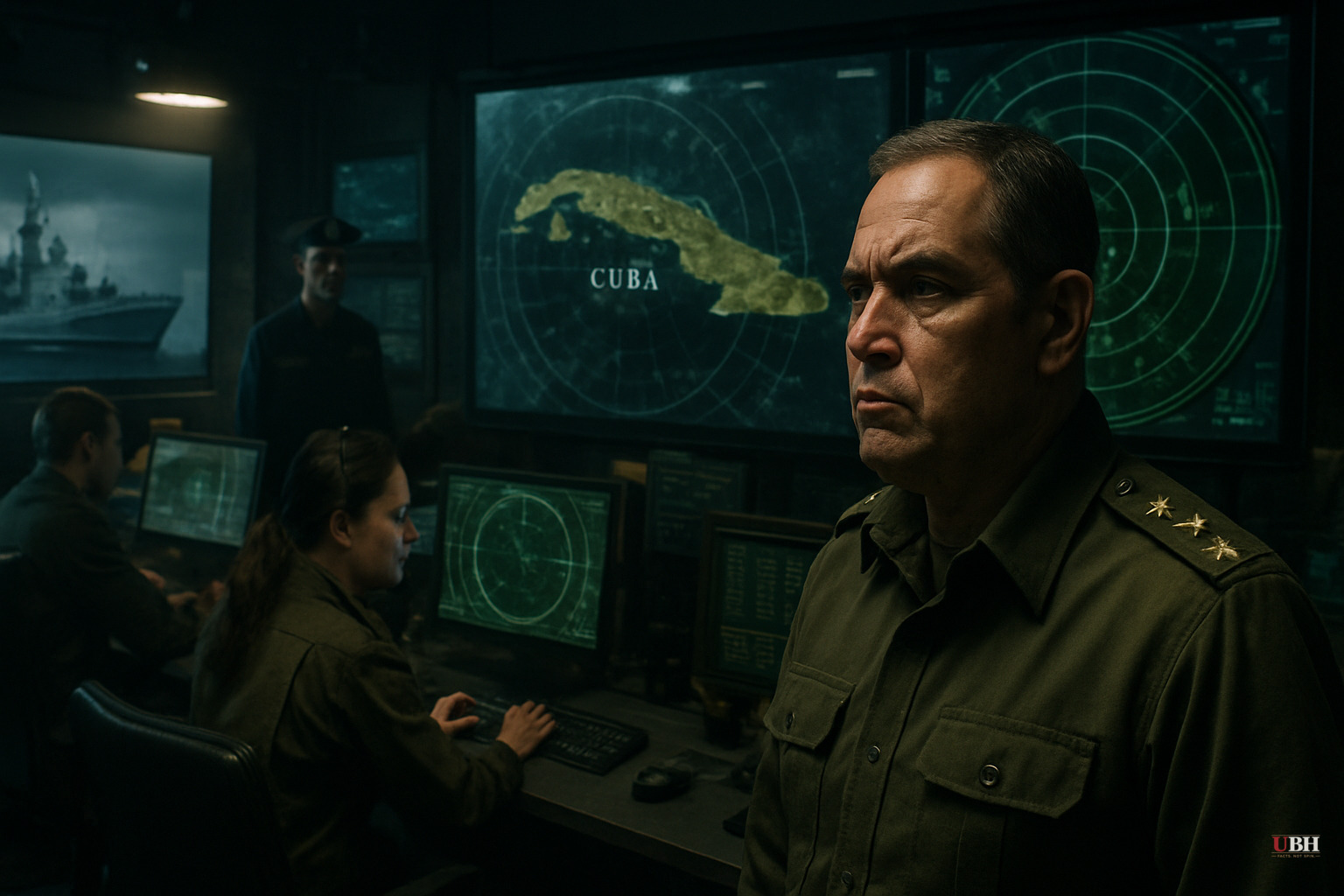
Secretary of State Marco Rubio announced Monday that the State Department has blacklisted three Cuban agencies and 11 individual officials, according to UPI. The three agencies hit: Cuba's Ministry of Interior, the National Revolutionary Police Force, and the Directorate of Intelligence — Havana's primary foreign spy outfit.
The officials sanctioned include the heads of the Revolutionary Police Force, various cabinet ministers, the chief of staff of military counterintelligence, the chief of the Central Army of Cuba, the chief of the Eastern Army of Cuba, and the president of Cuba's National Assembly for People's Power. These aren't low-level bureaucrats. This is the regime's command structure.
Rubio's statement, quoted by UPI, didn't mince words: "Regime-aligned actors such as those designated today bear responsibility for the suffering of the Cuban people, the failing Cuban economy and the exploitation of Cuba for foreign intelligence, military and terror operations."
He also signaled more sanctions "can be expected" in the coming days and weeks.
Díaz-Canel's Counterpunch
Late Monday, Cuban President Miguel Díaz-Canel responded on social media, arguing that none of the sanctioned officials have assets or property under U.S. jurisdiction — and claiming the Trump administration already knows this. His exact words: "The anti-Cuban rhetoric of hate tries to make people believe such things exist in order to justify the escalation of its total economic war."
He called Trump's Cuba policy "collective punishment" and "an act of genocide," and urged the international community to prosecute those responsible.
Díaz-Canel's argument has a factual basis worth examining. Sanctioning officials who hold no U.S.-jurisdiction assets doesn't freeze anything. It is a symbolic designation — a political message rather than a financial restriction.
Sanctions do create travel restrictions, reputational damage, and signal to third-country banks and businesses to stay away. But they represent a different category of pressure than asset freezes against officials with holdings in the U.S. financial system.
The Drone Angle
Cuba has reportedly acquired over 300 military drones capable of reaching South Florida, according to CBS News Miami reporting from Little Havana. Anna McAllister covered the story on the ground.
Three hundred military-grade drones sit ninety miles from U.S. territory.
Díaz-Canel previously threatened a "bloodbath" if the U.S. takes military action against Cuba. The Cuban military now possesses a drone arsenal with the range to reach the continental United States. While mainstream coverage has focused on the diplomatic sanctions, the drone threat has received minimal attention in national outlets.
The Hill reported on the escalating tensions but framed the story around the diplomatic sanctions. Epoch Times flagged the new sanctions but provided limited additional context. None of the major coverage gave the drone buildup prominent treatment.
The Bigger Picture: Trump's Cuba Strategy
According to UPI, President Trump declared a national emergency concerning Cuba earlier this year, citing Cuba's alignment with "numerous hostile countries" — including China, Russia, and Iran. Monday's sanctions are part of a sustained escalation.
Rubio's statement that more designations are coming "in the days and weeks ahead" indicates this is a rolling campaign.
The Cuban exile community in Little Havana, per CBS News Miami reporting, is reacting with cautious hope — wanting pressure on the regime but also seeking peaceful resolution.
The Media Coverage
Left-leaning coverage has focused heavily on Cuban-American community reaction and humanitarian considerations. Right-leaning coverage has treated the sanctions as a decisive blow without acknowledging Díaz-Canel's point about the limits of freezing non-existent assets.
These sanctions function as escalation signals and third-country deterrents. They are not, however, a crippling financial strike. The drone buildup 90 miles off Florida's coast remains a national security issue that warrants direct coverage rather than burial below diplomatic language.
On the Ground
South Florida residents now live within range of 300 military drones controlled by a government led by someone who has threatened "bloodbath" scenarios. For taxpayers watching the standoff: economic pressure only works when the target has something to lose in the U.S. system.
More sanctions are coming. The next moves will reveal whether Rubio's strategy targets new economic vulnerabilities or continues down the symbolic path.
Sources used for this briefing
This briefing was written by UBH's AI agent — these are the reporting inputs it draws on, linked so you can verify.


