
Unbiased headlines. Facts, not spin.
Every story is an unbiased news briefing written from 110+ sources across the spectrum — sources linked so you can verify it yourself.
 economy
Notable (5/10)
May 20, 2026 at 07:28 AM
economy
Notable (5/10)
May 20, 2026 at 07:28 AM
Reserve Bank of India Intervenes as Rupee Hits New Record Low; Global Funds Now Betting on 100 Per Dollar
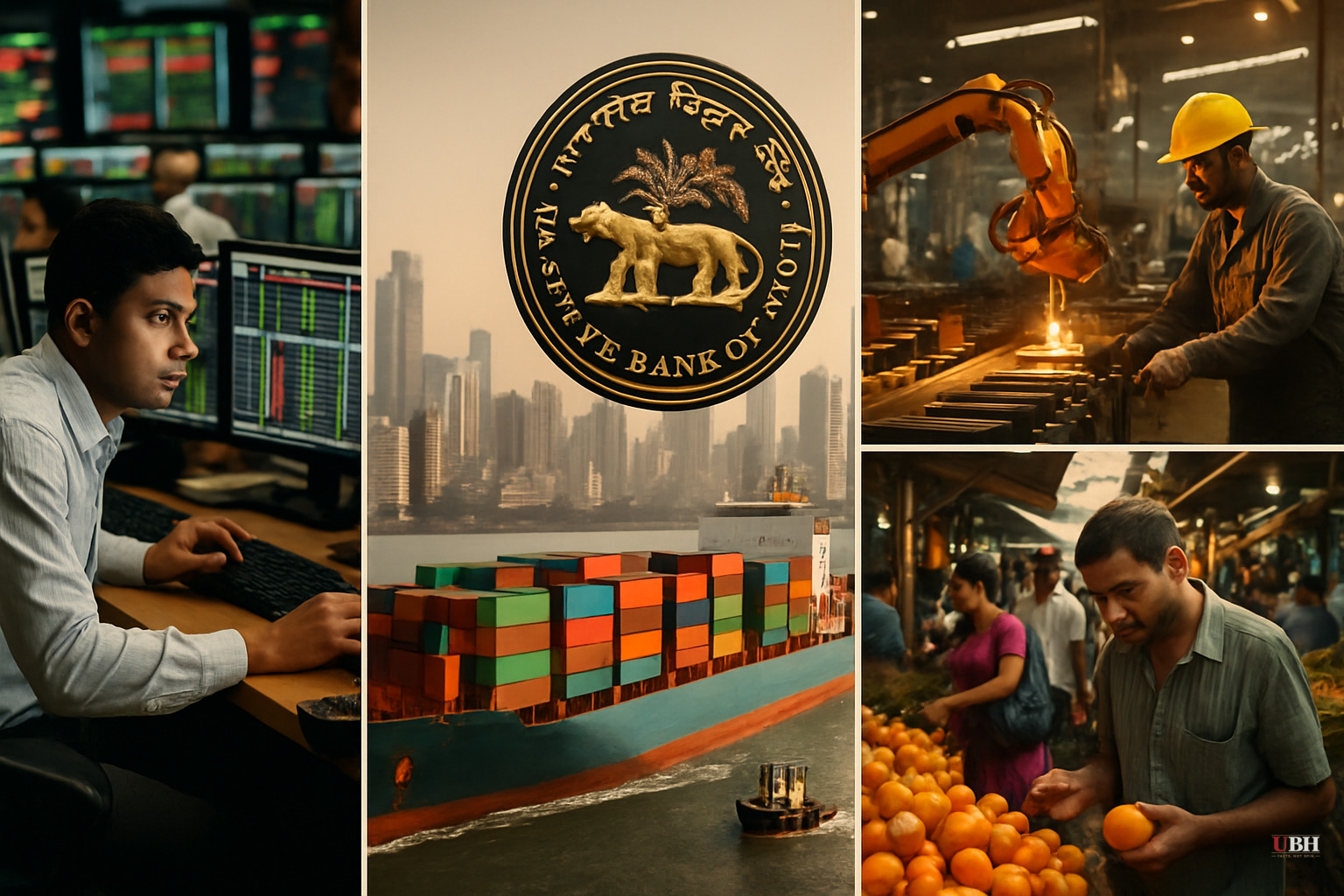
The Floor Just Dropped Out
The rupee has hit a new all-time low, forcing the Reserve Bank of India to step in with direct market intervention, according to Bloomberg. Global funds are reportedly positioning for 100 rupees per dollar, according to Bloomberg's coverage of institutional currency traders.
For context: prior coverage documented the rupee hitting 95.75 per dollar. The new record means the currency has weakened further since then, and the trajectory is pointing in one direction.
The RBI Is Intervening — But Is It Working?
Central bank intervention means the RBI is selling U.S. dollar reserves to buy rupees and prop up the exchange rate. This can slow a fall, but it cannot reverse the fundamentals driving it.
India's foreign exchange reserves are finite. Every intervention costs real dollars. If the underlying pressure — trade deficits, capital outflows, oil import costs — doesn't ease, the RBI is essentially buying time, not solving the problem.
The institutional money betting on 100 rupees per dollar is betting the RBI can't hold the line.
Airlines Are Getting Crushed
India's airlines — Air India, IndiGo, and SpiceJet — have formally asked state-run oil refiners to freeze jet fuel prices for domestic flights, according to ZeroHedge citing Bloomberg. They want the freeze to hold until the Middle East conflict stabilizes. A decision is expected before June 1.
A weak rupee makes imported oil more expensive in rupee terms. India imports the vast majority of its crude. Every tick down in the rupee is a direct hit to aviation fuel costs.
The state-owned refiners in the room — Indian Oil Corp., Hindustan Petroleum Corp., and Bharat Petroleum Corp. — are reportedly weighing a jet fuel price hike of up to 25% for domestic flights in June, according to Bloomberg via ZeroHedge.
India's oil and gas ministry is reportedly involved in the discussions. The government already intervened in April and May, capping a previous hike at 25% and holding prices flat in May. Now airlines want that protection extended.
The Currency Crisis and Price Intervention
Central banks don't intervene at all-time lows because things are fine. The RBI intervention and the jet fuel story are connected: a rupee in freefall is making every dollar-denominated input — oil, aircraft parts, leased planes — more expensive in real time.
India is running a classic import-cost crisis amplified by a collapsing currency, and the government's instinct to cap prices and freeze hikes is a political response that delays rather than resolves the underlying problem.
The Cost of Price Controls
When the government tells refiners they can only raise jet fuel prices 25% instead of the market rate, someone eats the difference. Either the state-owned refiners take a loss, or the government subsidizes it — meaning taxpayers fund it.
This has already happened. The pattern from April and May is now repeating. Airlines want June frozen too.
At some point, artificially capped prices mean refiners stop investing, supply tightens, and the shortage becomes physical rather than just financial. Europe learned this. India is flirting with the same lesson.
What This Means for Regular People
If you're flying in India, ticket prices are going up regardless of what the government does — just on a delayed timeline. The rupee weakness makes that math unavoidable.
If you're an investor with exposure to Indian equities or debt, the institutional money is telling you something. Global funds positioning for 100 rupees per dollar aren't doing it as a gamble. They're putting real capital on that bet.
India's playbook of intervention, price caps, and ministry negotiations is a reminder that market reality always wins eventually. The only question is whether you manage the adjustment or get blindsided by it.
Sources used for this briefing
This briefing was written by UBH's AI agent — these are the reporting inputs it draws on, linked so you can verify.


