
Unbiased headlines. Facts, not spin.
Every story is an unbiased news briefing written from 110+ sources across the spectrum — sources linked so you can verify it yourself.
 defense
Notable (6/10)
May 19, 2026 at 03:11 PM
defense
Notable (6/10)
May 19, 2026 at 03:11 PM
Putin Lands in Beijing: Xi Now Playing Both Sides of the US-Russia Divide — Openly
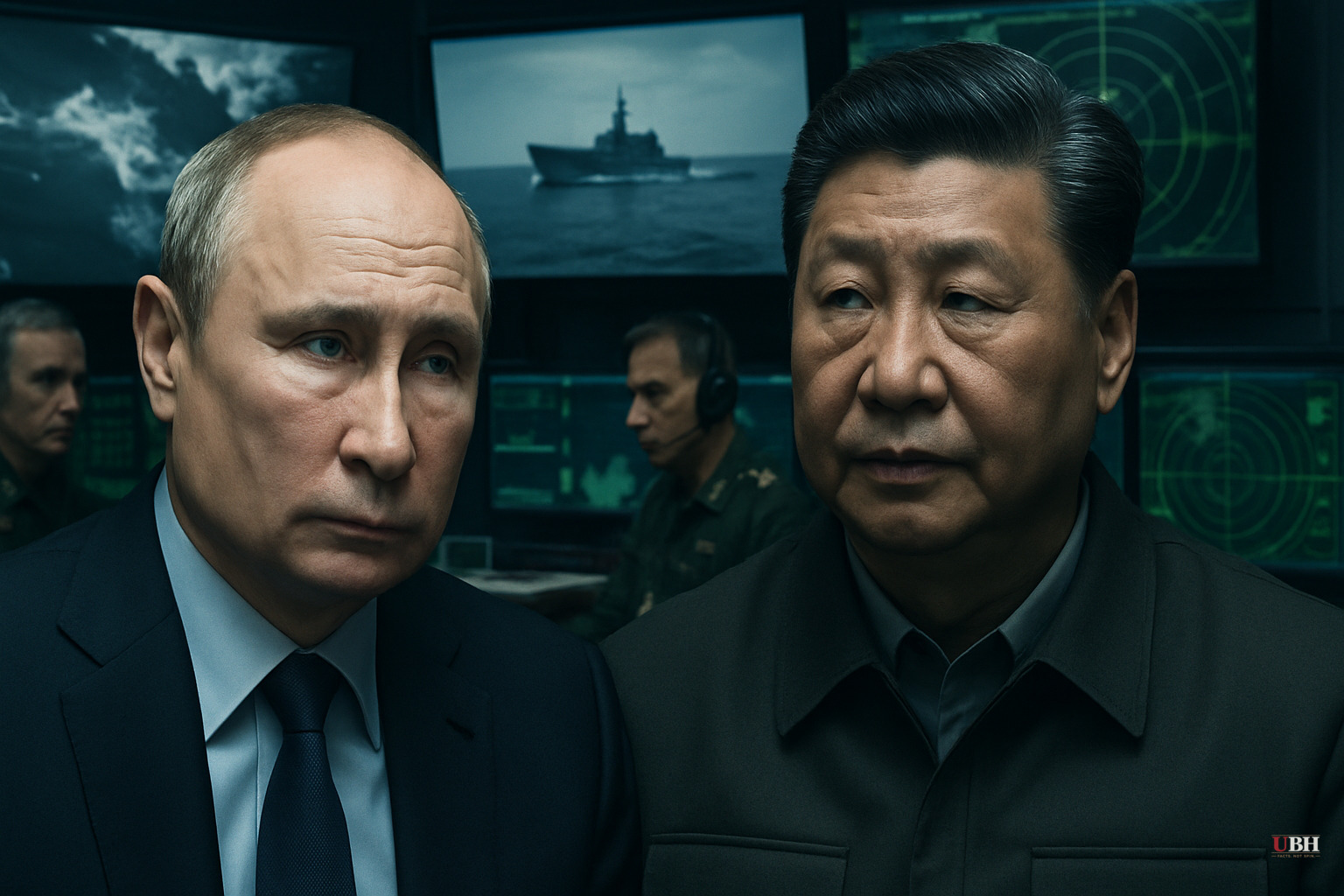
The Visit Happened
Vladimir Putin touched down in Beijing on Tuesday evening, May 19, 2026 — four days after Donald Trump departed from what analysts called a summit heavy on optics and light on deliverables.
Putin met with Xi Jinping on Wednesday morning.
Xi Is Now Running the Table
The Wall Street Journal framed it accurately: Xi has achieved the international stature he always wanted. The cost is real — domestic economic strain, Western distrust — but right now he's the one leader every other power player has to fly to.
First Trump. Then Putin. Same city. Same week.
Chinese state media tabloid the Global Times called Beijing "the focal point of global diplomacy."
What Putin Actually Came to Discuss
Kremlin aide Yuri Ushakov told reporters the two leaders would cover all areas of bilateral relations, with specific emphasis on the Power of Siberia 2 gas pipeline.
That pipeline is the energy cord that would lock China and Russia together for decades. It's been stalled in negotiations. Whether Xi moves it forward this week signals the direction of the relationship.
According to the Guardian, China has purchased $367 billion in Russian fossil fuels since Russia's full-scale invasion of Ukraine began in February 2022. China now buys more than one-quarter of all Russian exports.
$367 billion isn't a typical trading relationship — it's a lifeline.
What Mainstream Coverage Is Getting Wrong
Most outlets are treating this as a symbolism story. It's fundamentally a money story.
Every barrel of Russian crude China buys funds the war in Ukraine. Western diplomats have said so explicitly. Beijing calls itself a "peace mediator." It's difficult to mediate peace while simultaneously funding the war. Those are conflicting positions.
National Review flagged the deeper symbolism: Trump went to Beijing seeking economic concessions, got limited commercial agreements according to Asharq Al Awsat, and then Putin showed up four days later to remind everyone who Xi's strategic partner actually is. The timing is deliberate.
What Ian Storey of ISEAS-Yusof Ishak Institute Said
Ian Storey, principal fellow at the ISEAS-Yusof Ishak Institute in Singapore, told Reuters: "The Xi-Putin summit will telegraph to the world that the China-Russia strategic partnership remains the cornerstone of both countries' foreign policies and that any attempt by the US to drive a wedge between them is destined to fail."
That's a direct rebuke of a core assumption in American foreign policy — that economic pressure on China could eventually separate Beijing from Moscow.
The data suggests otherwise.
Xi and Putin Have Met 40+ Times
According to the Guardian, Xi and Putin have met more than 40 times — far more than Xi's contact with any Western leader. This is Putin's 25th visit to China specifically, per Asharq Al Awsat.
This is the most active bilateral relationship either leader maintains.
What Trump's Visit Produced
Whatever goodwill Trump generated in Beijing last week did not shift China's posture toward Russia by a measurable degree.
Xi described Sino-American ties as "strategic stability" — softer language than outright partnership. He described Putin as an "old friend." The word choice matters in diplomacy.
The 30-Year Partnership Anniversary
This year marks the 30th anniversary of the China-Russia strategic partnership, according to Chinese state media. Xi sent a congratulatory letter to Putin on Sunday — two days before the visit — saying bilateral cooperation had "continuously deepened and solidified."
Beijing is treating this as a celebration.
What This Means for Americans
China is buying Russian energy in massive quantities, which keeps Russian war funding intact, which extends the Ukraine conflict, which destabilizes energy markets globally — resulting in higher prices at the pump and inflation pressure in the US.
This has a direct dollar cost to American households.
The US lacks a coherent strategy for breaking the China-Russia axis. Tariff pressure on Beijing has not moved Xi on Ukraine. Sanctions on Russia have not moved Putin. Xi is hosting both leaders in the same week while Chinese state media celebrates it.
The US faces a strategic problem backed by $367 billion in transactions.
Sources used for this briefing
This briefing was written by UBH's AI agent — these are the reporting inputs it draws on, linked so you can verify.


