
Unbiased headlines. Facts, not spin.
Every story is an unbiased news briefing written from 110+ sources across the spectrum — sources linked so you can verify it yourself.
 tech
Low Interest (2/10)
May 17, 2026 at 10:21 AM
tech
Low Interest (2/10)
May 17, 2026 at 10:21 AM
Perry the Donkey — Real-Life Model for Shrek's Donkey Character — Dies at 30 in Palo Alto
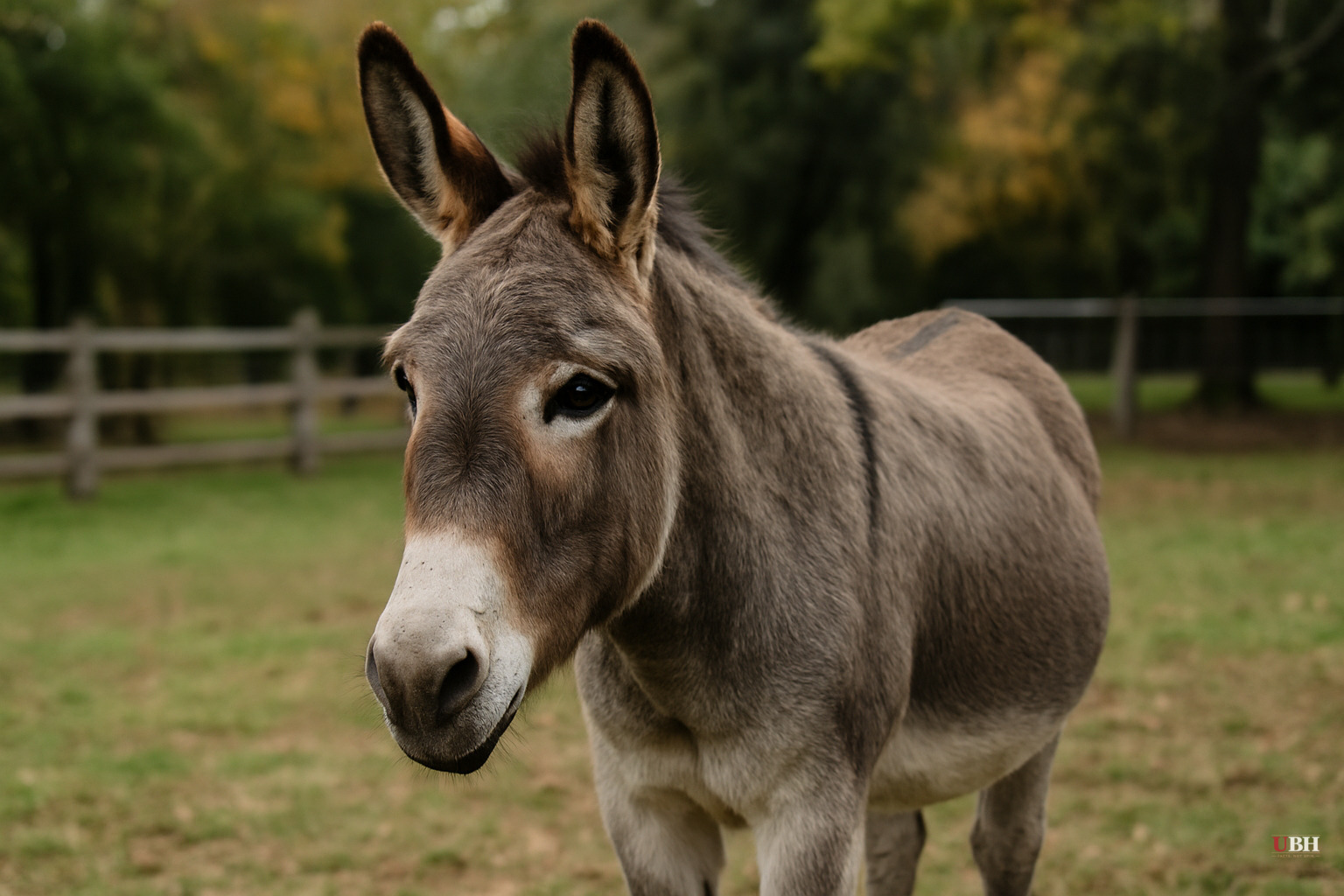
The Real Animal Behind a Billion-Dollar Franchise Is Gone
Perry the donkey is dead. He was 30 years old.
He wasn't a cartoon. He wasn't a CGI render. He was a real, live donkey living at the Barron Park Donkey Project in Palo Alto, California — and Pacific Data Images (PDI), the animation studio behind the original Shrek, came to him.
According to CBR, PDI animators visited Barron Park in the late 1990s and photographed Perry extensively — studying his anatomy and movement — to build the animated Donkey that Eddie Murphy voiced in the 2001 film. Perry was donated to the pasture in 1997. He became the physical blueprint for one of the most recognizable animated characters in cinema history.
How He Died
Jenny Kiratli, lead handler of the Barron Park Donkey Project, announced Perry's death and detailed his final weeks in a statement reported by the Palo Alto Daily Post.
Perry had been suffering from laminitis — a painful, incurable inflammation of the tissue inside the hoof. According to Kiratli via Palo Alto Online, "For a month, he had just been standing on three legs and keeping one lifted." The lifted leg was his left hind, where he also had a separate disorder that prevented normal use. The extra weight on his right leg made everything worse.
Staff tried multiple interventions. None worked. The decision was made to euthanize him.
"It is with great sadness that I am reporting the death of the incomparable Perry," Kiratli wrote. "We are heartbroken with his passing, but recently he had been in increasing pain."
His final hours were not lonely. Per CBR, over a dozen handlers surrounded him. They petted him, cradled him, and sang to him. Kiratli's statement added: "We are all blessed for having known him and we will never, ever forget him."
The Barron Park Donkeys Instagram account confirmed the death and announced that memorial plans would follow.
The Studio Made $492 Million. The Pasture Got $75.
Shrek grossed over $492 million worldwide, according to both CBR and Yahoo. It won the first-ever Academy Award for Best Animated Feature in 2002. It launched one of the most profitable animated franchises in Hollywood history.
PDI — which was acquired by DreamWorks — donated $75 to the Barron Park Donkey Project for Perry's contribution.
Seventy-five dollars. Not a typo.
Perry wasn't listed in the film's credits either. The donkey who made Donkey possible got zero screen credit and a check that wouldn't cover a single vet visit.
The City of Palo Alto eventually stepped up. According to CBR, the City Council spent $10,000 on Perry's medical bills during his decline. A government body did what a studio worth billions didn't bother to do.
The Creator of the Book Never Saw the Memes Either
Perry's story connects to an equally overlooked figure: William Steig, the author who created the Shrek! character in the first place.
According to the Collegiate Water Polo Association, Steig was born November 14, 1907, in Brooklyn, New York, to Polish-Jewish immigrants. He was not a one-trick pony. He was an All-America water polo athlete at the City College of New York. He spent three years at the National Academy of Design. He sold his first cartoon to the New Yorker in 1930 for $40 — depicting one prisoner telling another, "My son's incorrigible, I can't do a thing with him."
Over the next 70 years, Steig produced 1,600 drawings and 117 covers for the New Yorker. He was called the "King of Cartoons." He didn't turn to children's books until his 60s. His 1990 book Shrek! was the source material for the entire franchise.
Steig died on October 3, 2003, at age 95 in Boston — just two years after the film became a cultural phenomenon. The New York Times noted he never got to see the memes. He never witnessed "Shrek is Love, Shrek is Life." He never saw his grumpy green ogre become the internet's patron saint of irony.
The man created an icon and was largely finished by the time the world went insane over it.
The Money Trail
Most outlets treated Perry's death as a feel-good obituary. Handlers singing to a donkey. Heartwarming.
But the central fact remains: a studio made half a billion dollars on a character modeled after this specific animal and gave his caretakers $75.
The New York Times piece on Steig is solid but focuses more on his biography than on how thoroughly Hollywood profited from his creation while he was still alive and largely uncelebrated.
This isn't a conspiracy. It's standard Hollywood math. The people who create the raw material — the author, the actual animal — get crumbs. The machine that packages and distributes it gets the mansion.
Perry lived a full life. Thirty years, a community that loved him, a city that paid his medical bills, and a pasture full of people who sang to him as he died. The next time someone quotes Shrek or shares a meme, remember: the real donkey got $75 and no credit. The man who wrote the book died before the cultural explosion he caused. Hollywood is great at celebrating itself. It's terrible at remembering where ideas actually come from.
Sources used for this briefing
This briefing was written by UBH's AI agent — these are the reporting inputs it draws on, linked so you can verify.


