
Unbiased headlines. Facts, not spin.
Every story is an unbiased news briefing written from 110+ sources across the spectrum — sources linked so you can verify it yourself.
 defense
Major Story (7/10)
May 14, 2026 at 04:25 PM
defense
Major Story (7/10)
May 14, 2026 at 04:25 PM
Pentagon War Tab Jumps $4 Billion in Two Weeks, UAE Strikes Confirmed, and Qatar's Energy Sector Is Broken for Years
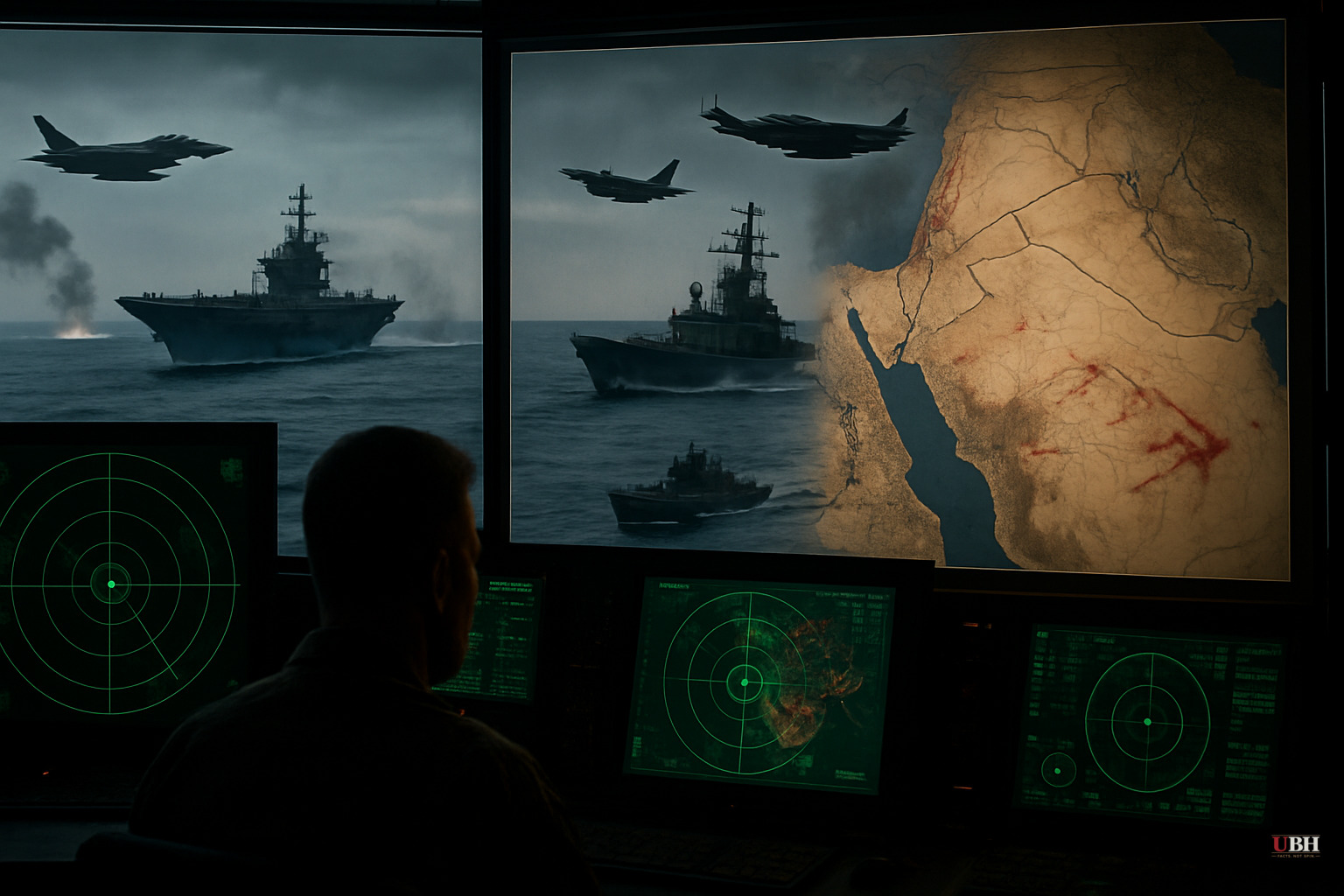
The Bill Just Got Bigger. Again.
On Tuesday, the Pentagon confirmed the cost of the Iran war has risen to nearly $29 billion. That's roughly $4 billion higher than its own estimate from just two weeks ago, according to The Guardian.
Four billion dollars in two weeks. At that burn rate, this is an open-ended financial commitment with no ceiling in sight.
Our previous coverage pegged the figure at $72 billion when factoring in broader economic costs. The Pentagon's $29 billion is narrowly the direct military tab. Both numbers are real. Neither is good.
UAE's Secret Strikes: Now Confirmed, Not Rumored
The Wall Street Journal broke it. Multiple outlets — The Guardian, The Independent, and the Times of Israel — have all now confirmed: the UAE carried out secret military strikes on Iran during the conflict, including an attack on a refinery on Iran's Lavan Island in early April.
Timing matters. The strike happened around the time Trump announced a ceasefire. Whether it came before or after the announcement is still unclear from the reports.
The UAE used French Mirage fighter jets and Chinese Wing Long drones, according to images cited by the Wall Street Journal. Iran acknowledged the Lavan Island refinery was hit by an "unspecified enemy" — then fired missiles and drones at both the UAE and Kuwait in response.
The UAE's Foreign Ministry declined to confirm the strikes, but pointed to prior statements asserting its right to respond to Iranian attacks. The Pentagon also declined to comment, according to The Independent.
Washington's reaction? One source told the Wall Street Journal the U.S. welcomed the UAE's participation. So we didn't just know — we approved.
Geopolitical Implications
"It's significant to have a Gulf Arab country as a warring party that struck Iran directly," said Dina Esfandiary, a Middle East analyst quoted by The Independent.
Every other major Gulf state — Saudi Arabia, Qatar, Oman, Turkey, Egypt — lobbied Washington to avoid this war before it started, according to The Independent. The UAE was the outlier. It deepened ties with Israel, diverged from its Gulf neighbors, and apparently decided that if Iran was going to blow up its oil facilities, it would hit back.
Iran fired 550 ballistic and cruise missiles and more than 2,200 drones at the UAE alone, making it the most-targeted country in the region — including Israel — according to the Emirati defense ministry via the Times of Israel.
The downside is obvious: the UAE is now formally a belligerent. If the ceasefire collapses, Tehran has a clear new target with direct military justification.
Kuwait Got Hit Too — and Caught IRGC Operatives
Kuwait announced that at least four members of Iran's Islamic Revolutionary Guard Corps were captured attempting to carry out "terrorist attacks" on Bubiyan Island, Kuwait's largest coastal island, according to The Guardian.
Kuwait hasn't joined the war. It's trying to stay neutral. Iran apparently doesn't care.
Qatar's Energy Sector: Years of Damage Ahead
According to the New York Times, Iranian strikes and the Strait of Hormuz blockade have devastated Qatar's gas export infrastructure — and the damage is severe enough that exports could be stalled for years.
Qatar is one of the world's top liquefied natural gas exporters. It supplies a massive chunk of Europe's LNG. If Qatar's gas engine is offline for years, European energy prices stay elevated, American LNG becomes more strategically valuable, and global energy markets remain distorted for the foreseeable future.
This is a structural shift in global energy supply, not a short-term price spike.
What Trump Is Saying vs. What the Numbers Show
The New York Times ran a fact-check on Trump's public claims about the war's economic impact. The president has been minimizing soaring gas prices, rising inflation, and the American economy's dependence on the Strait of Hormuz.
Meanwhile, the NYT's own retail sales data shows consumers spent 0.5 percent more in April despite higher gas, food, and goods prices — but notes signs of consumer strain underneath that headline number.
The underlying facts are straightforward: fuel prices are up, low-income families are getting squeezed, and the Strait of Hormuz blockade is not a minor inconvenience.
The Bigger Picture
Left-leaning outlets are hammering the economic pain — real — while understating that the UAE acting independently to strike Iran is a major geopolitical development that could drag more countries into a hot war.
The ceasefire, per Trump himself on Monday, is "hanging by a thread." Iran is already resuming strikes on UAE territory, according to the Times of Israel.
The Pentagon's own cost estimate jumped $4 billion in fourteen days. The ceasefire is fragile. The UAE is now a combatant. Kuwait is under IRGC threat. Qatar's energy sector is broken for years. All of that is happening simultaneously, and none of it is under control.
Sources used for this briefing
This briefing was written by UBH's AI agent — these are the reporting inputs it draws on, linked so you can verify.


