
Unbiased headlines. Facts, not spin.
Every story is an unbiased news briefing written from 110+ sources across the spectrum — sources linked so you can verify it yourself.
 economy
Notable (6/10)
May 17, 2026 at 02:21 AM
economy
Notable (6/10)
May 17, 2026 at 02:21 AM
Oxford Economics Models $190 Oil and Global Recession If Hormuz Stays Shut Six Months — Manufacturers Are Already Stockpiling Like It's Happening
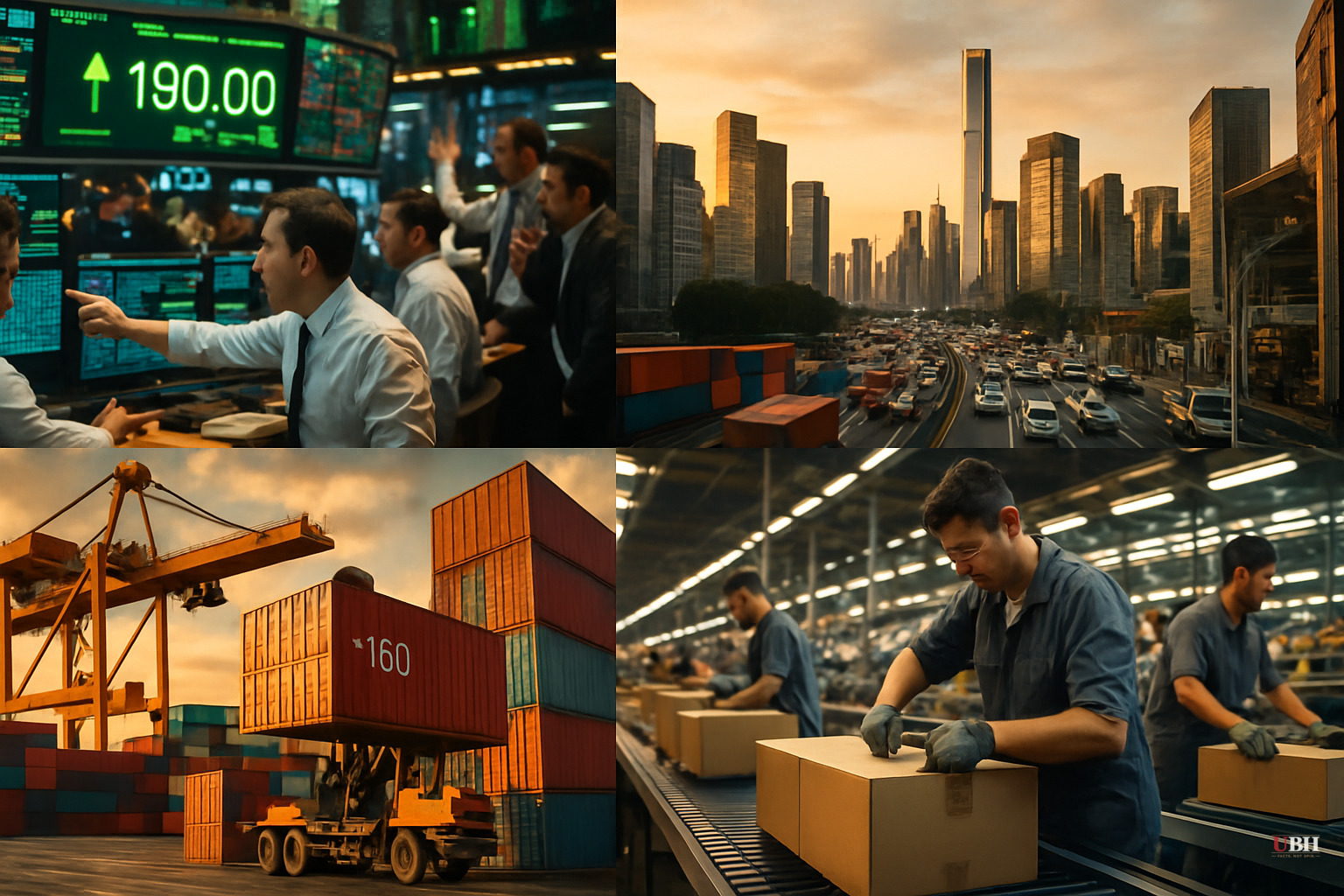
The Scenario Nobody Wants to Model — Oxford Just Did It Anyway
Oxford Economics published a stress-test on March 31, 2026, that mainstream outlets have largely buried under softer PMI preview coverage. It deserves front-page treatment.
Their "Prolonged Iran War" model assumes the Strait of Hormuz stays effectively closed for six months, Iranian strikes hit alternative pipeline routes through Saudi Arabia and the UAE, and Houthi attacks resume in the Red Sea. All at once.
The result: global oil supply drops by nearly 20 million barrels per day — a complete system collapse.
The Numbers Are Not Subtle
According to Oxford Economics, Brent crude surges to approximately $190 per barrel by August 2026 — blowing past the 2008 all-time record of $147. Refined products like diesel, jet fuel, and shipping fuel spike even harder.
European and Asian natural gas prices hit $30 per MMBtu in Q3, making winter energy storage replenishment nearly impossible. Global inflation reaches 7.7%, near the 2022 peak.
The critical difference from 2022 emerges in the growth forecasts. Oxford Economics projects world GDP at 1.4% growth for 2026 — 1.2 percentage points below their baseline — with outright contraction hitting mid-year. The US, most major advanced economies, and China (down to 3.4% growth) all slide into recession.
Oxford calls it the worst synchronized global downturn in 40 years outside of the pandemic and the 2008 financial crisis.
Who Gets Destroyed First
The Gulf states take the sharpest hit — GDP down over 8% in 2026 before rebounding when production recovers. Advanced Asian economies, deeply dependent on Gulf oil imports, get hammered by both energy costs and supply chain breakdown. Europe faces a gas and electricity squeeze heading into winter.
The US fares relatively better, per Oxford Economics, thanks to domestic energy production. But "relatively better" in a global recession still means recession.
Meanwhile: Manufacturers Are Already Acting Like It's Happening
Separately, May PMI data releases this week — covering economies from Australia to the US — are expected to show continued expansion in industrial activity, according to Bloomberg and the Financial Post.
Companies across major economies are racing to accumulate manufactured goods inventories now, anticipating an energy-supply crunch that could cripple logistics later. The Financial Post noted that Bloomberg analyst polls project most PMI readings will show expansion, but explicitly flags the question of whether this reflects genuine resilience or "manufacturers running on fumes before the energy shock fully hits."
One reflects a healthy economy. The other is a borrowing of future activity that makes current numbers look stronger than they are.
The Inflation Trap Central Banks Are Walking Into
This stockpiling surge creates a policy nightmare for central banks. The inventory buildup is feeding pipeline inflation pressures — higher input costs, supply bottlenecks, and demand spikes — right before the next round of key monetary policy decisions scheduled for June, according to the Financial Post.
If central banks see strong PMI numbers and read them as genuine growth, they may hold rates higher for longer. If those numbers are inventory illusion masking an incoming energy shock, rate decisions made on that data will be badly miscalibrated.
The Federal Reserve, the European Central Bank, and the Bank of England face potential miscalibration based on misleading headline numbers.
What Mainstream Coverage Is Getting Wrong
Most of the PMI preview coverage this week is treating the expansion numbers as broadly positive — a sign of economic resilience under pressure. The Financial Post at least flagged the stockpiling distortion, but didn't push hard on it. Oxford Economics' recession modeling — the most important piece of new analytical work published on this crisis — is getting minimal mainstream attention compared to the softer PMI preview stories.
The G7 finance ministers meeting this week is also on the agenda, per the Financial Post, where officials will assess global growth and bond market fragility. Their decisions directly affect policy response to potential oil shocks.
Trump's recent meeting with Chinese President Xi Jinping adds another variable. Concrete outcomes are still emerging, according to the Financial Post, but any US-China economic coordination — or lack of it — directly affects how the global economy weathers an oil shock of this magnitude.
What Happens If Oxford Gets It Right
If Oxford Economics' prolonged war scenario materializes, $190 oil means diesel rationing, food price spikes, and airline disruptions. Two-thirds of global oil consumption is transport-related. Diesel moves food, manufactured goods, and raw materials. When diesel gets rationed, grocery shelves feel it.
The current stockpiling surge gives businesses a buffer — for a few months. After that buffer burns off, the real hit arrives.
May PMI data this week will tell us how far along that stockpile race is. The inventory sub-indexes, not the headline expansion numbers, contain the actual picture.
Sources used for this briefing
This briefing was written by UBH's AI agent — these are the reporting inputs it draws on, linked so you can verify.


