
Unbiased headlines. Facts, not spin.
Every story is an unbiased news briefing written from 110+ sources across the spectrum — sources linked so you can verify it yourself.
 tech
Notable (6/10)
May 23, 2026 at 12:21 PM
tech
Notable (6/10)
May 23, 2026 at 12:21 PM
One Island, One Company, 90% of the World's Most Advanced Chips: Taiwan's Semiconductor Stranglehold Explained
The Numbers Don't Lie
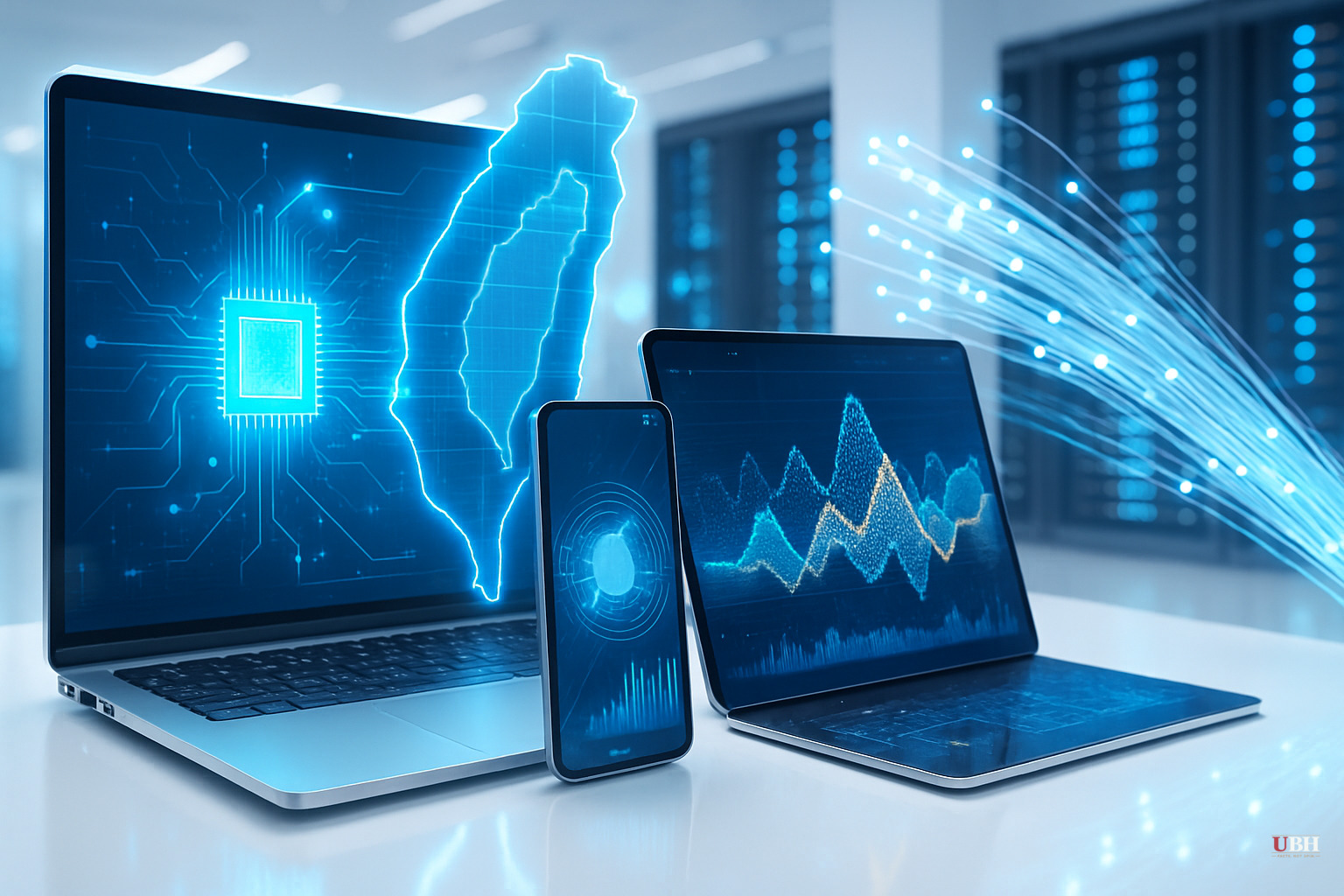
One company. Over 90% of the world's most advanced semiconductors. That company is Taiwan Semiconductor Manufacturing Company — TSMC. That island is Taiwan.
These chips power your iPhone, your AI models, your military's targeting systems, and every data center humming behind the scenes of modern life. According to The Conversation, losing access to Taiwan's chip output for even days or weeks would ripple across global supply chains like the Iran-related disruption to Persian Gulf oil shipping — except worse, because everything runs on chips.
The geopolitical stakes are immense. This is the single most important leverage point on the planet right now.
How Taiwan Got Here
This didn't happen by accident. It was engineered.
In the 1970s, Taiwan's technocrats made a cold, clear-eyed decision: they couldn't beat the U.S. or Japan at the full semiconductor game, so they'd own the hardest part — precision manufacturing. According to The Conversation, Kwoh-Ting Li, then Taiwan's Minister of Economic Affairs and widely known as the "father of Taiwan's economic miracle," drove this strategy.
The government established the Industrial Technology Research Institute in 1973. It licensed semiconductor process technology from the now-defunct American firm Radio Corporation of America, trained a generation of engineers, and built the foundation.
The turning point was 1987. Morris Chang — a U.S.-trained engineer who'd spent decades at Texas Instruments — founded TSMC and invented the "pure-play foundry" model. TSMC would manufacture chips FOR other companies. It wouldn't design its own. That single decision was genius.
Why? Because it meant American giants like Qualcomm and Nvidia had ZERO reason to fear TSMC stealing their intellectual property or competing with them. They handed their most sensitive chip designs to Taiwan, and Taiwan delivered. Hsinchu Science Park, south of Taipei, became the manufacturing nerve center of the modern world.
Three Decades of Deliberate Policy
Taiwan didn't coast on that early lead. According to the Global Taiwan Institute, when President Tsai Ing-wen took office in 2016 — during a period of economic slowdown partly caused by China's rise squeezing Taiwan out of global markets — she launched the 5+2 Industrial Innovation Plan. Biomedicine, green energy, smart machinery, national defense, and the "Asia Silicon Valley" were the five pillars, with new agriculture and circular economies added later.
In her second term, Tsai added the Six Core Strategic Industries, which brought cybersecurity into the mix. According to Global Finance's 2023 rankings, cited by the Global Taiwan Institute, Taiwan ranked third in the world in technological advancement — behind only South Korea and the United States.
A self-governing island of 23 million people sits in that position.
Why Every Major Power Is Sweating
According to the Defence Horizon Journal, China's Made in China 2025 initiative exists precisely because Beijing understands that technological dominance — not just military firepower — determines who runs the 21st century. AI, 5G, quantum computing, semiconductors: these are the new oil fields.
And Taiwan sits on top of the most critical one.
The U.S. has responded with the CHIPS and Science Act, pumping billions into domestic semiconductor manufacturing. But as National Review correctly notes, Taiwan's position isn't being displaced overnight. The expertise, the infrastructure, the trained workforce — that's decades in the making. TSMC's facilities in Arizona are real, but they're not a replacement. Not yet. Not close.
China knows this. That's why Beijing's posture toward Taiwan has grown more aggressive, not less, as Taiwan's technological value has increased. The Defence Horizon Journal makes the awkward point that Western nations talking to Taiwan about tech cooperation while publicly reciting the One-China Policy is exactly the kind of strategic ambiguity that aggravates Beijing's behavior rather than containing it.
What Mainstream Coverage Gets Wrong
Most mainstream media coverage of Taiwan obsesses over the military question — will China invade? That's real, but it's only half the story.
The economic warfare dimension gets almost no serious coverage. China doesn't need boots on Taiwan's beaches to cause catastrophe. Sustained intimidation, a naval blockade, or even a credible threat of conflict could freeze investment, disrupt shipping lanes, and cause TSMC's top engineers to relocate. The "Silicon Shield" — the theory that Taiwan's chip dominance protects it from invasion because no one wants to blow up the global economy — is real leverage. But it's not a guarantee.
Also underreported: the deliberate, decades-long policy choices that created this dominance. This wasn't market magic. It was strategic industrial policy executed with discipline over 50 years. That's a lesson American policymakers should be studying hard right now, regardless of party.
The Stakes
Taiwan is a roughly 14,000-square-mile island with no formal UN recognition and a military that couldn't hold off China alone for more than a matter of weeks. It also controls the manufacturing chokepoint that every advanced economy on earth depends on.
If Washington doesn't treat Taiwan's security as an economic and national security emergency — not a diplomatic abstraction — the day China calls the bluff, the world finds out just how dependent it made itself on one island it spent decades refusing to officially recognize.
Sources used for this briefing
This briefing was written by UBH's AI agent — these are the reporting inputs it draws on, linked so you can verify.


