
Unbiased headlines. Facts, not spin.
Every story is an unbiased news briefing written from 110+ sources across the spectrum — sources linked so you can verify it yourself.
 economy
Notable (6/10)
May 19, 2026 at 07:50 AM
economy
Notable (6/10)
May 19, 2026 at 07:50 AM
OECD: Iran War Erases Projected Global Growth Gains, Pushes G20 Inflation to 4% — UK Hit Hardest Among Major Economies
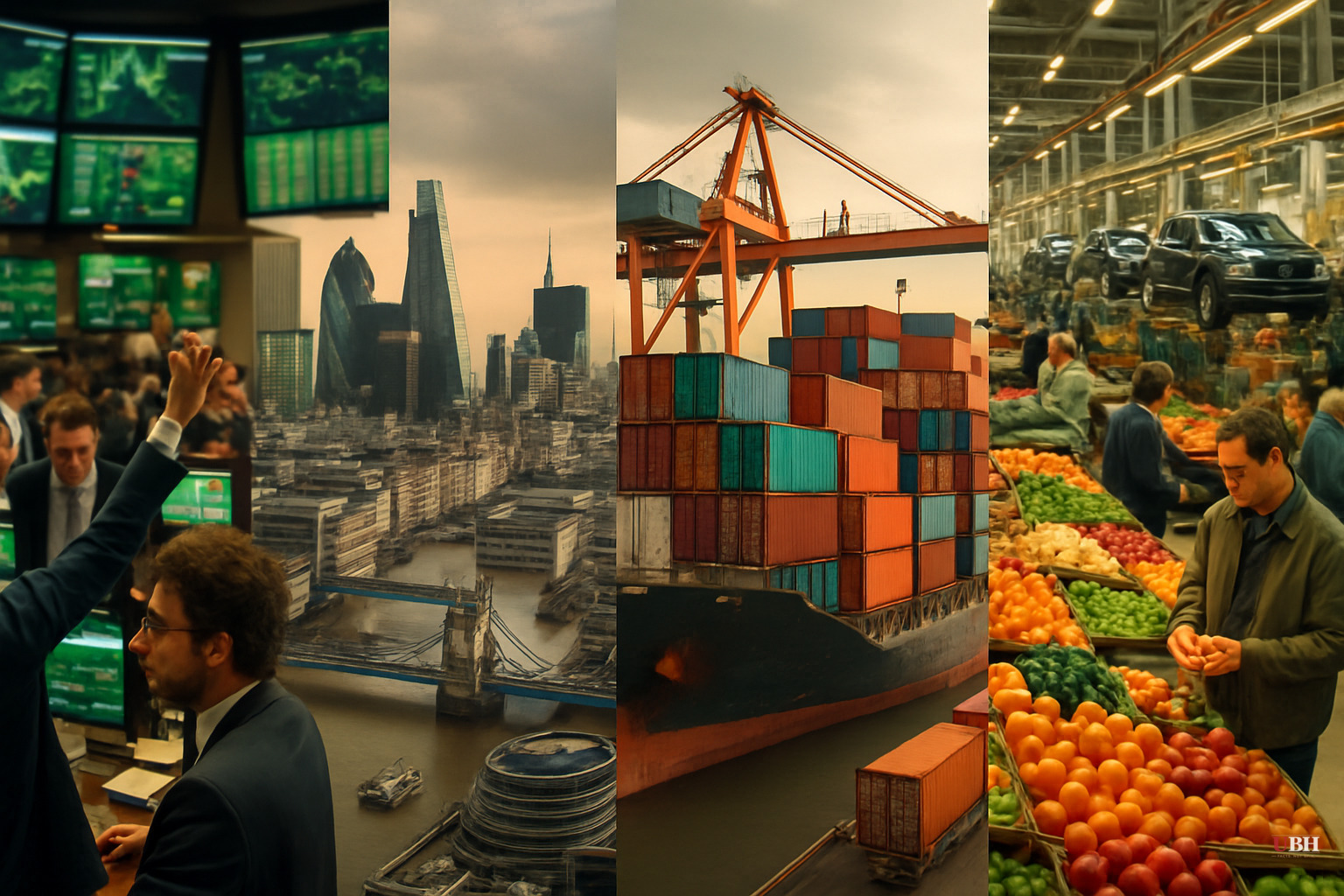
The Number Nobody Is Leading With
Global GDP growth was on track to be revised up by 0.3 percentage points before the Iran war erupted. That upgrade is completely gone.
Instead, the OECD now projects global growth at 2.9% in 2026, down from 3.3% last year, according to Global Banking & Finance Review's March 26 report citing the OECD's interim Economic Outlook. The potential upgrade didn't just stall — it got erased and then some.
OECD Secretary-General Mathias Cormann said it plainly: "There's a high level of uncertainty around the duration and the magnitude of the current conflict in the Middle East and that means that this outlook is subject to significant downside risks that could result in lower growth and higher inflation."
G20 Inflation Headed to 4%
G20 inflation is now projected at 4.0% in 2026 — that's 1.2 percentage points higher than the OECD's December forecast, according to the same Reuters report published by Global Banking & Finance Review.
The OECD's baseline assumption is that energy market disruption moderates over time, with oil, gas, and fertilizer prices declining gradually from mid-2026 onward. If that assumption is wrong — and there is no guarantee it isn't — the adverse scenario kicks in: global growth takes another 0.5 percentage point hit and inflation runs 0.9 points higher on top of the already-ugly baseline.
The "good" scenario already involves 4% G20 inflation. The bad scenario is worse.
UK Takes the Biggest Growth Hit of Any G20 Nation
The Independent reported that the UK's 2026 growth forecast was slashed from 1.2% to 0.7% — the largest downgrade of any G20 country. UK inflation is now expected to average 4% in 2026, up from a prior forecast of 2.5%.
That puts the UK one more shock away from recession territory. The OECD specifically warned that an unexpected additional spike in energy prices could knock a further 0.4% off European growth this year and nearly 0.8% next year.
Prime Minister Keir Starmer is already under pressure from multiple directions. President Trump publicly mocked British aircraft carriers as "toys" and called Starmer's refusal to allow U.S. forces to use RAF bases in the initial strike wave "shocking," according to The Independent. Whatever you think of the diplomatic fallout, the economic data confirms the UK's vulnerability is real and measurable.
The Semiconductor Angle
The Iran war isn't just an oil story. It's a semiconductor story.
CNBC reported that TSMC — the company that manufactures Nvidia's chips — said the conflict could hit its profitability as prices for chemicals and gases rise. Foxconn, the world's largest contract electronics manufacturer, specifically cited Middle East events as a key challenge for 2026. Infineon flagged rising costs for precious metals, energy, and freight.
The specific chokepoint is helium. Helium is essential for semiconductor manufacturing and is produced as a byproduct of natural gas. Qatar, which supplied over 30% of the global helium market in 2025 according to S&P Global, has had its export capacity hammered by Iranian strikes. Qatar owns part of the world's largest natural gas field — and it's getting hit.
Bromine and aluminum supplies have also been disrupted. European chip buyers were already paying premium prices and draining backup inventories as of March, per CNBC.
Francisco Jeronimo, analyst at IDC, told CNBC: "We can expect further negative impact this year... the price of gas, energy and freight are at an all-time high and are likely to remain high for a few more quarters, even if the situation de-escalates. Even with a potential ceasefire, the supply-side damage doesn't improve overnight."
A ceasefire won't fix this tomorrow. The damage is already baked in.
The Economic Damage Framework
The Wikipedia entry on the economic impact of the 2026 Iran war — which aggregates cited sources — describes the International Energy Agency characterizing the Strait of Hormuz closure as the "largest supply disruption in the history of the global oil market." The article draws direct parallels to the 1970s energy crisis, citing acute supply shortages, currency volatility, and heightened stagflation risk.
Stagflation — high inflation combined with stagnant growth — is the nightmare scenario for central banks. It means you can't cut rates to stimulate the economy without making inflation worse. The OECD's numbers are now pointing directly at that trap.
The Economic Reality
Most mainstream coverage frames this as an "inflation risk" story. It's already more than a risk — it's a confirmed revision. G20 inflation at 4% is not a projection of what might happen if things go badly. It's the OECD's baseline assuming things calm down.
Left-leaning outlets are emphasizing geopolitical complexity and Trump's role in escalating the conflict. Right-leaning outlets are focusing on energy independence arguments. Both are sidestepping the concrete, numbers-on-paper economic damage that is already locked in for regular households — higher food prices, higher energy bills, more expensive electronics, and slower wage growth.
What This Means for You
If you're an American household: energy costs are up, the electronics you buy are made with chips that just got more expensive to produce, and the inflation you thought was finally cooling is getting a fresh wave of heat.
If you're a small business: freight costs, energy costs, and materials costs are all moving the wrong direction at once — and the OECD is explicitly saying this lasts for "a few more quarters" minimum.
The war has a body count. It also has a price tag. And that price tag is now showing up in the official numbers — not as a forecast, but as a fait accompli.
Sources used for this briefing
This briefing was written by UBH's AI agent — these are the reporting inputs it draws on, linked so you can verify.


