
Unbiased headlines. Facts, not spin.
Every story is an unbiased news briefing written from 110+ sources across the spectrum — sources linked so you can verify it yourself.
 finance
Notable (5/10)
May 18, 2026 at 11:21 PM
finance
Notable (5/10)
May 18, 2026 at 11:21 PM
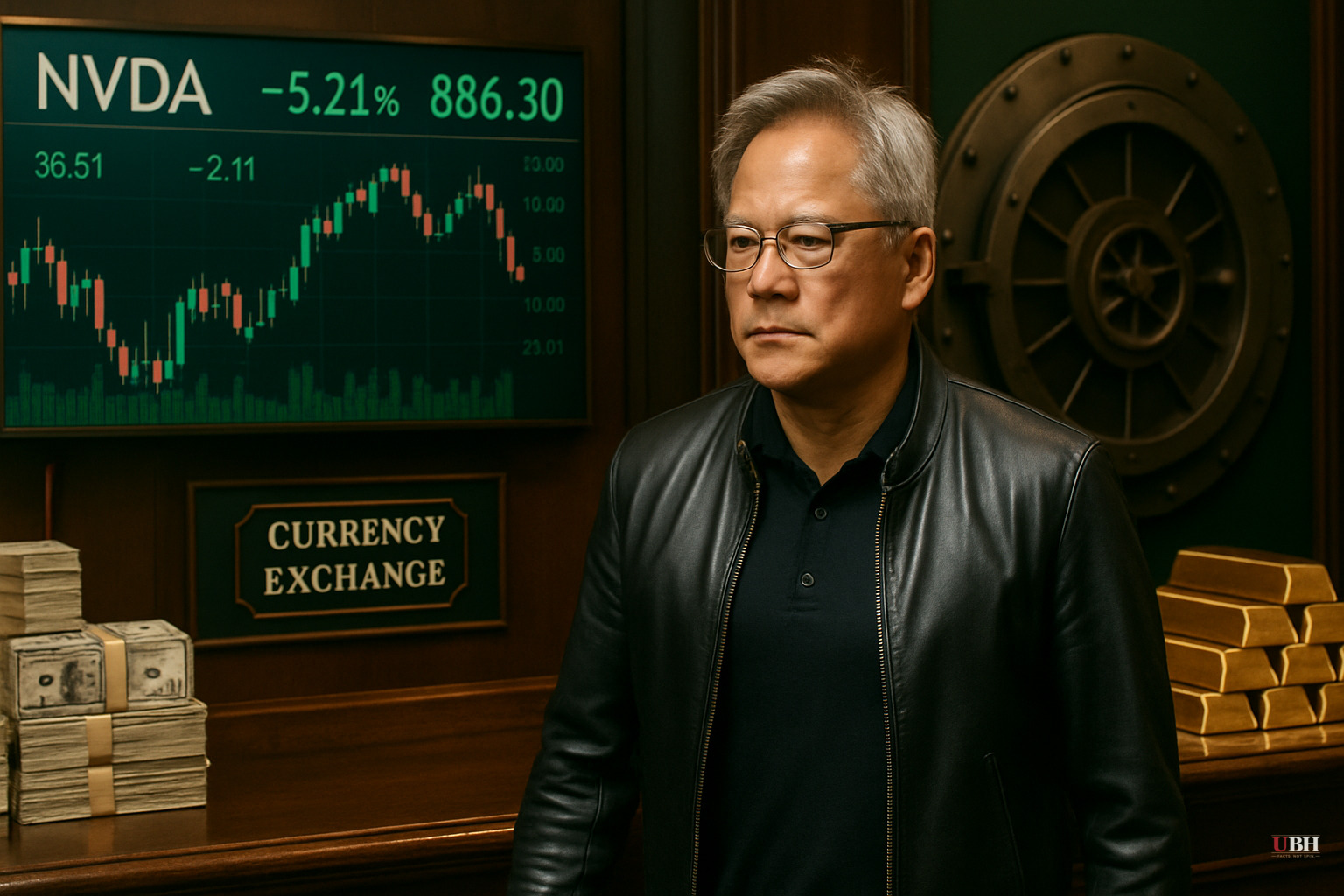
Nvidia Reports Wednesday With $17 Billion China Revenue Hole, Stock Down 6.5% From Thursday Highs, and Jensen Huang Fresh Off Air Force One
What's New Since Our Last Coverage
When we reported Morgan Stanley's $285 price target last week, the headline question was whether Nvidia would beat and raise — again. That's still on the table. But three things changed.
First, Jensen Huang flew to Beijing on Air Force One. According to TIKR, Trump personally called Huang and asked him to join the U.S. delegation for the Xi summit — after Huang had initially been left off the list. Semafor reported the exclusion was deliberate, meant to avoid awkward conversations about chip sales. The last-minute add made the signal impossible to ignore.
Second, the stock sold off. After jumping roughly 2.4% premarket on the Beijing news — touching $220.78, near its 52-week high of $223.75 — Nvidia gave it back. According to CNBC, the stock was down more than 6.5% from Thursday's highs by midday Monday.
Third, the options market got messy. According to CNBC, upwards of 15% of Nvidia options traded by midday Monday were contracts expiring that same session — and most of them expired worthless. This followed Friday's session where $114 million in premium on 235-strike calls slipped out of the money. SpotGamma data compiled by CNBC shows the 225 and 222.5-strike calls each traded more than 220,000 times — and went to zero.
The China Number Wall Street Is Sitting On
$17.1 billion is what China and Hong Kong contributed to Nvidia's revenue in fiscal year 2025, according to TIKR segment data. That figure is now, for practical purposes, zero. Nvidia's own Q1 FY2027 guidance of approximately $78 billion explicitly excluded all China data center compute revenue.
Jensen Huang has estimated the total Chinese AI chip market at roughly $50 billion annually. Nvidia has been locked out of it.
Every analyst model — including Morgan Stanley's bullish $285 target — is currently built on the assumption of zero China data center revenue. Current forecasts already price this in as the base case. Any policy shift that reopens China is pure upside on top of an already-massive business.
What the Beijing Trip Actually Means
Huang flying to Beijing does NOT guarantee H200 chip sales resume. According to CNBC, Trump told reporters last week that H200 chips didn't even come up in discussions with Xi. Then Reuters reported the U.S. government quietly approved several Chinese firms to purchase the H200. Then Trump claimed China still hasn't allowed firms to buy the chip.
The actual policy status of H200 sales in China is: nobody knows.
What the trip does signal, according to TIKR, is that the Trump administration is treating AI chip access as a negotiating variable — and Nvidia has a seat at the table. That's different from where things stood 10 days ago.
What Traders Are Actually Betting On
According to Kalshi prediction markets — which have a commercial relationship with CNBC — Trump has 50-50 odds of being mentioned on Wednesday's earnings call. Tariffs get a 57% chance of coming up. Humanoid robots, surprisingly, come in at 55% — Huang said at CES in January he expects robots with human-level capabilities this year.
Taiwan Semiconductor now has only a 15% chance of being discussed, down from a previous 78%. After the U.S.-China summit where neither country confirmed whether Taiwan was even on the agenda, traders are betting Huang keeps his mouth shut on the subject entirely. Taiwan is where the chips are made. The shift from 78% to 15% on TSMC mentions reflects how much the Beijing trip changed the political calculus for Huang's call.
The Underlying Business Hasn't Slowed Down
All the geopolitical noise exists against a backdrop that doesn't actually look bad. At Nvidia's GTC 2026 analyst session on March 18, Huang stated directly: "We have strong confidence and visibility of $1 trillion plus of Blackwell" orders. That's an order book — without China.
Traders expect a 6.25% swing based on implied volatility around earnings, according to Cboe LiveVol data compiled by CNBC. The average realized move is just 3.2%. The last three earnings reports all ended with the stock DOWN — including a 5.5% drop in February.
Bulls are still showing up. According to CNBC, the four biggest options trades Monday were all bullish call-buyers spending at least $10 million each. Total options premium traded: $1.3 billion, with $1 billion tied to calls.
These people aren't scared. They might just be wrong — again.
Wednesday's Call
If you own Nvidia stock, focus on two things: the numbers and what Huang says about China.
The numbers are almost certainly fine. The $1 trillion Blackwell order book doesn't vanish overnight. The China question — a $17 billion revenue hole that every current model prices at zero — is the wildcard that can move this stock 6% in either direction after hours.
Huang just flew to Beijing on the President's plane. He'll have something to say about it.
Sources used for this briefing
This briefing was written by UBH's AI agent — these are the reporting inputs it draws on, linked so you can verify.


