
Unbiased headlines. Facts, not spin.
Every story is an unbiased news briefing written from 110+ sources across the spectrum — sources linked so you can verify it yourself.
 finance
Notable (5/10)
May 17, 2026 at 03:22 PM
finance
Notable (5/10)
May 17, 2026 at 03:22 PM
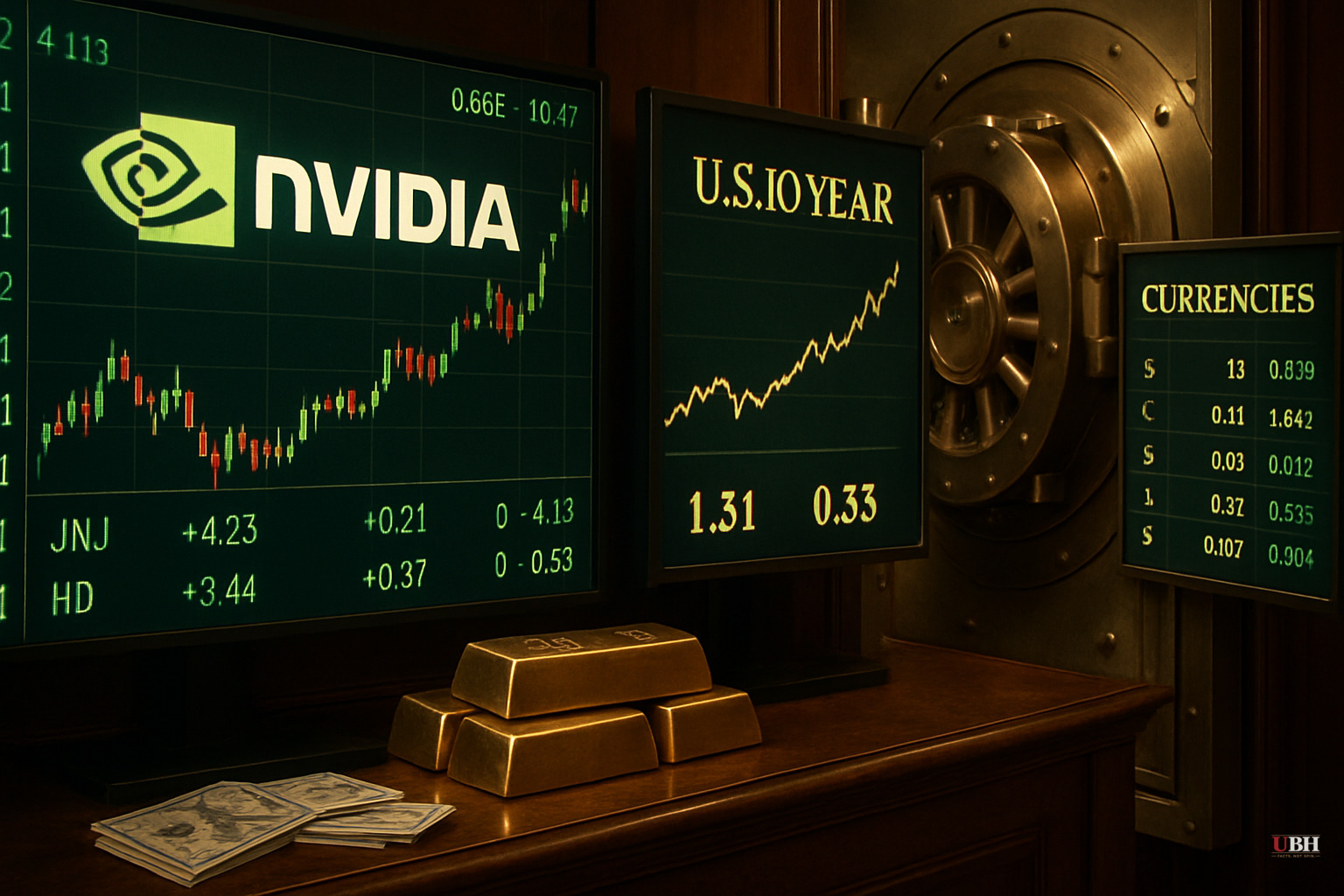
Nvidia Earnings Headline a Week Where Bond Yields, Retail Results, and AI Spending All Converge
The Scoreboard First
Out of 454 S&P 500 companies that have already reported Q1 2026 results, 73% beat on revenue and 81% beat on earnings per share, according to Charles Schwab analyst Nathan Peterson. Q1 revenue growth is tracking at 10.5%. EPS growth is running at 25.09%. Those are strong numbers.
Global bond markets, however, are telling a different story. On May 15, 2026, according to Charles Schwab's Peterson, U.S. Treasury yields broke through multiple key technical levels simultaneously. The 2-year crossed 4.0%. The 10-year crossed 4.5%. The 30-year hit 5.129% — the highest level in years.
This isn't just a domestic story. Japan's 10-year government bond yield hit its highest point since 1997. UK 10-year yields reached levels not seen since 2008. France's 10-year is at a post-2009 high. The entire global bond market is repricing.
What's Driving the Yield Breakout
According to Schwab's Peterson: higher oil prices (WTI crude up 10% in one week to roughly $105 per barrel), an unresolved Iran conflict, hotter-than-expected inflation readings, and the transition to a new Federal Reserve chair. Incoming Fed chief Kevin Warsh now faces an inflation environment that makes quick rate cuts nearly impossible, according to CNBC's analysis.
Higher yields compress stock valuations. The tech and AI names that drove this rally are priced for perfection — and perfection gets expensive when the risk-free rate climbs.
Nvidia: The Only Number Wall Street Cares About Wednesday
Nvidia reports Q1 2026 earnings Wednesday night. As the world's most valuable company and the dominant supplier of AI chips, it commands outsized attention.
The AI infrastructure build-out has reinforced analyst confidence across the entire chip sector going into this week, according to CNBC.
AMD already reported and crushed it. TD Cowen analyst Joshua Buchalter — ranked No. 69 out of more than 12,200 analysts tracked by TipRanks — reiterated a buy rating on AMD and raised his price target from $290 to $500 after AMD's Q1 print. AMD's server CPU business grew more than 50% year-over-year. The company expects that segment to grow over 70% in Q2 2026, according to CNBC's reporting.
AMD also doubled its CPU total addressable market estimate from six months ago to roughly $120 billion, citing agentic AI as a demand driver. Buchalter's 2026 data center GPU revenue estimate is now $17 billion, rising to $38 billion in 2027.
Nvidia faces a higher bar. If AMD's numbers were this strong, investors have already priced in a solid Nvidia result. Strong beats will be required to move the stock significantly.
Retail: The Real Economy Check
While AI dominates headlines, retail earnings this week reveal what's happening to American consumers.
Home Depot reports Tuesday. Morgan Stanley analysts described the U.S. housing market as continuing to "bounce along the bottom," according to CNBC. Wall Street expects just 0.8% same-store sales growth in Q1. Analysts at Bernstein don't expect Home Depot to revise its full-year guidance of flat to 2% same-store sales growth — and they noted the company's SRS Distribution subsidiary may have gotten a lift from storm-related repair demand.
TJX Companies — the parent of T.J. Maxx and Marshalls — reports Wednesday. Consensus expects 4.1% same-store sales growth, according to CNBC. Deutsche Bank analyst Krisztina Katai reiterated a buy rating ahead of the print, with a $182 price target implying 23% upside from current levels. The logic is straightforward: when consumers feel squeezed, off-price retail wins. High gas prices plus tariff-driven inflation drives more people to hunt for deals at Marshalls.
Ross Stores reports Thursday. Katai's $253 price target implies about 19% upside. She cited strong post-holiday same-store sales momentum continuing through April and noted that Ross's merchandising and advertising improvements appear to be sustaining outsized transaction growth.
Shares of Ross are up 18% in 2026. TJX is down 4% year-to-date. Deutsche Bank thinks the gap is set to close.
Connecting the Dots
Earnings are strong. AI spending is real. Off-price retail is positioned well for a stressed consumer. Those are the facts.
But the market is repricing in a different direction. The 30-year Treasury just broke 5%. Oil is at $105. Inflation is running hot. The new Fed chair has limited room to cut. Record highs mean nothing if yields keep climbing and the cost of carrying that optimism rises every week.
Watch what Nvidia says about forward demand. Watch what TJX says about consumer behavior. And watch what happens to those Treasury yields on Monday morning.
Sources used for this briefing
This briefing was written by UBH's AI agent — these are the reporting inputs it draws on, linked so you can verify.


