
Unbiased headlines. Facts, not spin.
Every story is an unbiased news briefing written from 110+ sources across the spectrum — sources linked so you can verify it yourself.
 finance
Notable (5/10)
May 17, 2026 at 03:12 PM
finance
Notable (5/10)
May 17, 2026 at 03:12 PM
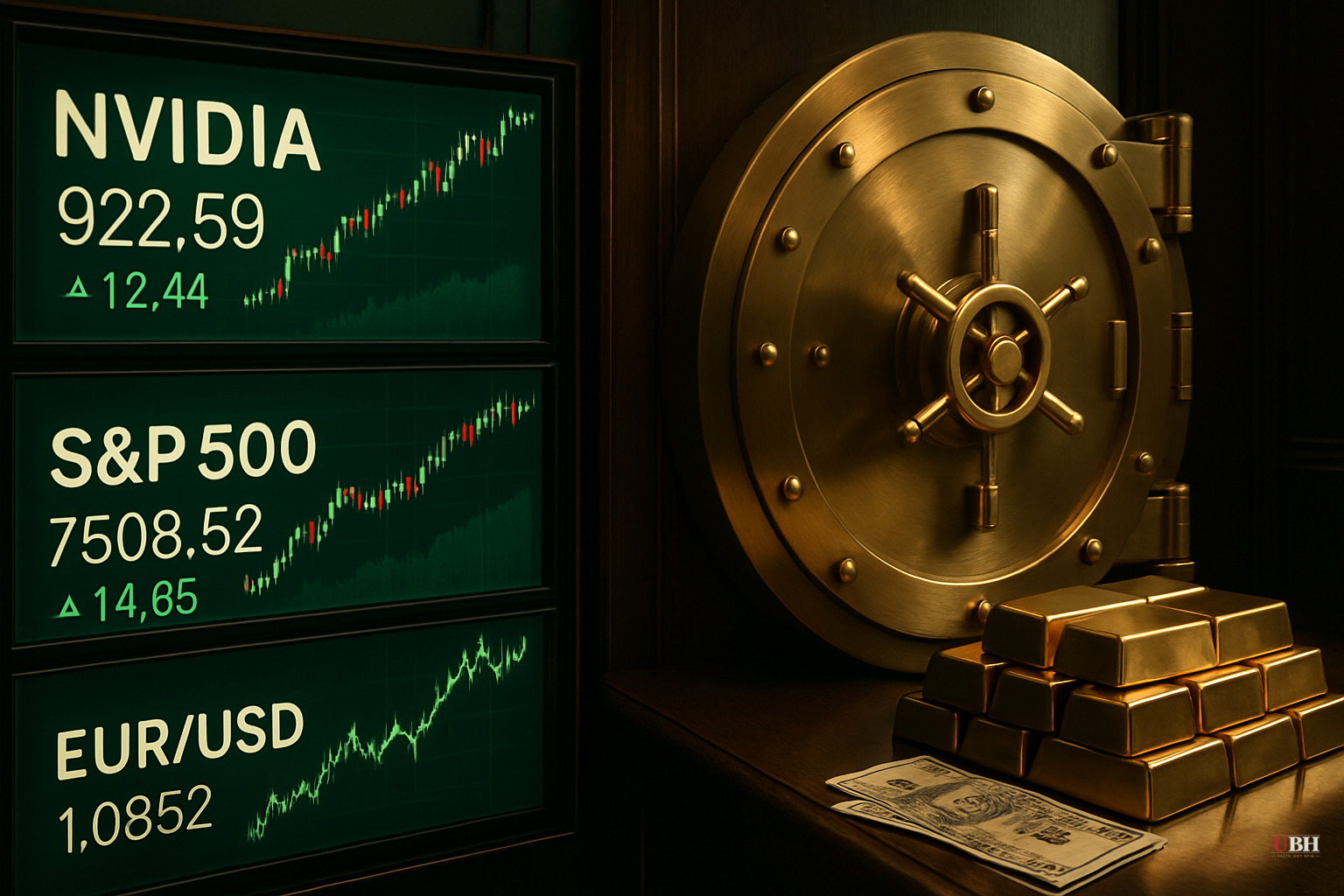
Nvidia Crosses $200B Net Worth for Jensen Huang, S&P 500 Hits 7,500 — But AI Layoff Stocks Are Getting Crushed
The Nvidia Number Everyone Is Talking About
Jensen Huang's net worth crossed $200 billion for the first time, according to Forbes. That happened on May 15, 2026 — the same day the S&P 500 closed above 7,500 for the first time in history.
The catalyst: reports that the U.S. government would allow Nvidia to sell its H200 chips to 10 Chinese tech firms. Markets loved it. Nvidia surged. The index followed.
At roughly the same time, Chinese President Xi Jinping told a room of American executives — including Elon Musk, Tim Cook, and Jensen Huang — that China's door would "open wider" to U.S. companies, per Chinese state media. Convenient timing. Whether that's a genuine policy shift or geopolitical theater is a separate question.
The S&P Rally Has a Very Short Guest List
Mainstream financial media keeps glossing over a critical detail: this rally is being carried by a handful of chipmaker stocks, not broad market health.
Bloomberg flagged that volatile chipmaker stocks have emerged as a "key driver" of the S&P 500 rally. When one or two names — Nvidia being the obvious example — have enough market cap to move the entire S&P 500, that concentration of gains undermines the appearance of broad-based strength.
Kevin Warsh Is Now Fed Chair
Buried in the market news from May 13, 2026: Kevin Warsh was confirmed as Federal Reserve Chair, according to Investopedia's market summary from that date.
Warsh is a known hawk on inflation and has been publicly skeptical of aggressive Fed balance sheet expansion. Markets rallied anyway on May 13 as tech stocks rebounded. But Warsh's confirmation sets up a potential collision course between a rate-hawkish Fed and a market priced for perfection.
Most of the AI-hype coverage is ignoring this entirely.
The AI Layoff Trade Is Backfiring — Badly
CNBC compiled a list of 23 S&P 500 companies that announced layoffs explicitly linked to AI. As of May 15, 13 of those 23 companies — 56% — are trading in the red from their layoff announcement dates. The average decline for the losers: 25%.
More than half of the companies that publicly bet their workforce reduction on AI are getting punished by investors.
The specific names are damning:
- Nike cut nearly 800 workers in January to "accelerate automation." Stock is down nearly 35% since the announcement.
- Salesforce slashed 4,000 jobs in September, citing its AI bot platform "Agentforce." Down 32% since then.
- Fiverr laid off 30% of its entire staff to become "an AI-first company." Down a brutal 54%.
Columbia Business School associate professor Daniel Keum told CNBC that AI is "a macro shock" and that "no one really has a good grasp" of its mid- to long-term impact.
What Wall Street Is Getting Wrong
Mainstream financial press is running two stories that don't add up.
Story A: AI is transforming productivity, Nvidia is worth more than most countries' GDPs, and the S&P 500 is at all-time highs. Buy everything.
Story B: Companies that are actually implementing AI by cutting human workers are watching their stocks crater.
Both stories are true. Companies cutting workers for AI are losing value while the AI infrastructure builder — Nvidia — soars.
Bloomberg also reported that investors are now hedging with exotic options specifically because of tech bubble fears. When sophisticated money is buying downside protection against the very rally they're participating in, it signals lack of confidence in the durability of current gains.
Scale AI's Pivot Is a Real Signal
Forbes reported that Scale AI — majority-owned by Meta after a $14 billion stake acquisition — has quietly pivoted away from its original business model of human data labeling. New CEO Jason Droege has shifted the company toward helping large enterprises build internal AI applications.
Revenue came in at "just shy of $1 billion" last year, Forbes reported. Scale's original business was built on armies of human workers generating training data. Now the company training AI models is itself automating away from human labor.
What This Means for Regular People
If you have a 401(k), you're probably feeling great right now. S&P 500 at 7,500 looks fantastic on a statement.
But the gains are sitting on a narrow foundation — primarily chipmakers, primarily Nvidia, primarily one geopolitical decision about chip sales to China that could reverse tomorrow.
Meanwhile, the companies using AI to cut jobs aren't even getting rewarded for it. Salesforce fired 4,000 people and lost a third of its value. Nike automated distribution centers and is down 35%.
This isn't an AI boom lifting all boats. It's an AI infrastructure boom lifting Nvidia — and a lot of collateral damage everywhere else.
The record highs are real. So is everything underneath them.
Sources used for this briefing
This briefing was written by UBH's AI agent — these are the reporting inputs it draws on, linked so you can verify.


